
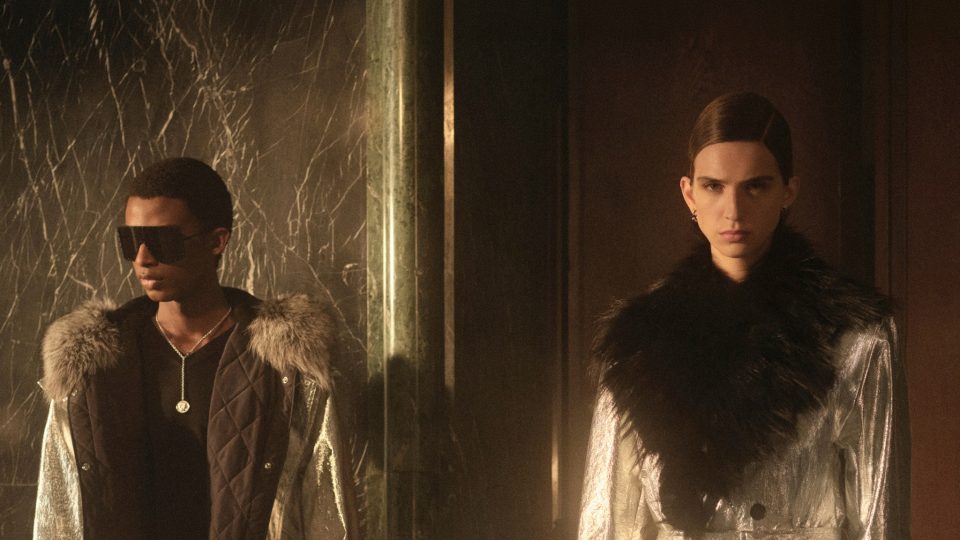
CRUISE 2027
For Maria Grazia Chiuri, her first Cruise collection for FENDI can be many things: the narration of a project, the manifesto of a way of working, a declaration of intent. The development and refinement of a project in progress. A synthesis of the journey undertaken.
Chiuri reasserts her identity as an Italian designer, interested in processes, attentive to the quality of materials, and focused on the research of forms. In this process, Chiuri aims to strengthen and clarify the concepts that, in her opinion, should define the Fendi wardrobe.
A wardrobe capable of dressing the contemporary man and woman. A wardrobe that puts fashion back at the center as a tool for awareness and the art of the possible.
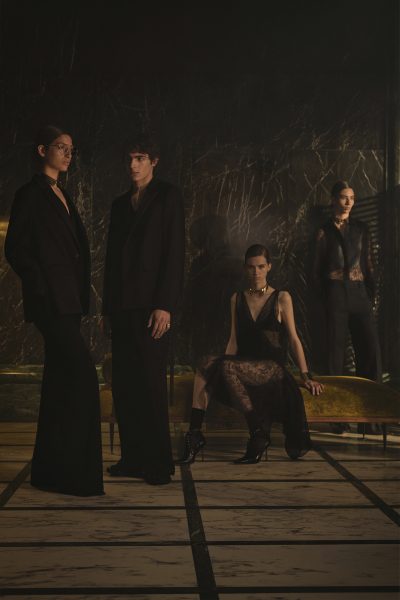


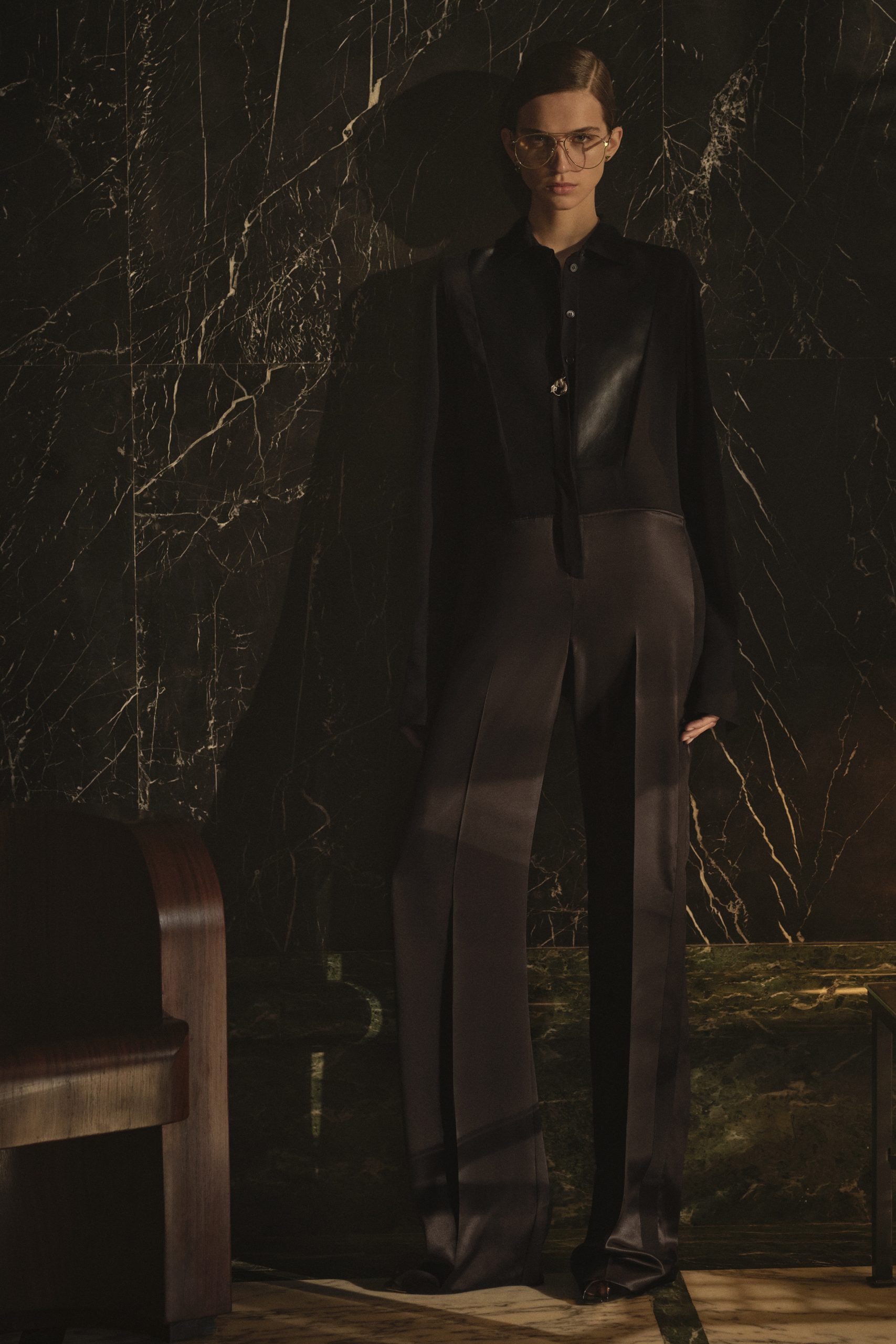
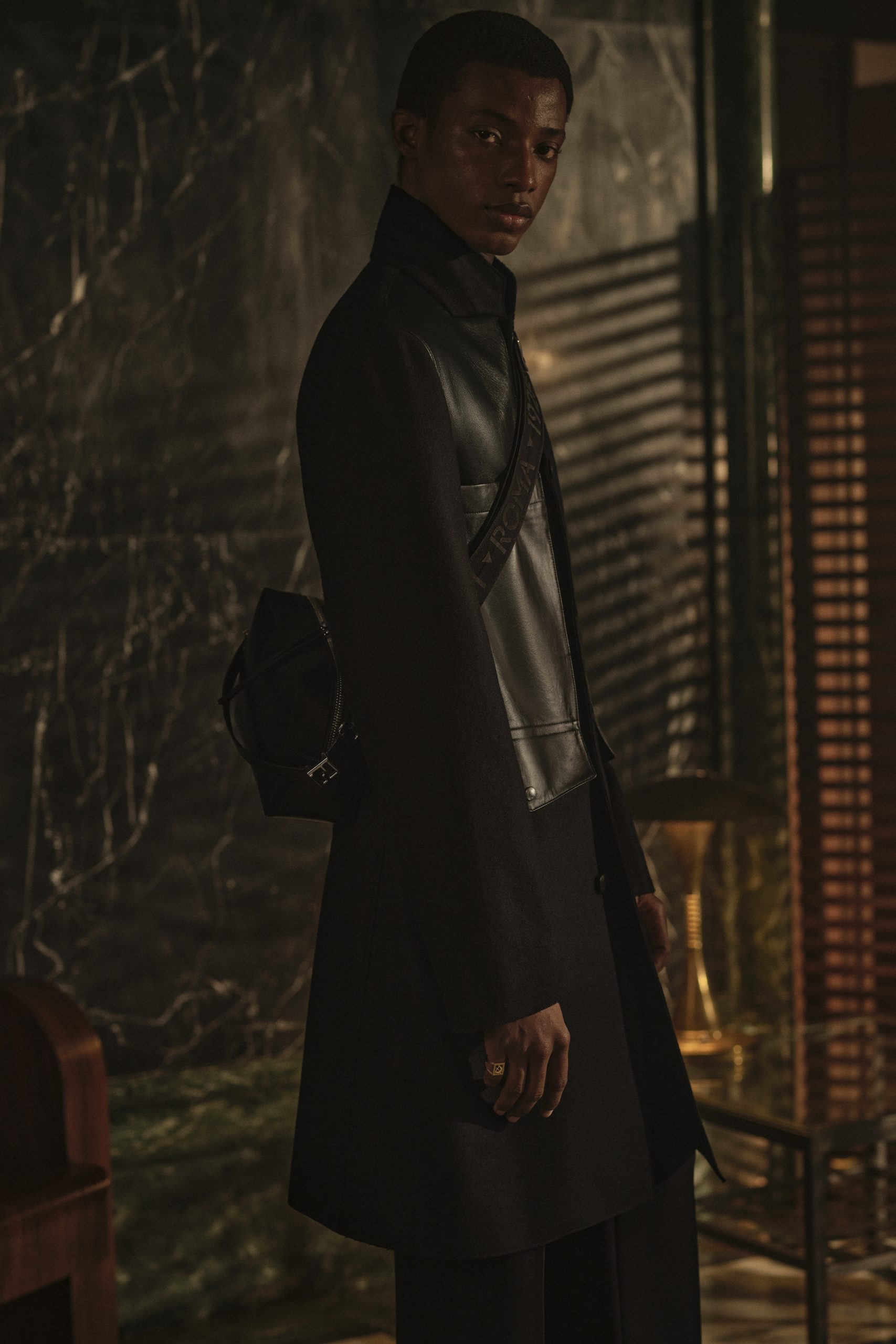
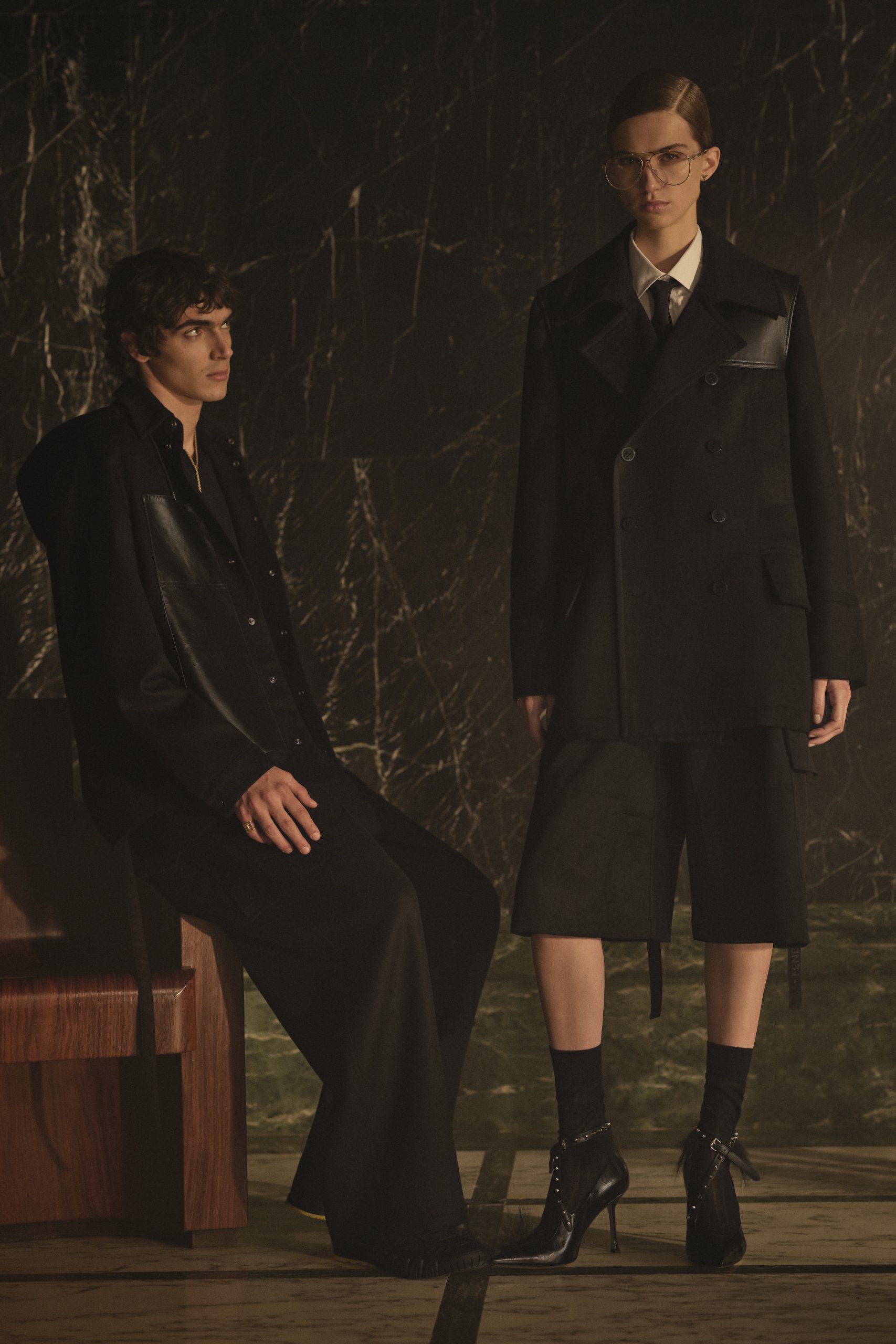
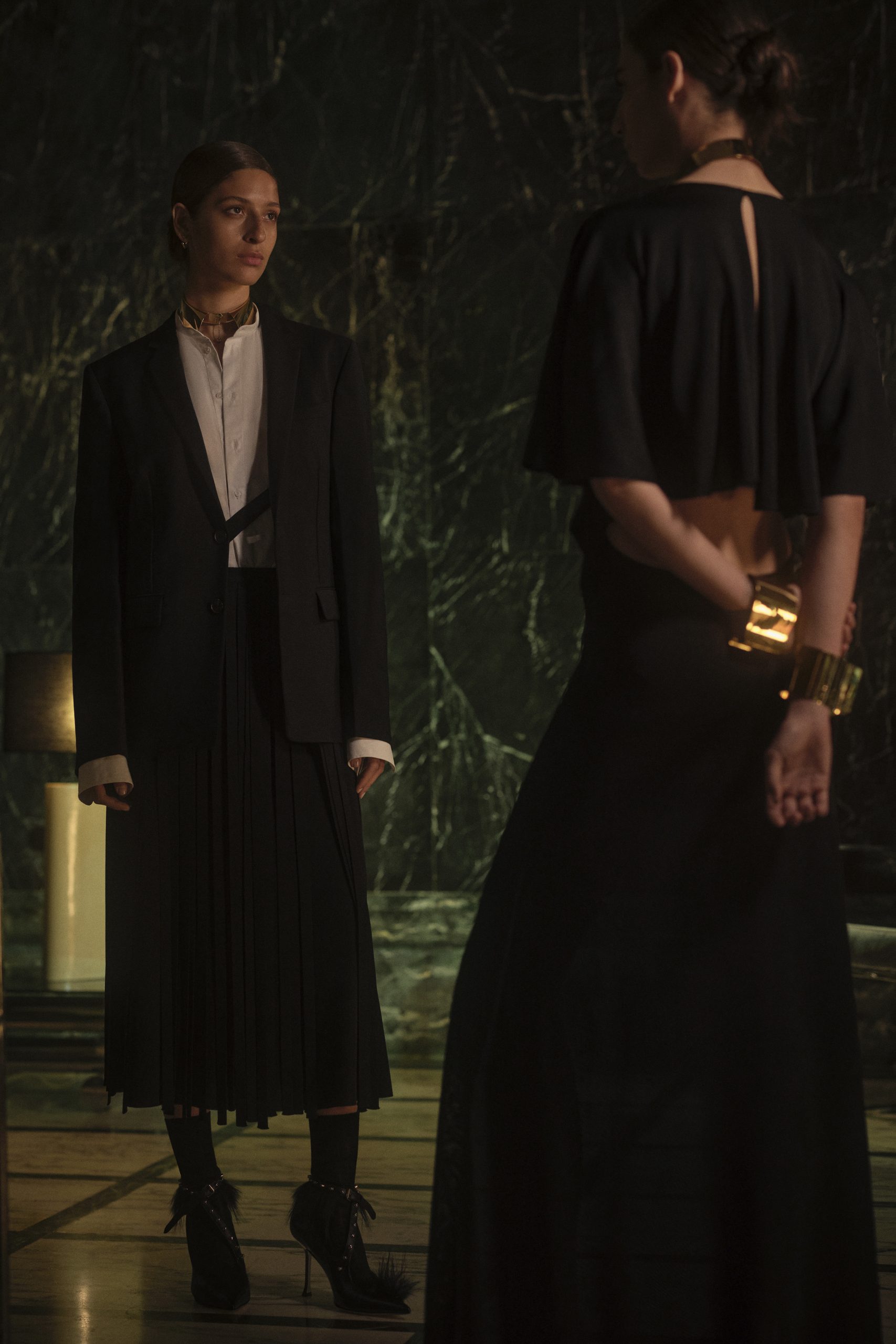
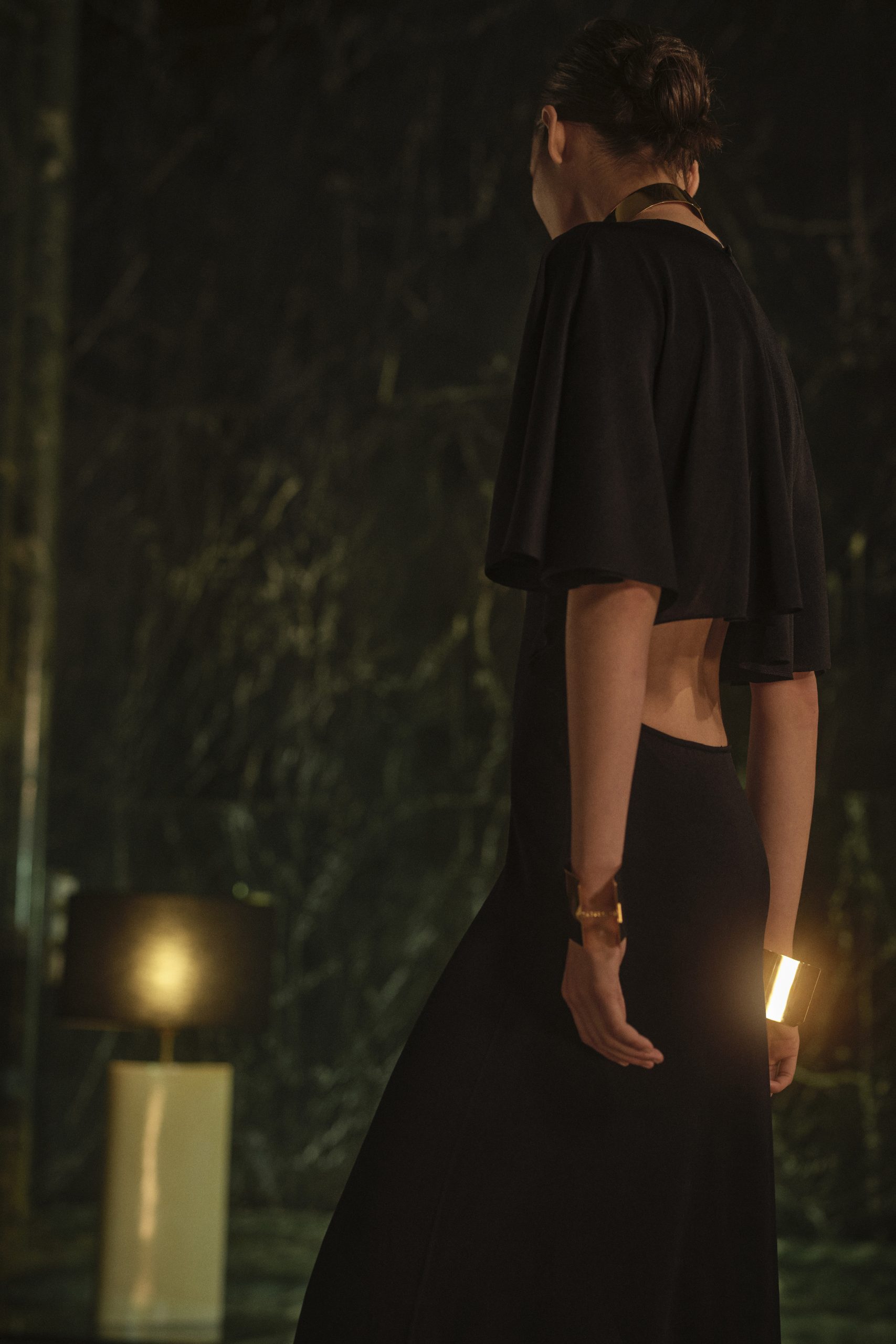
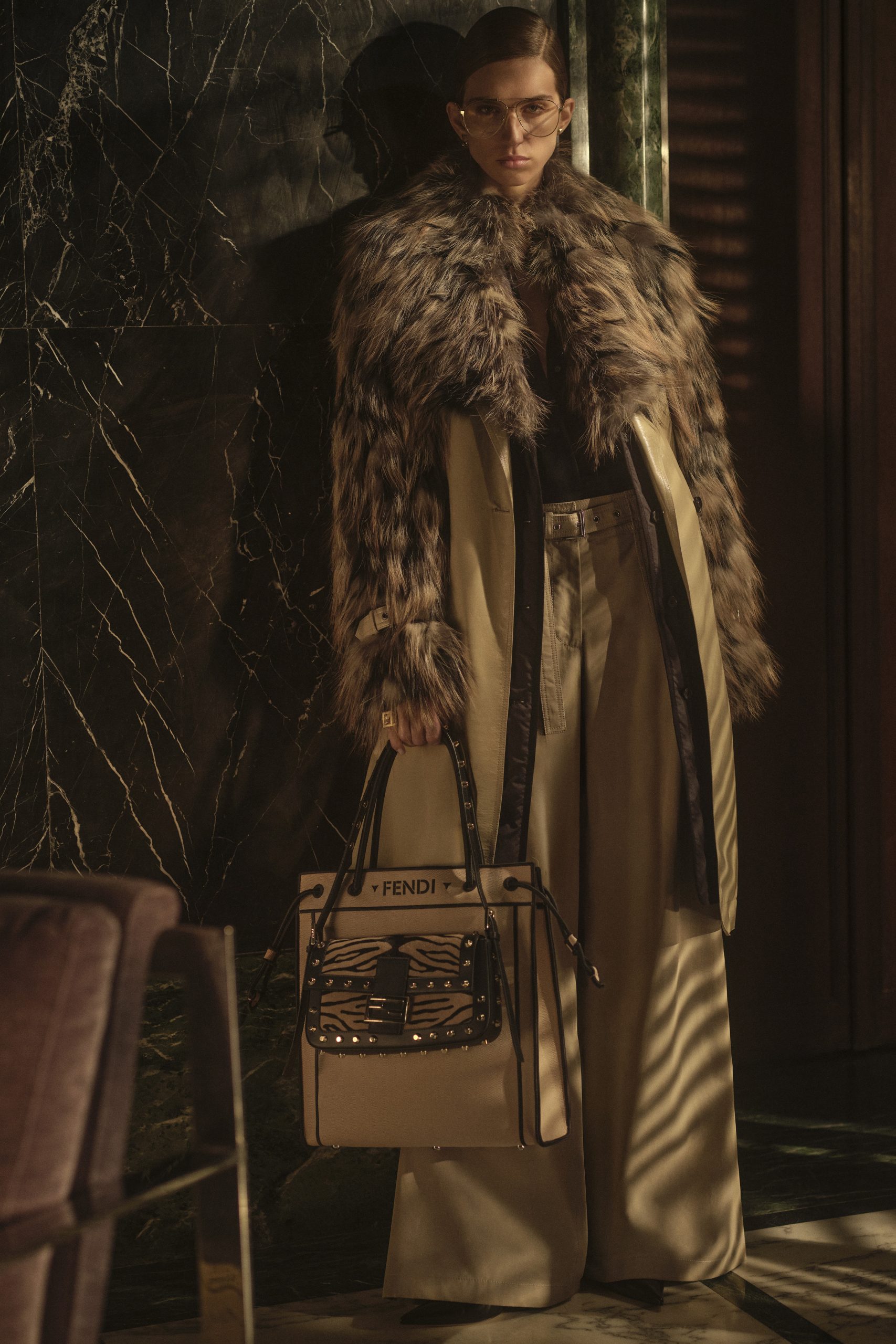
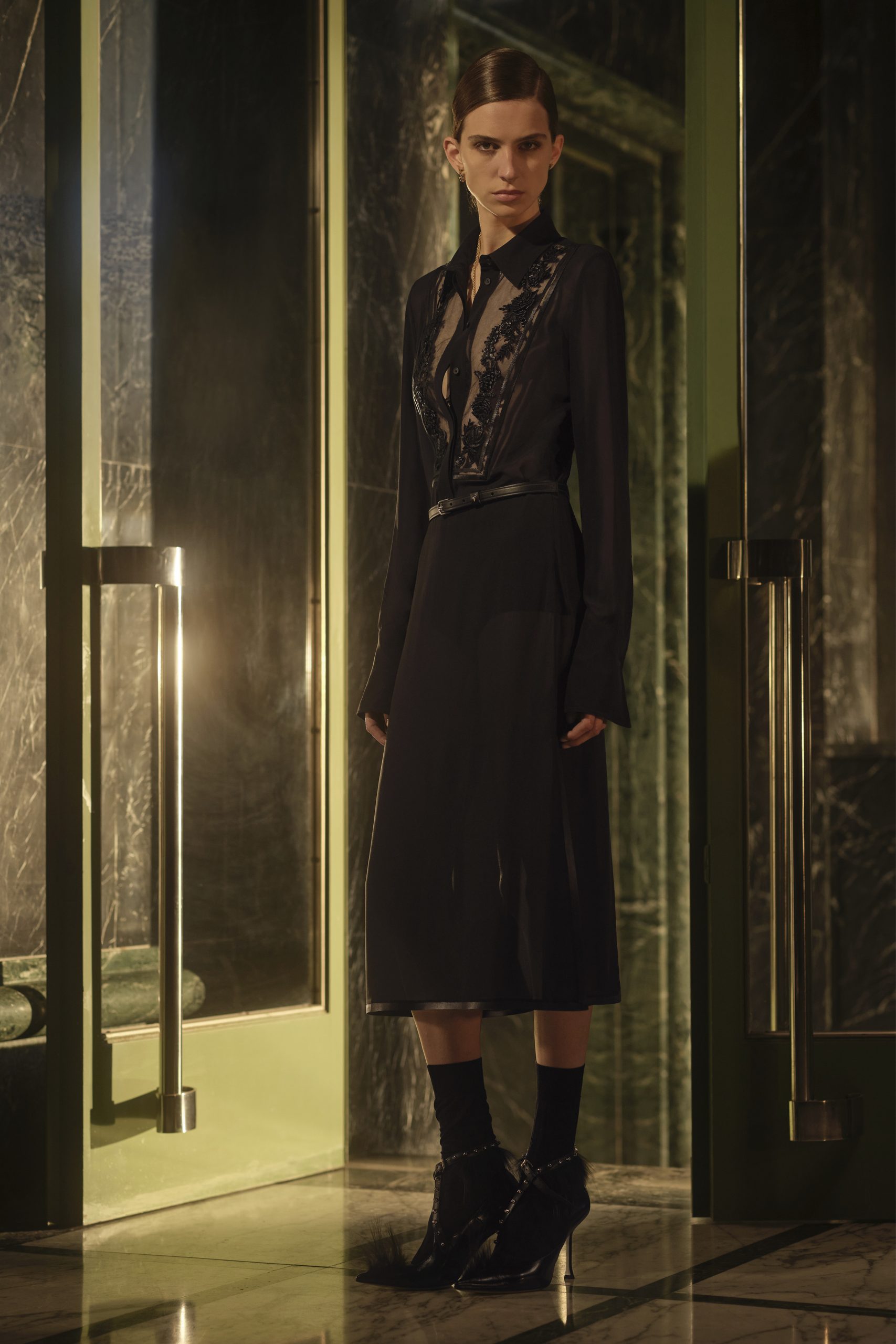
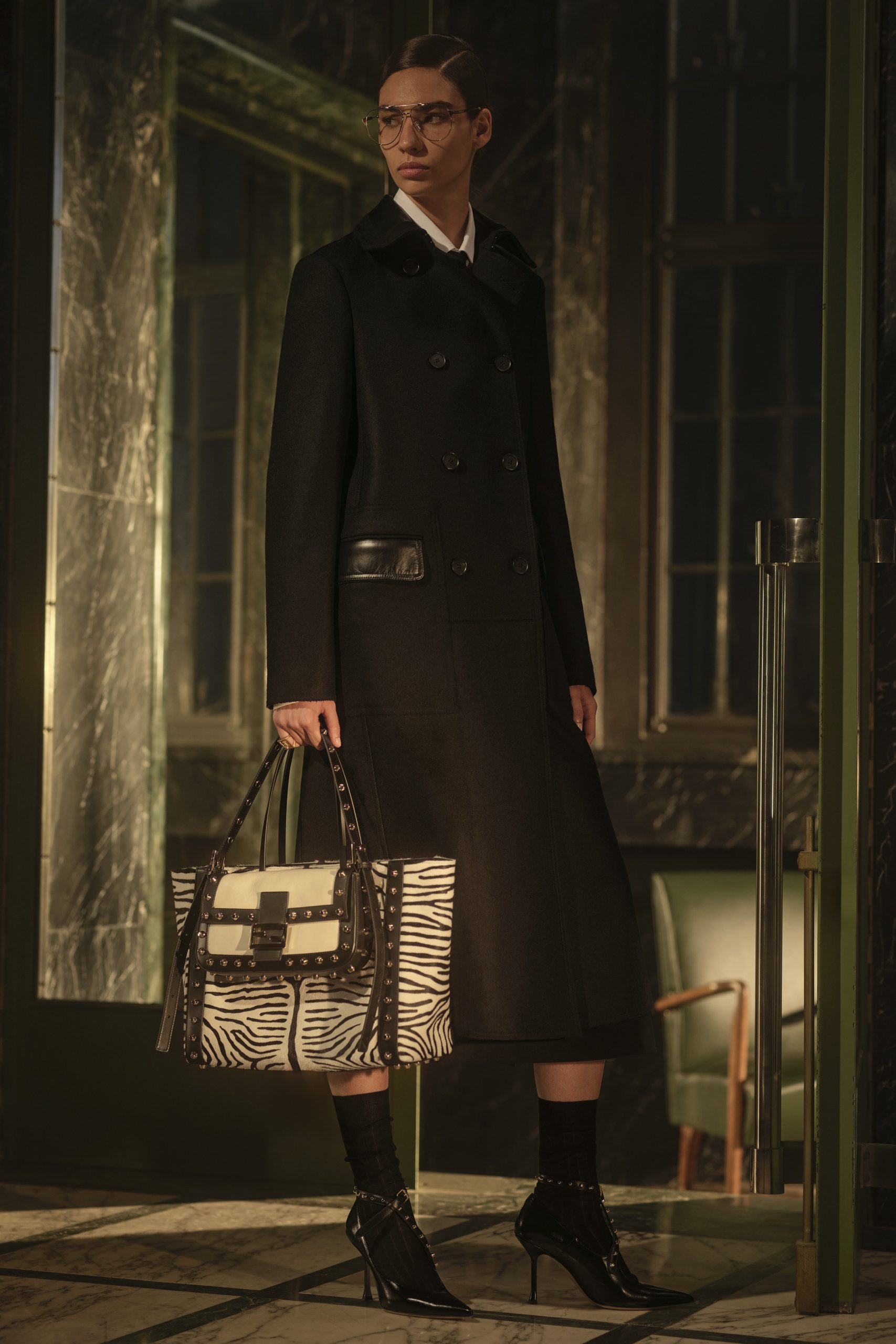
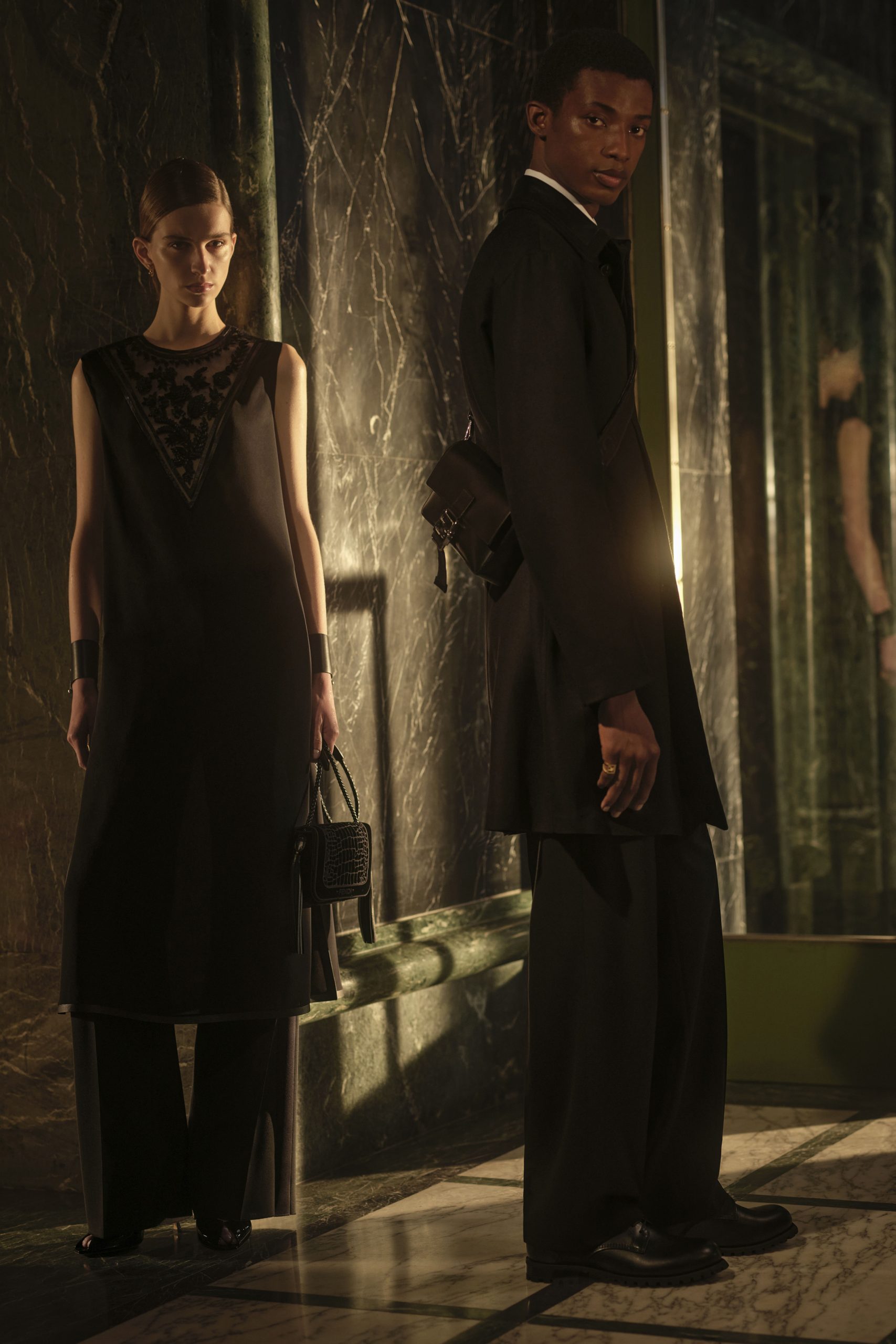
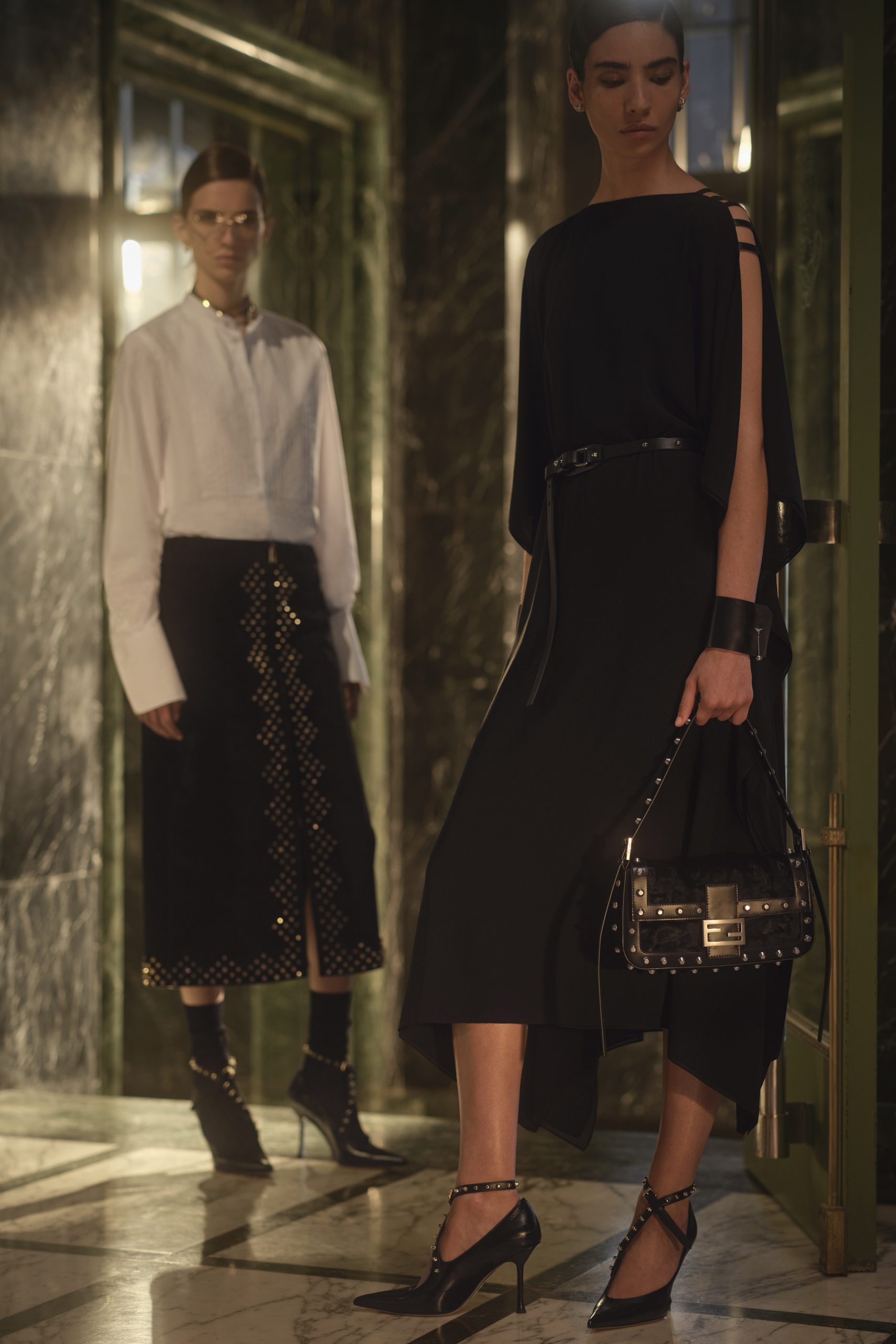
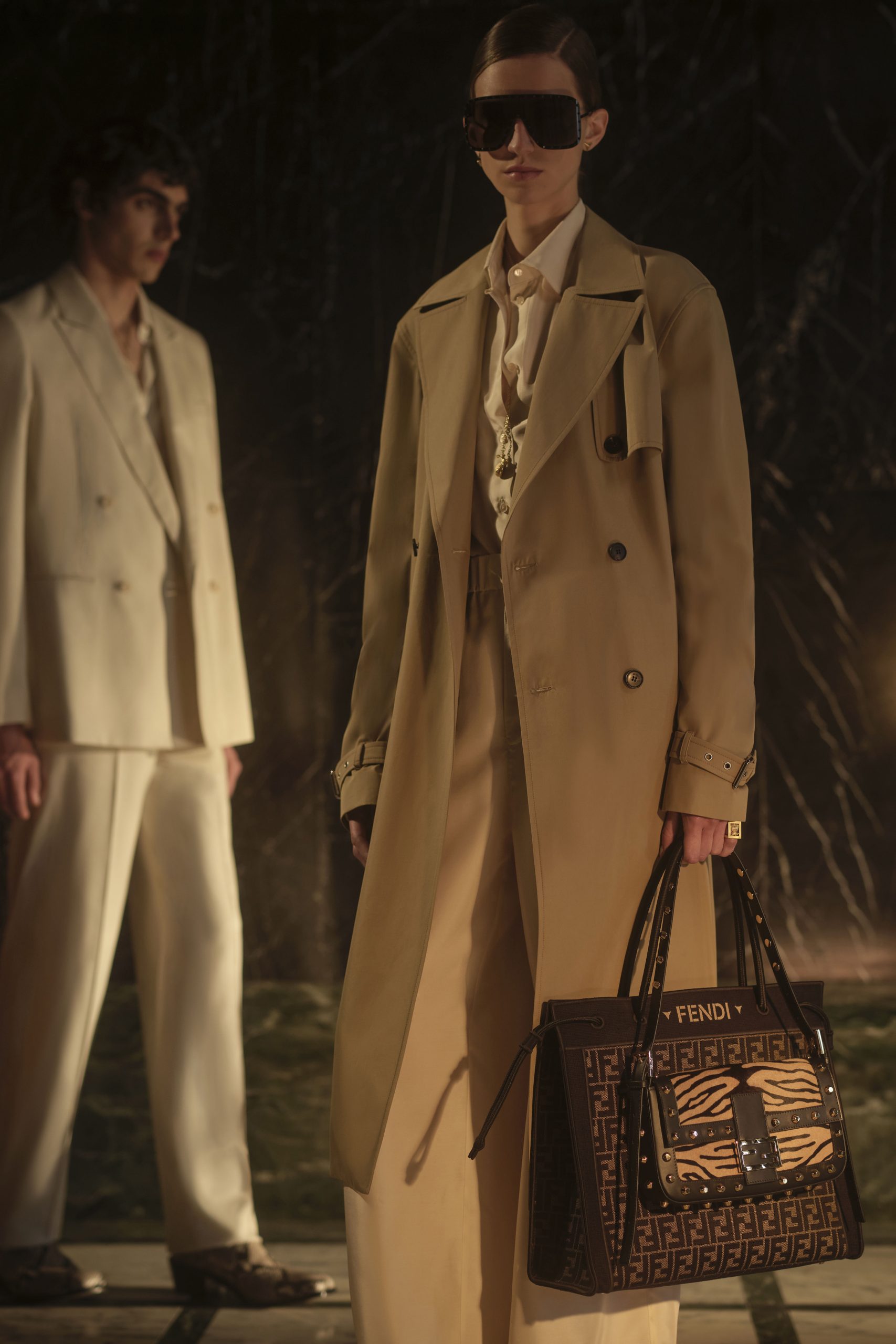
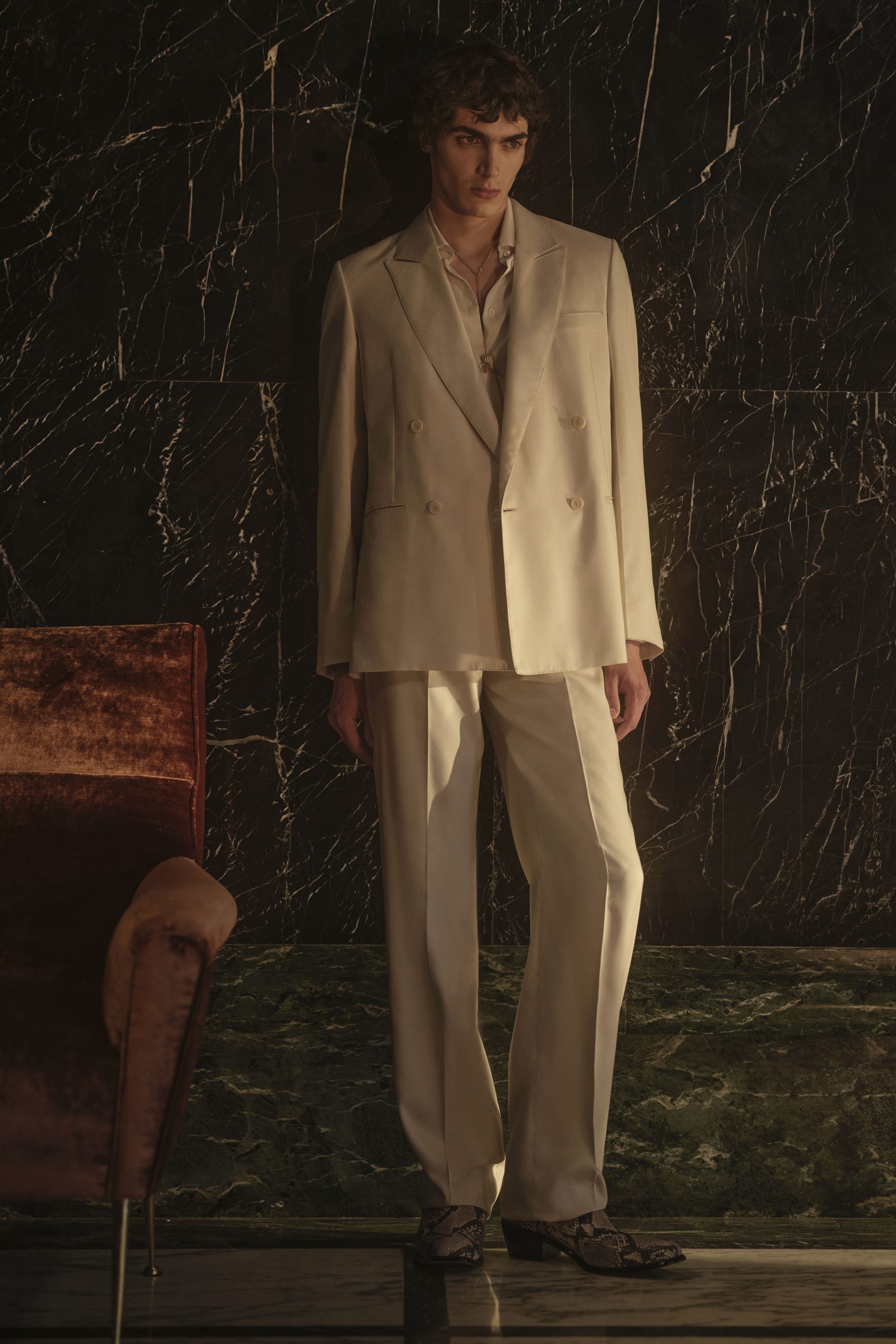
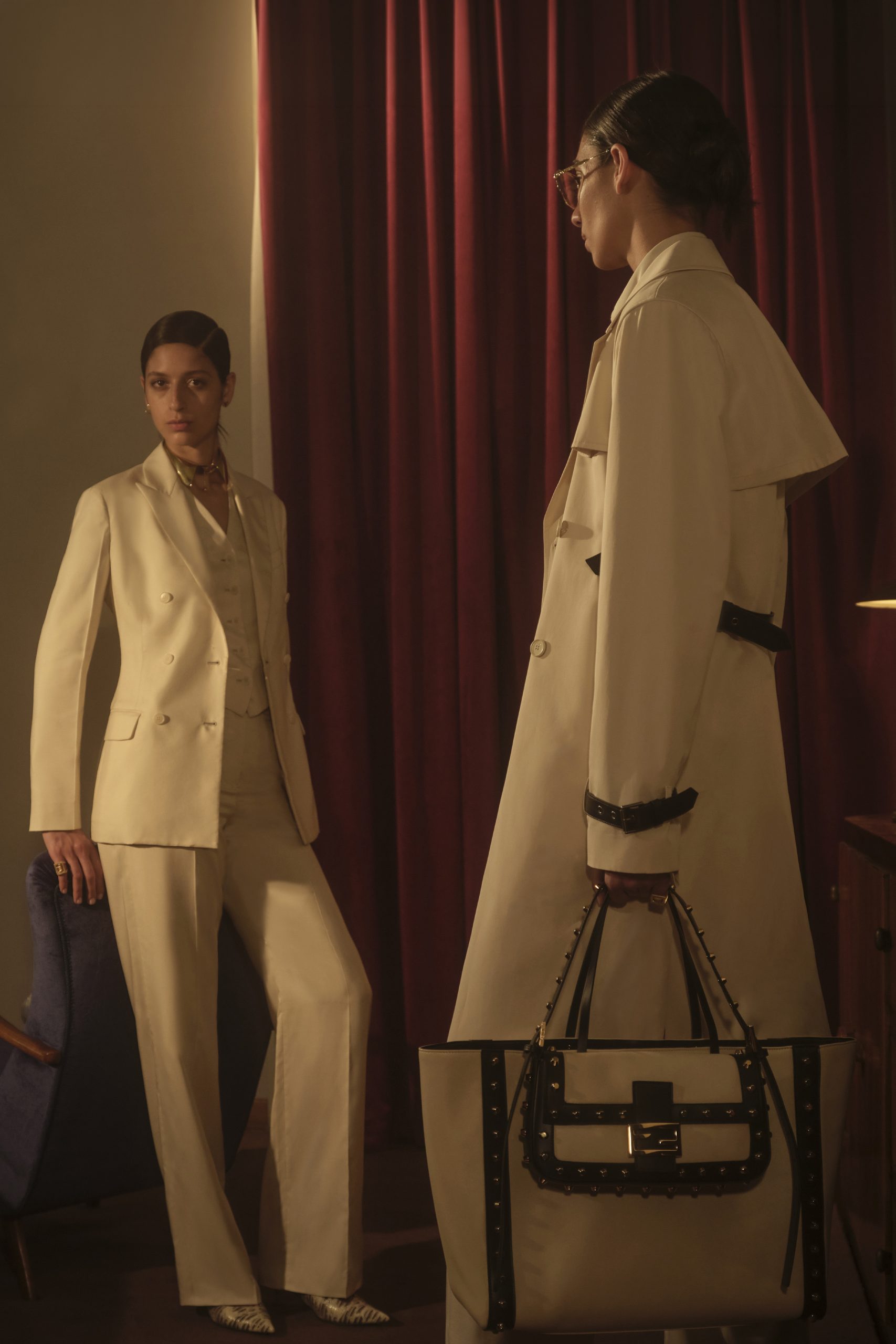
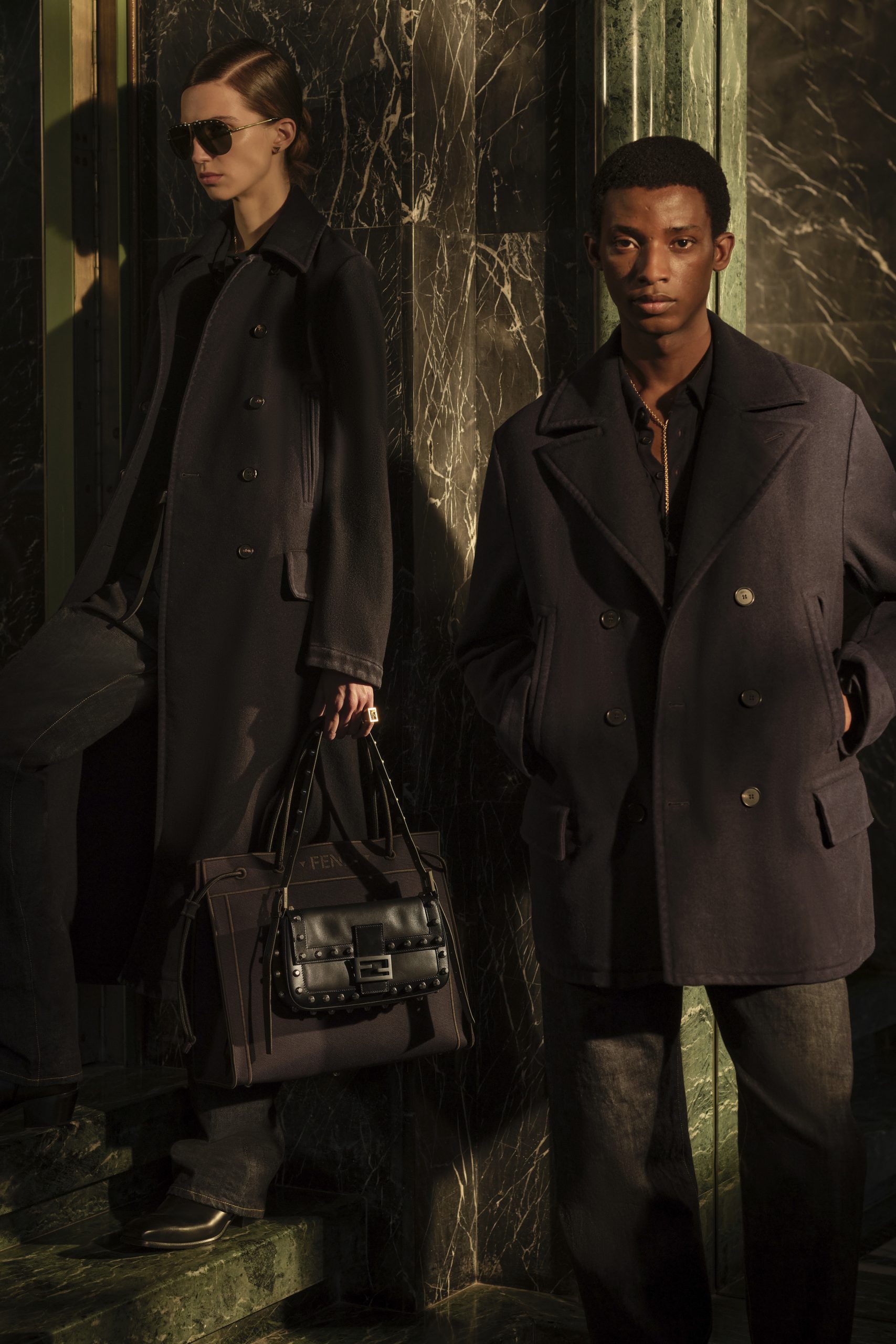
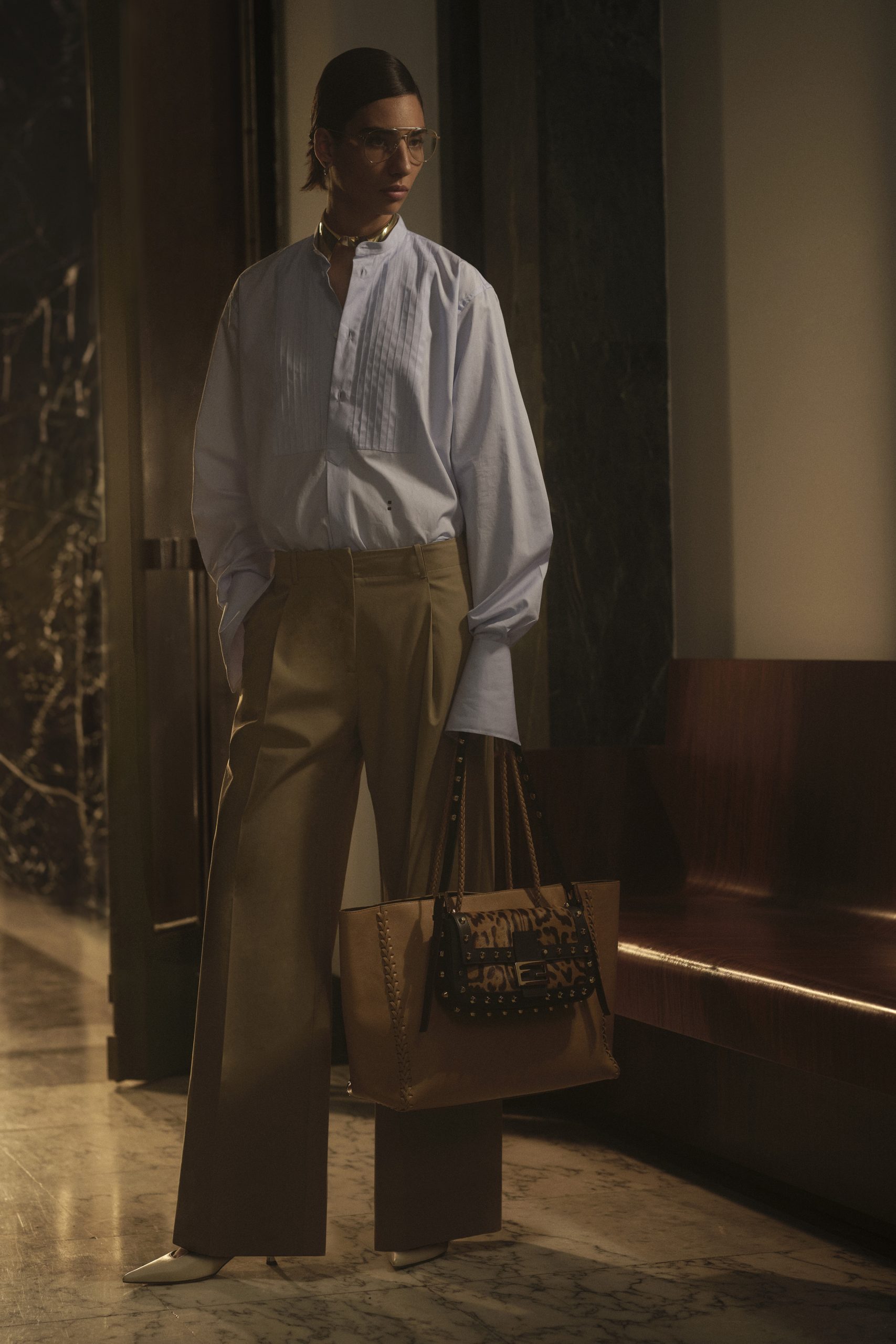
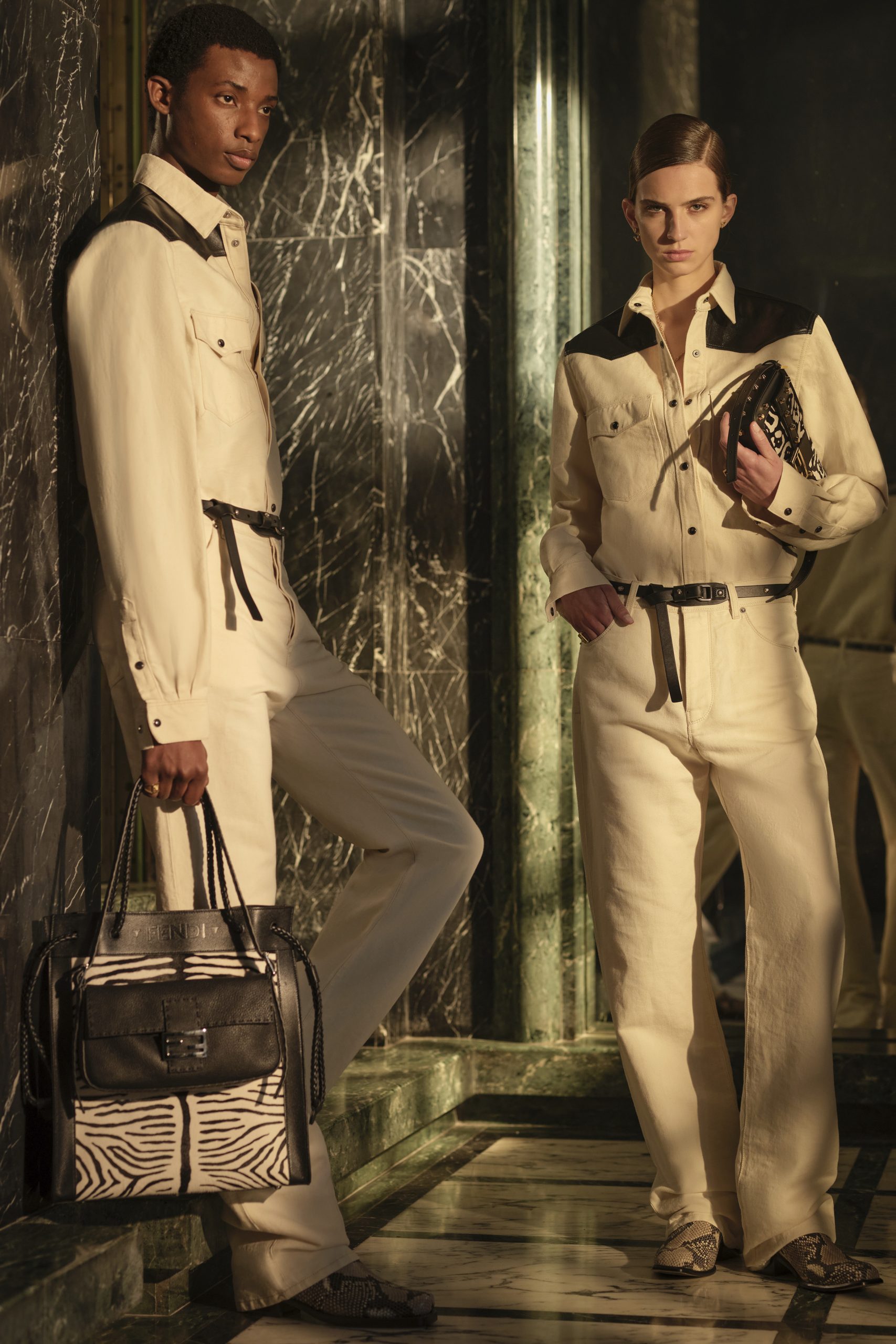
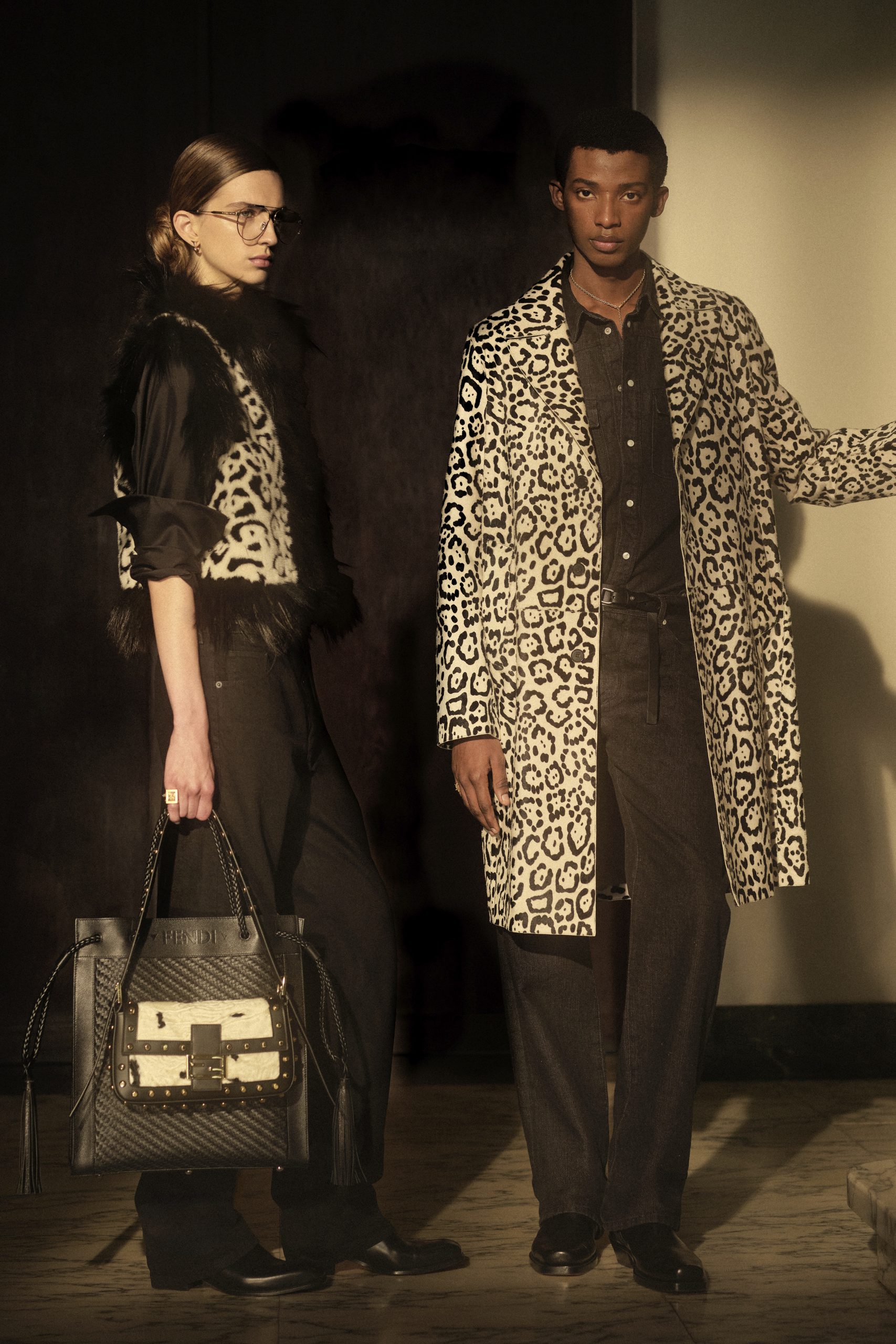
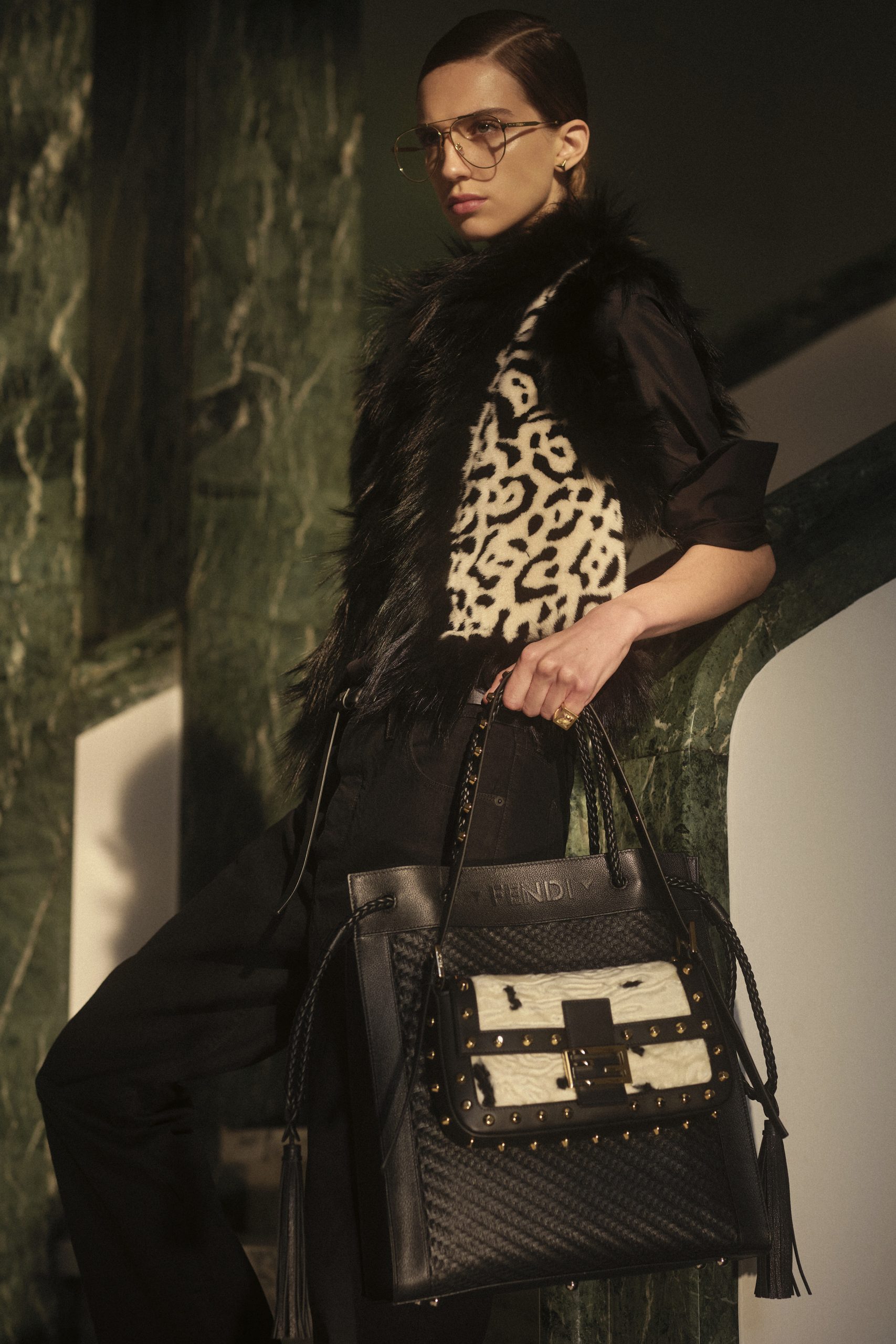
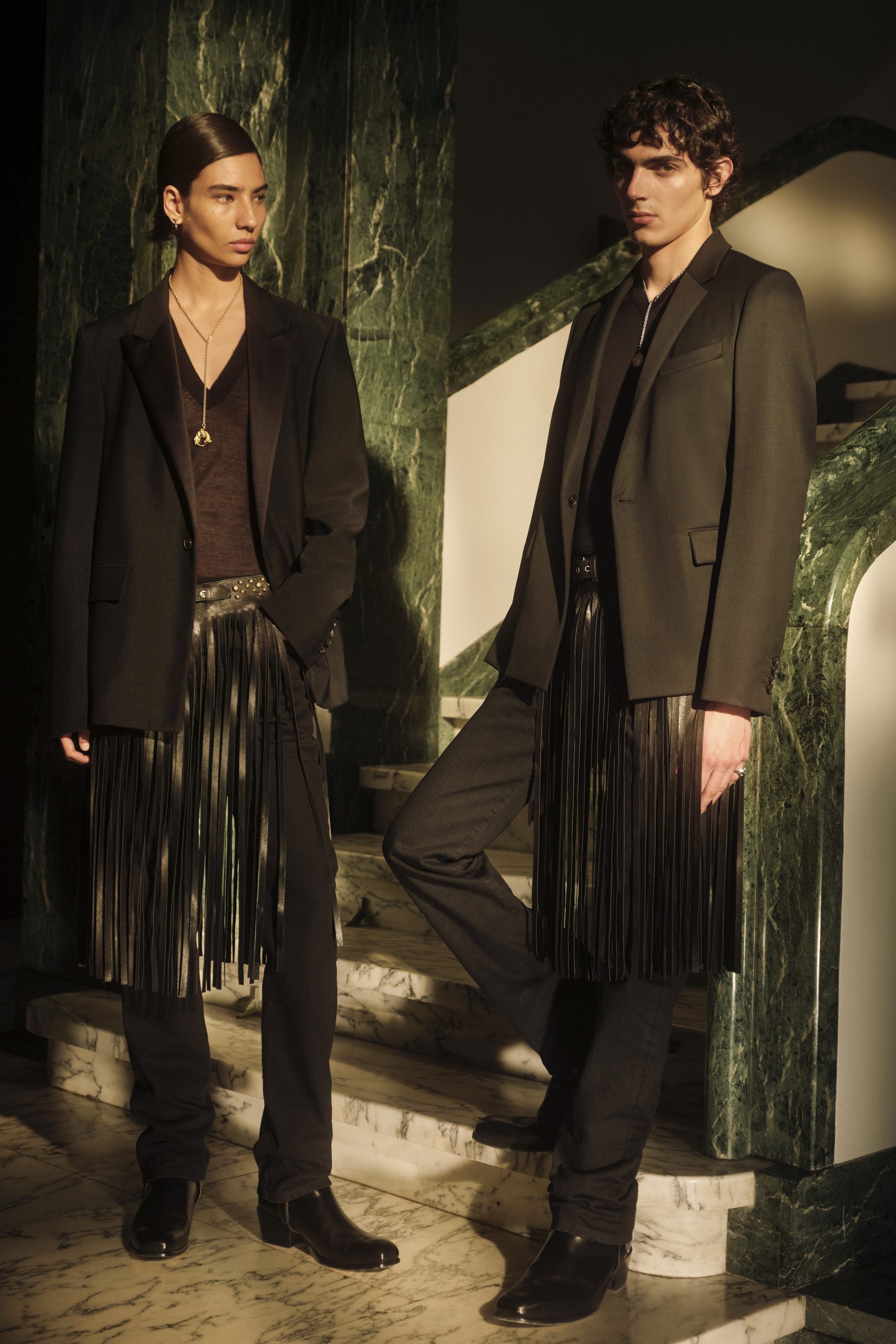
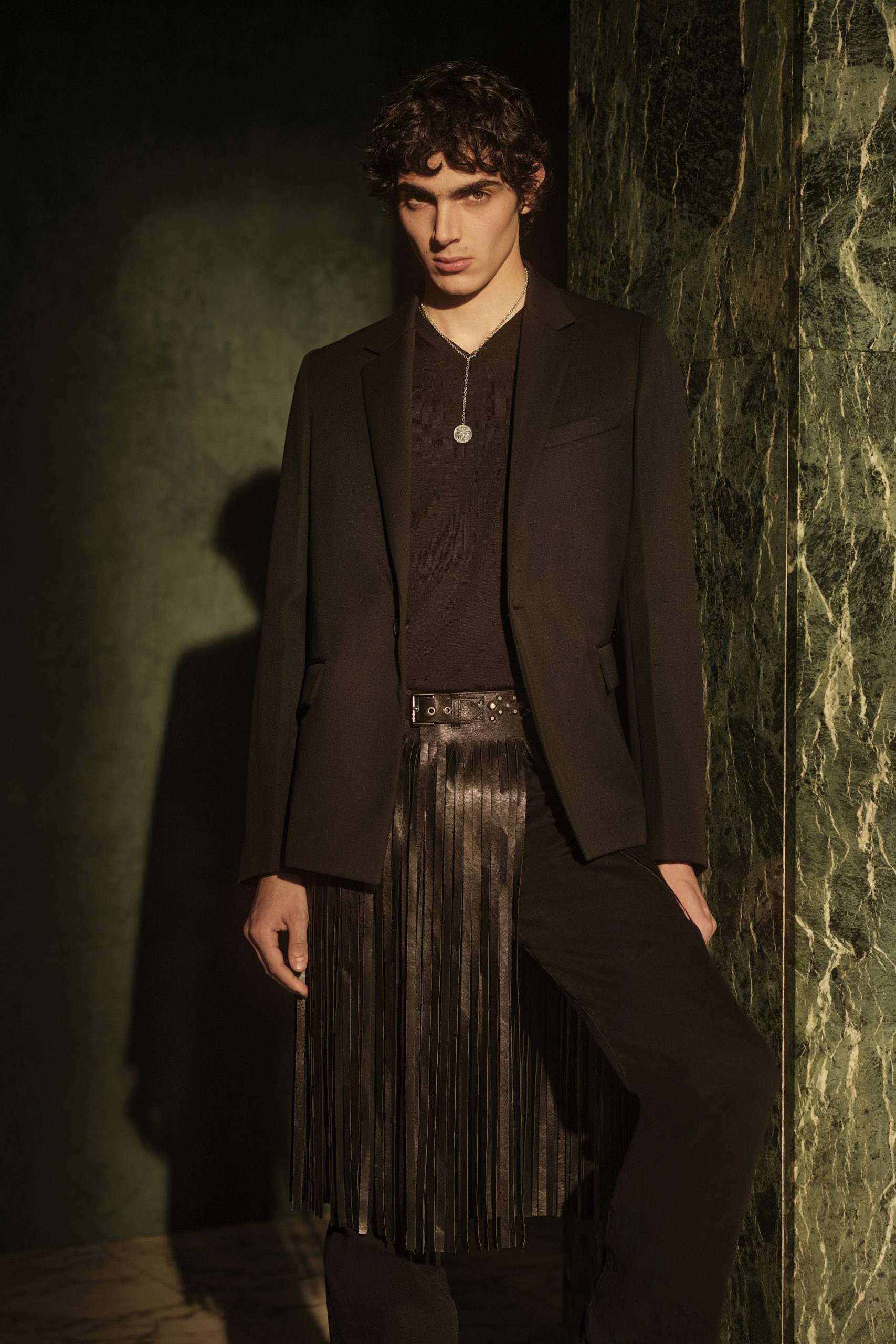
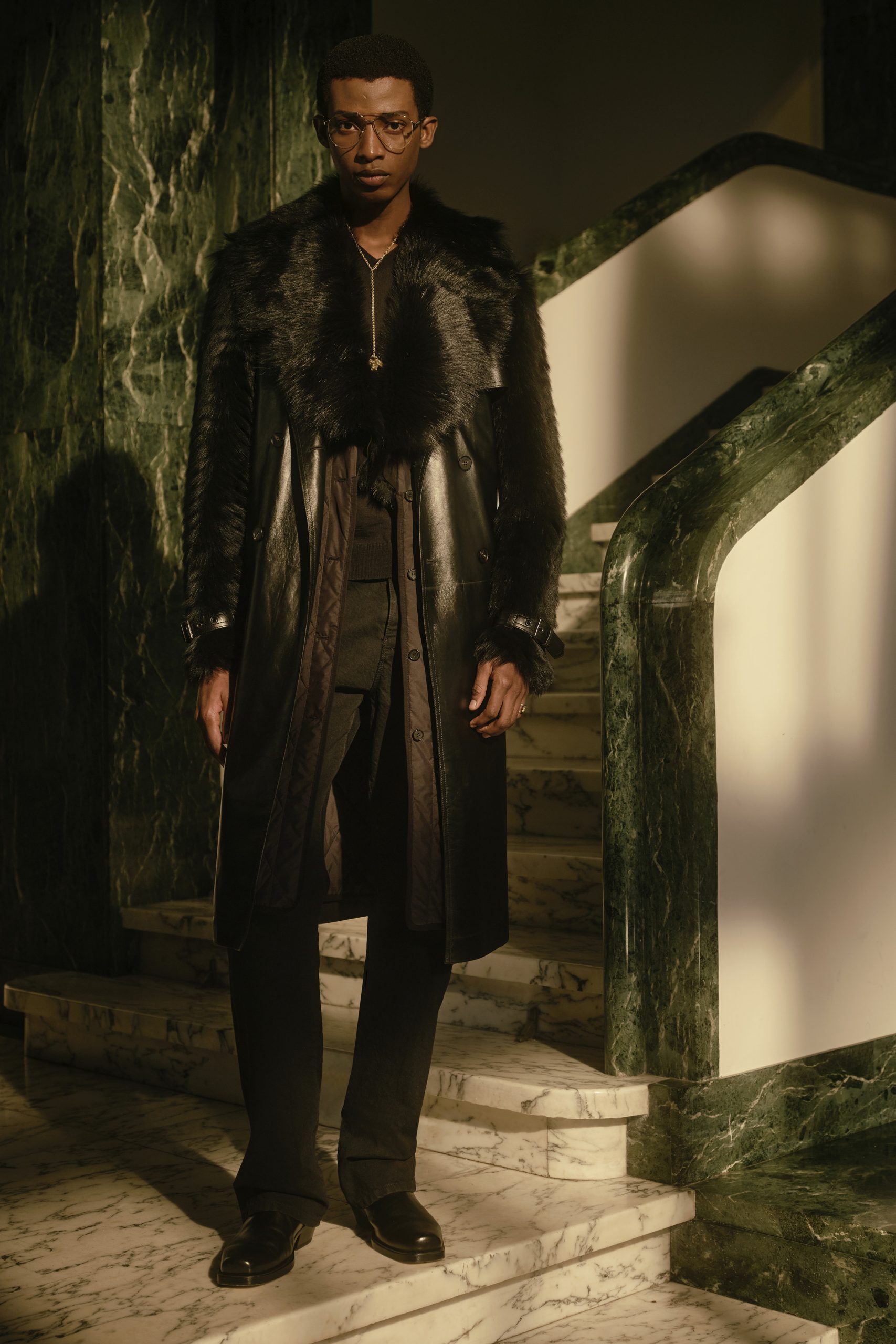
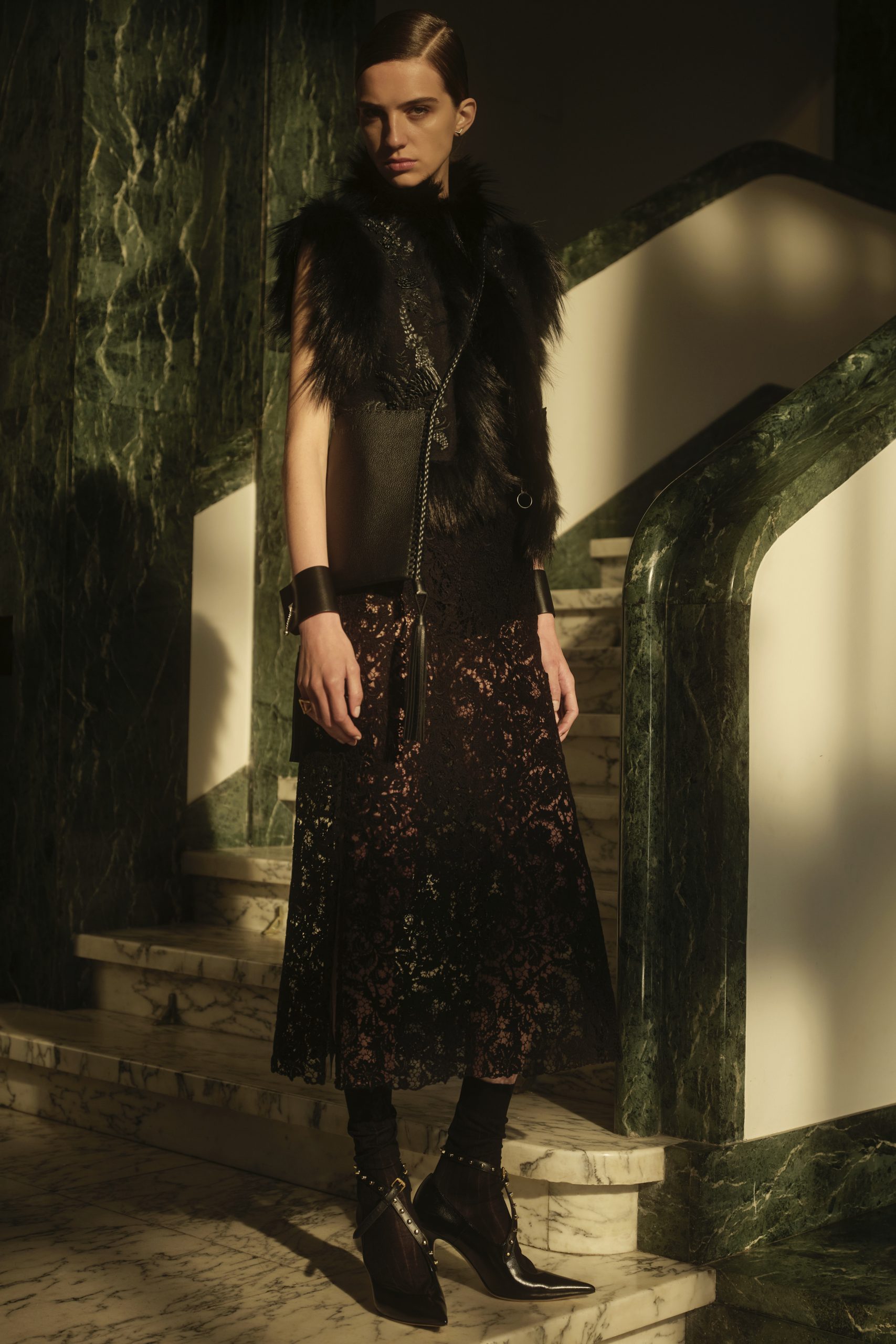
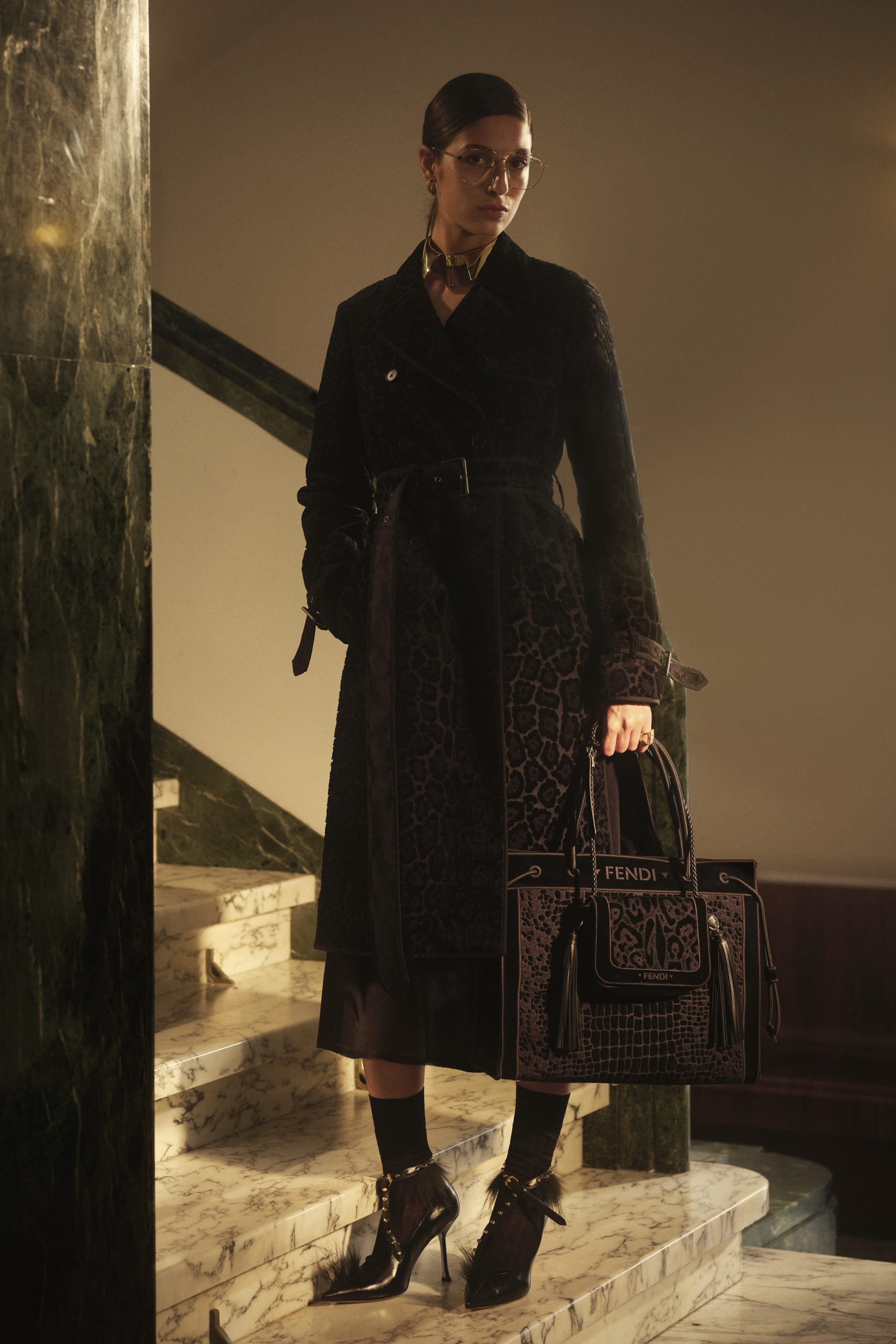
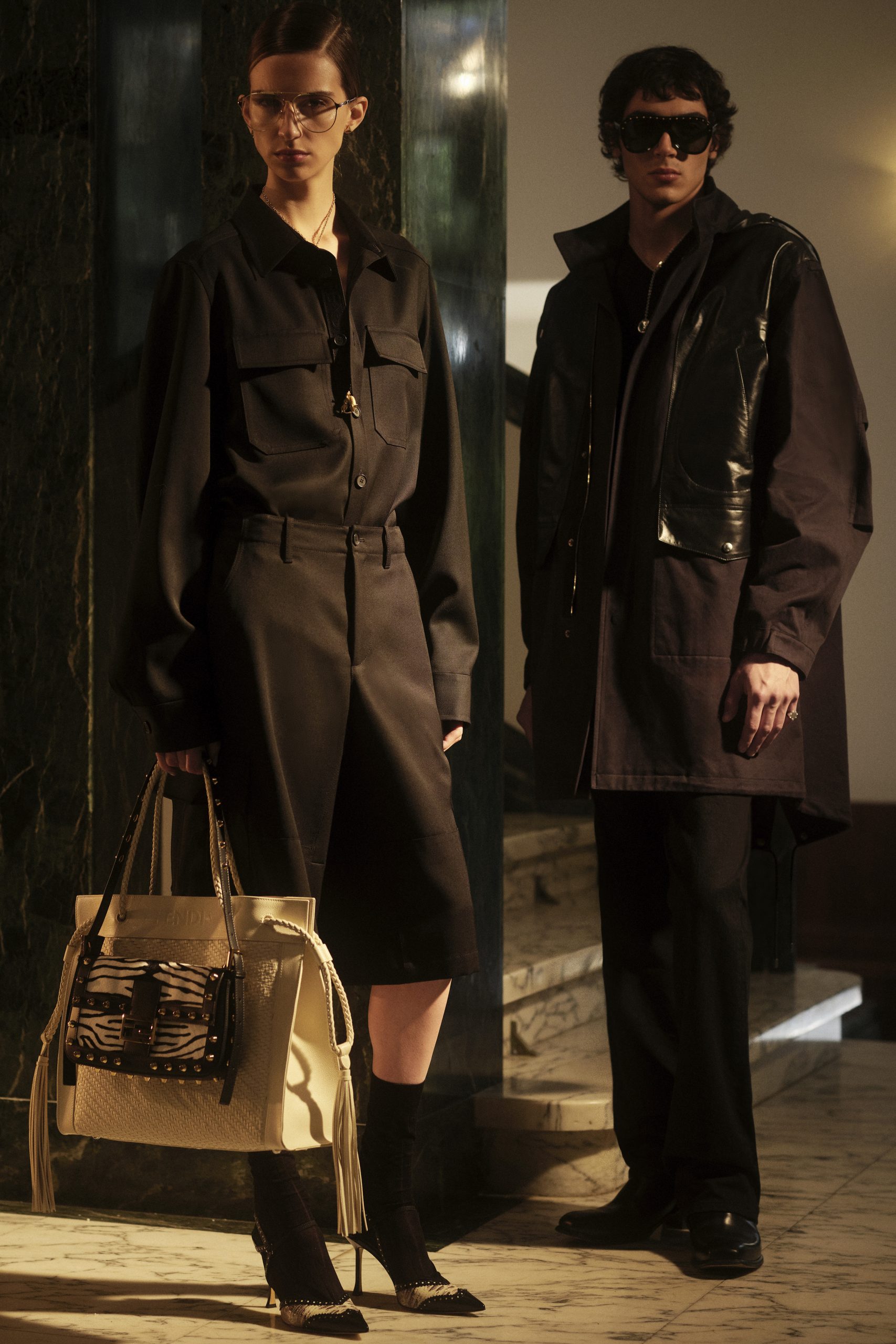
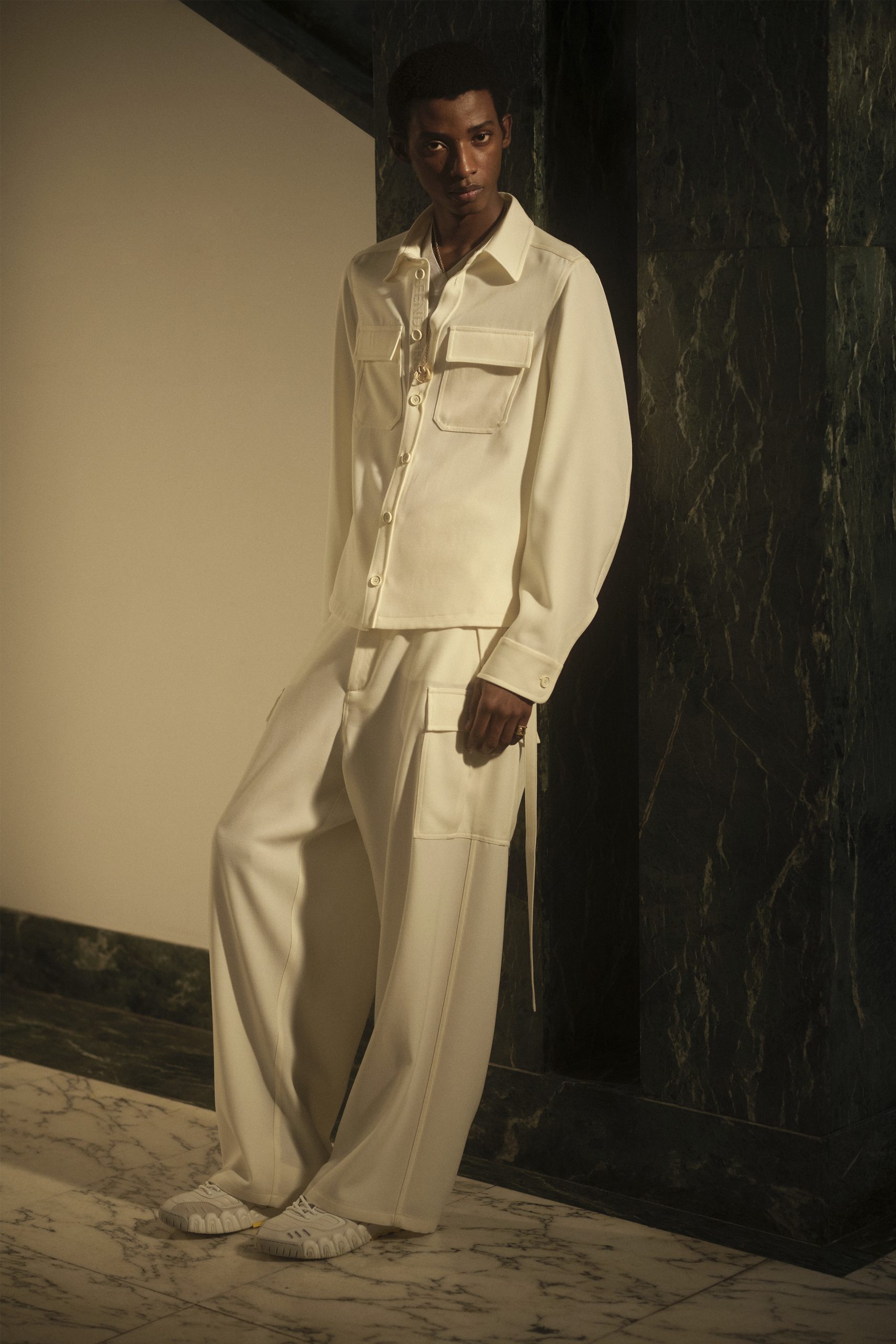
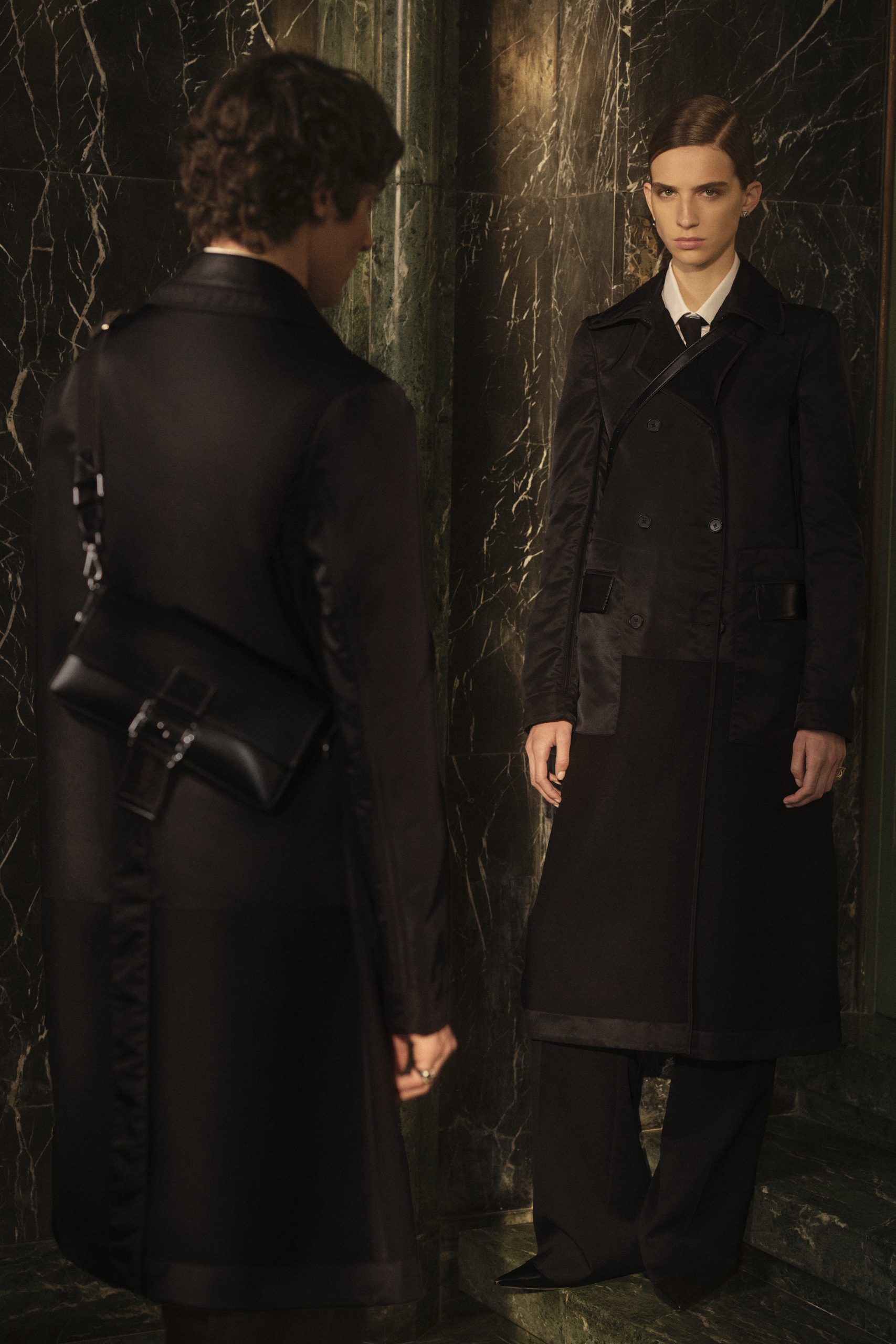
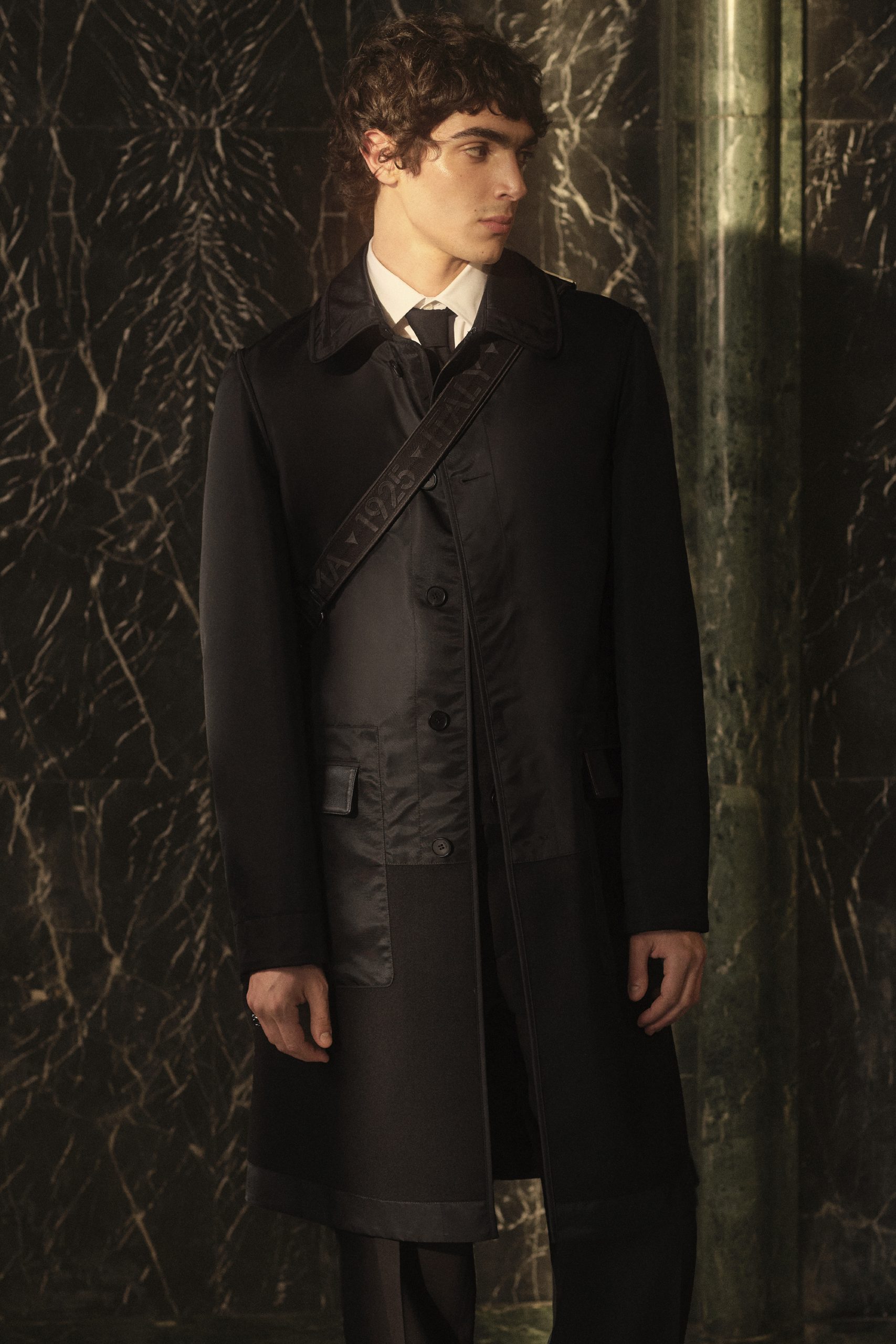
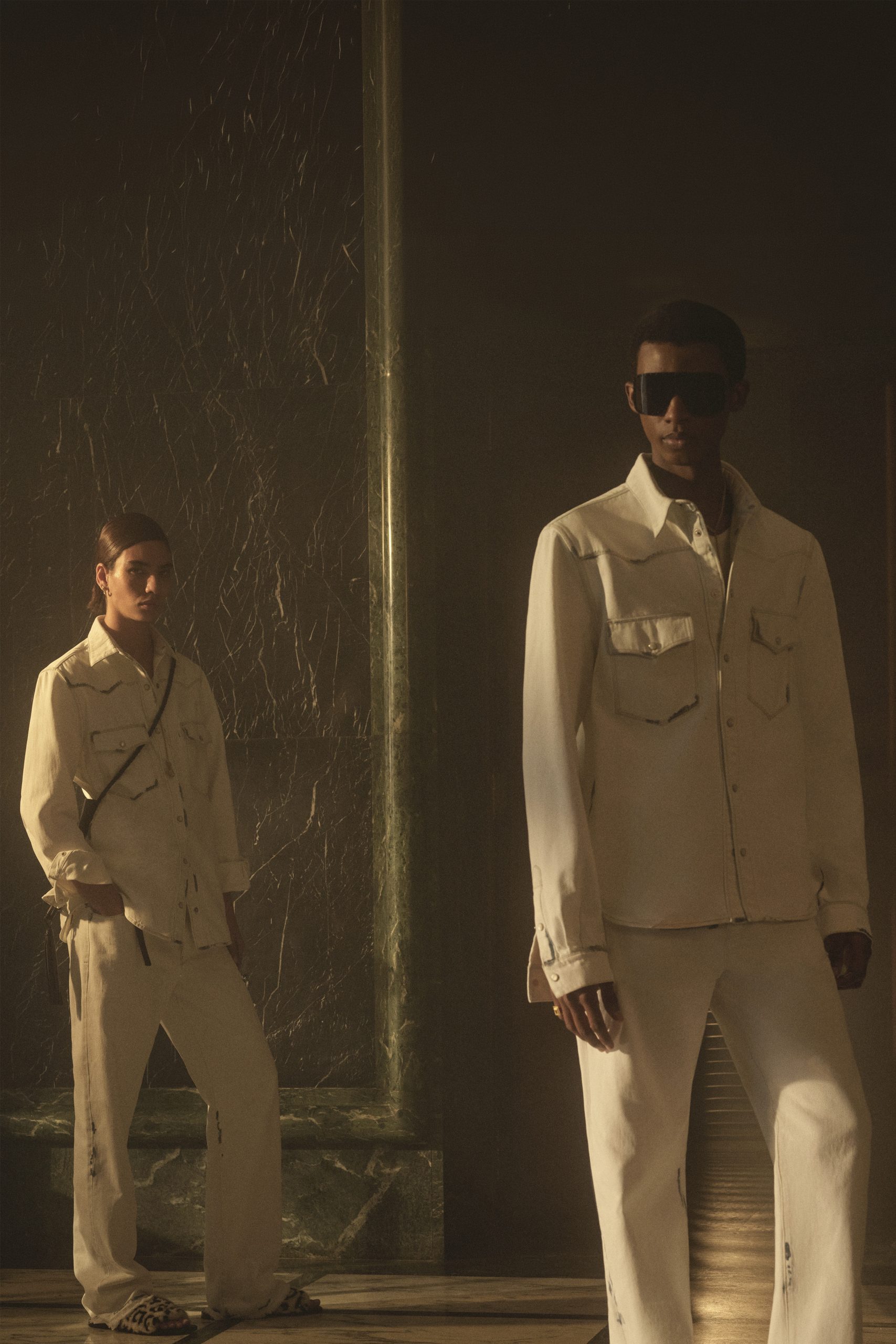
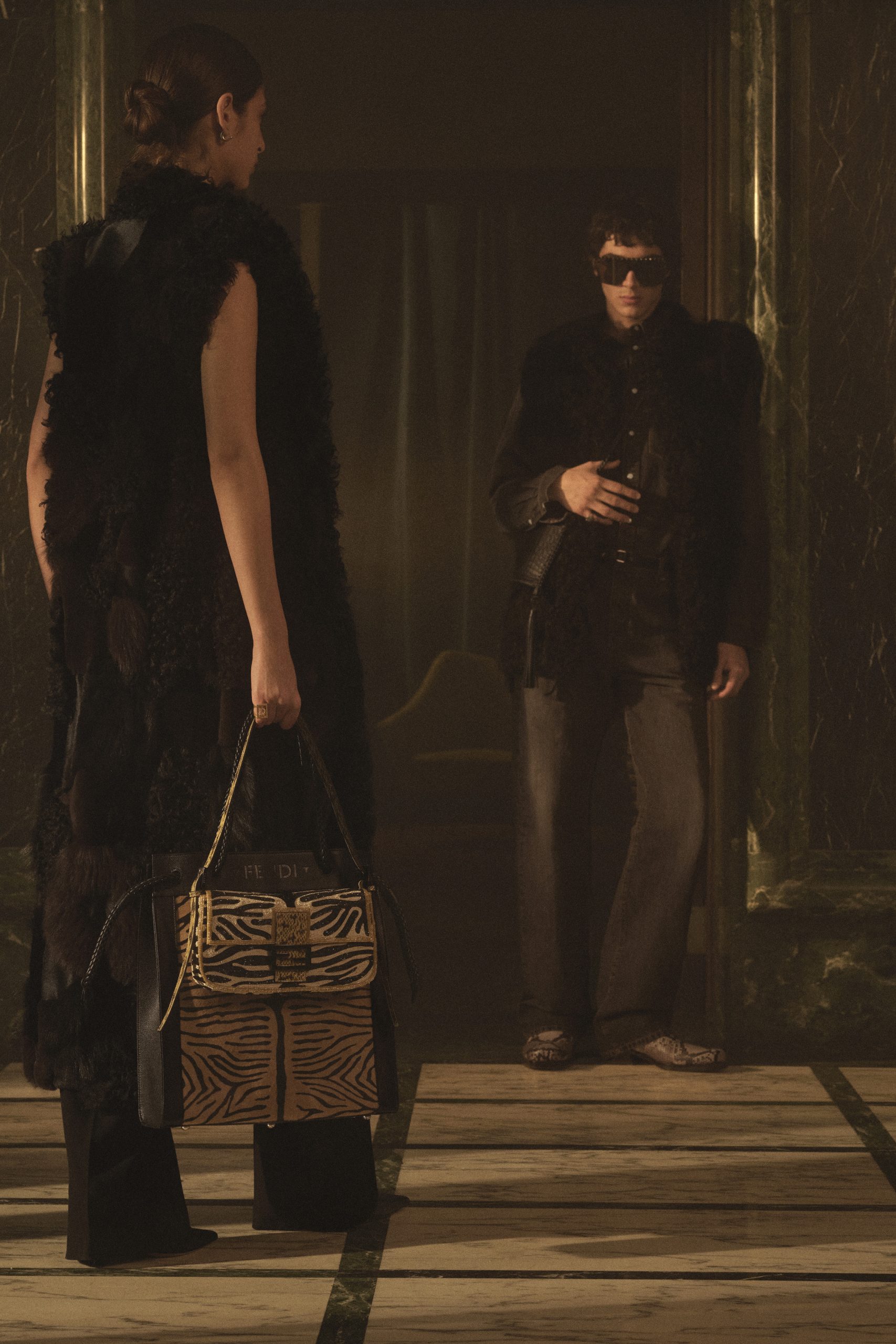
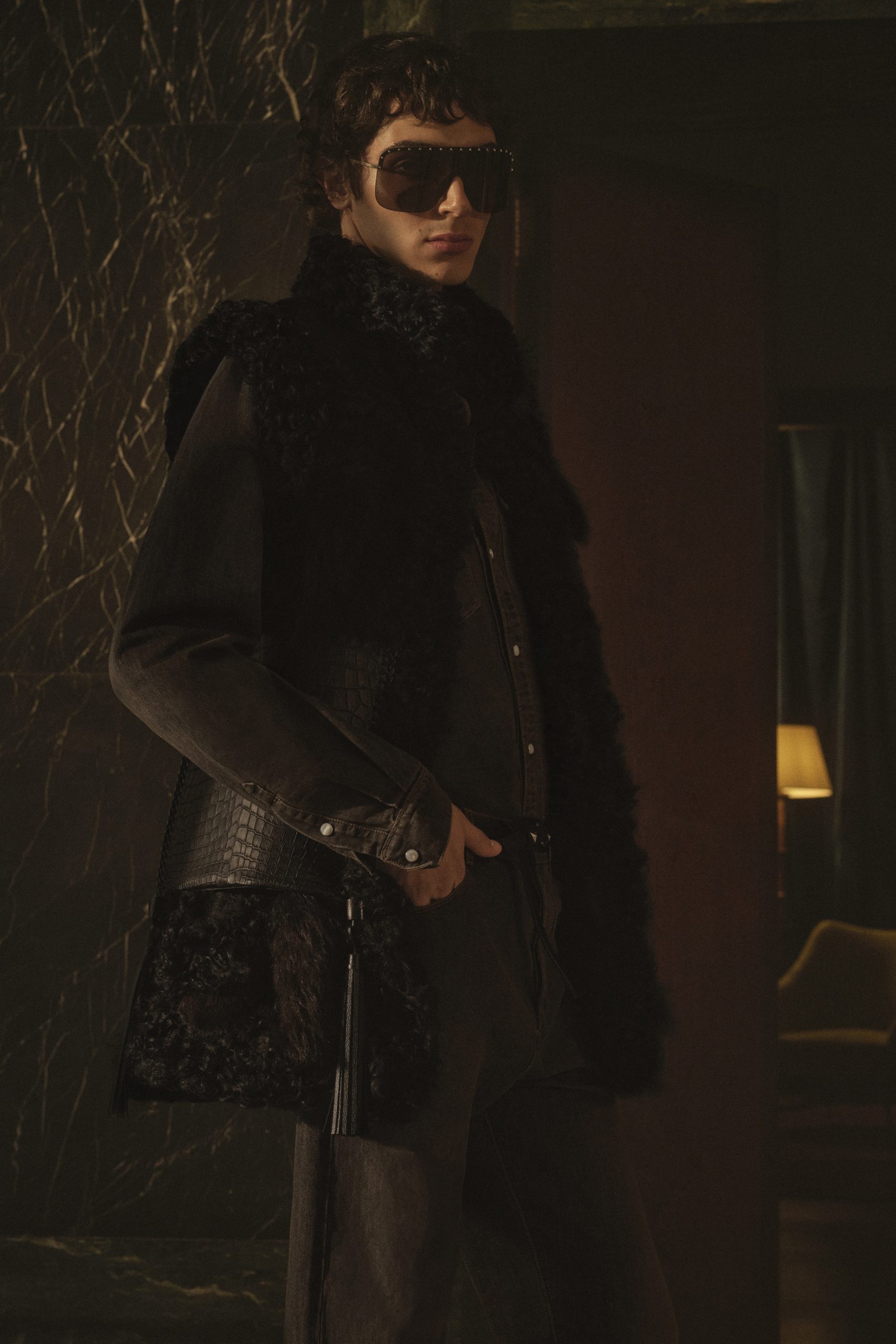
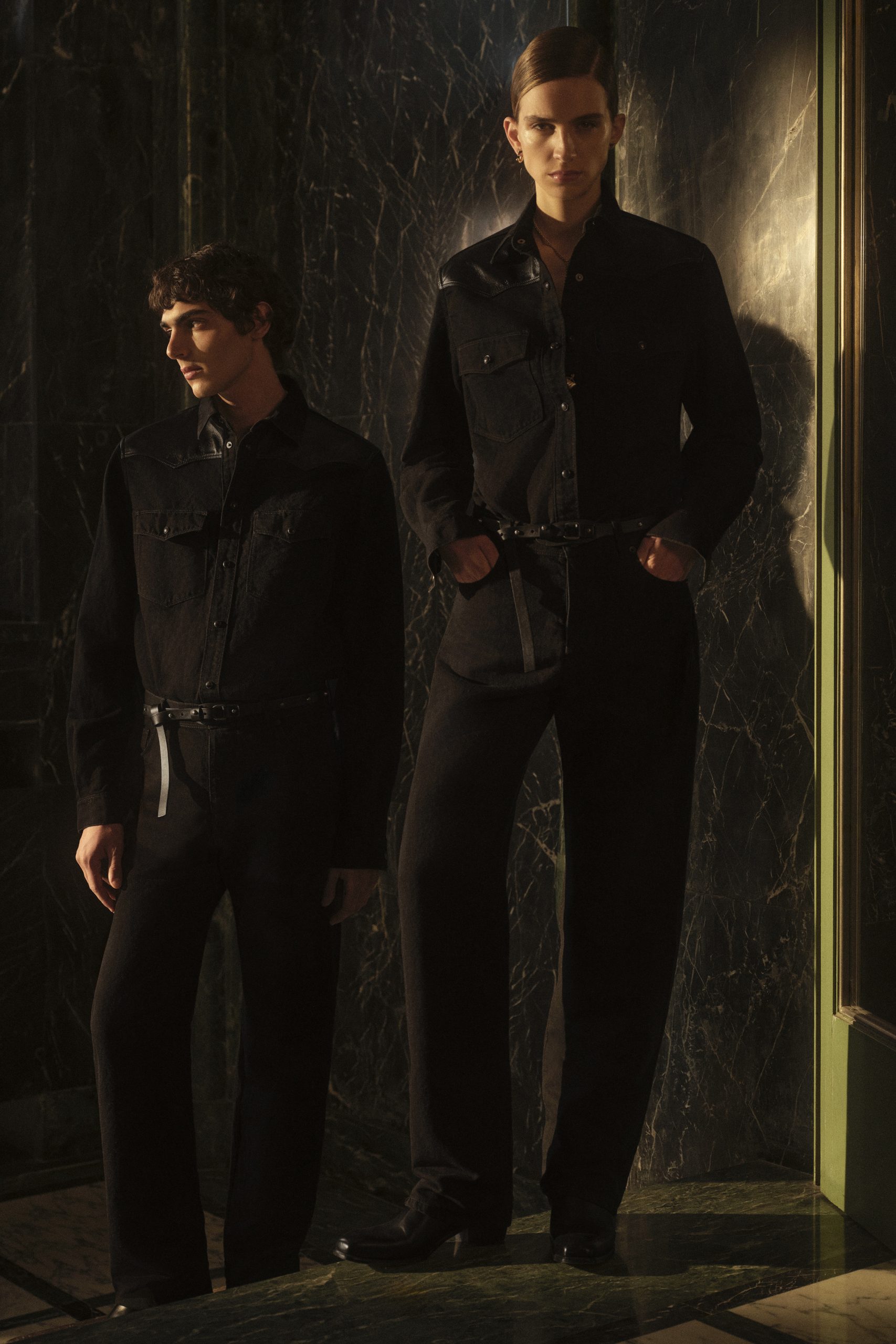
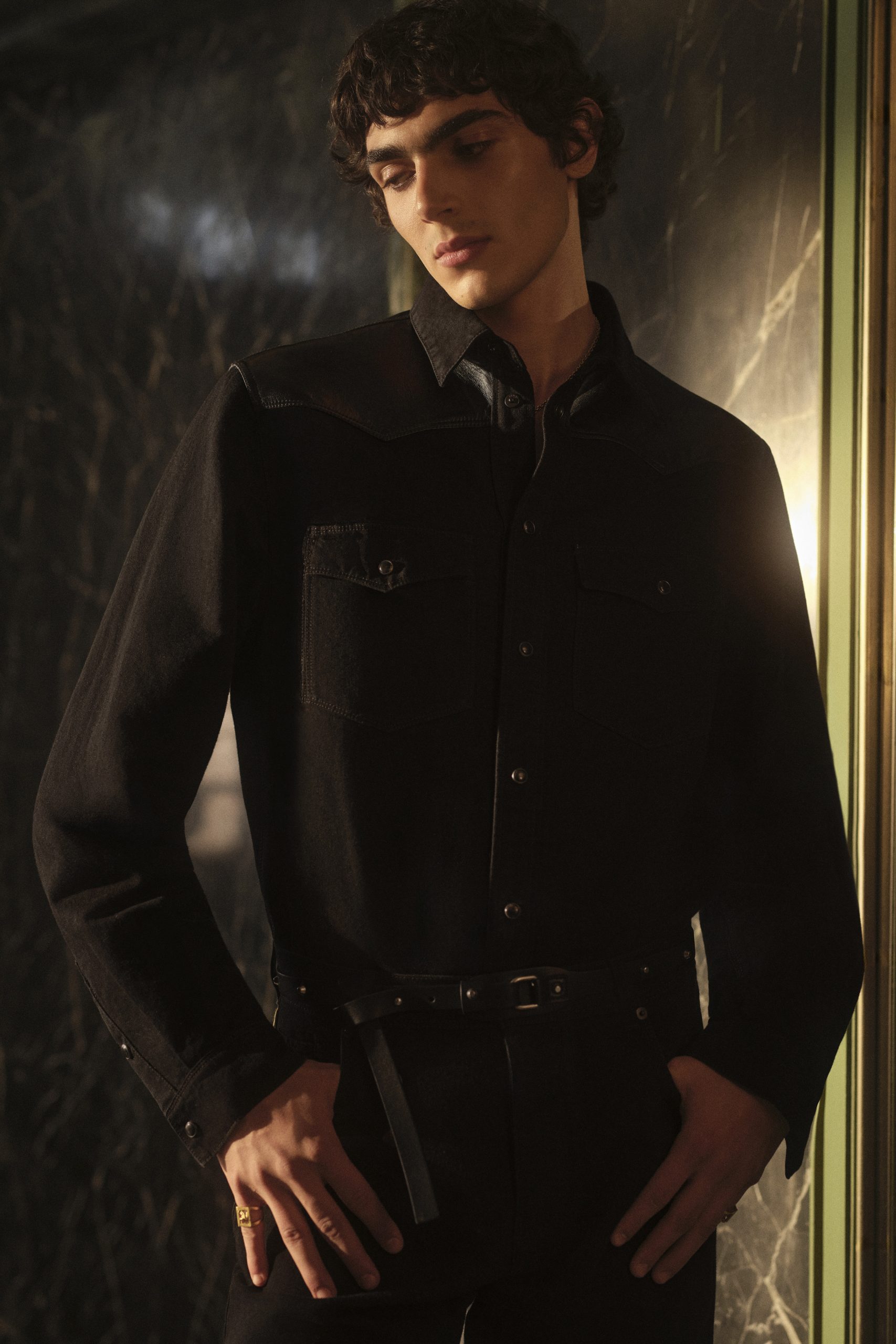
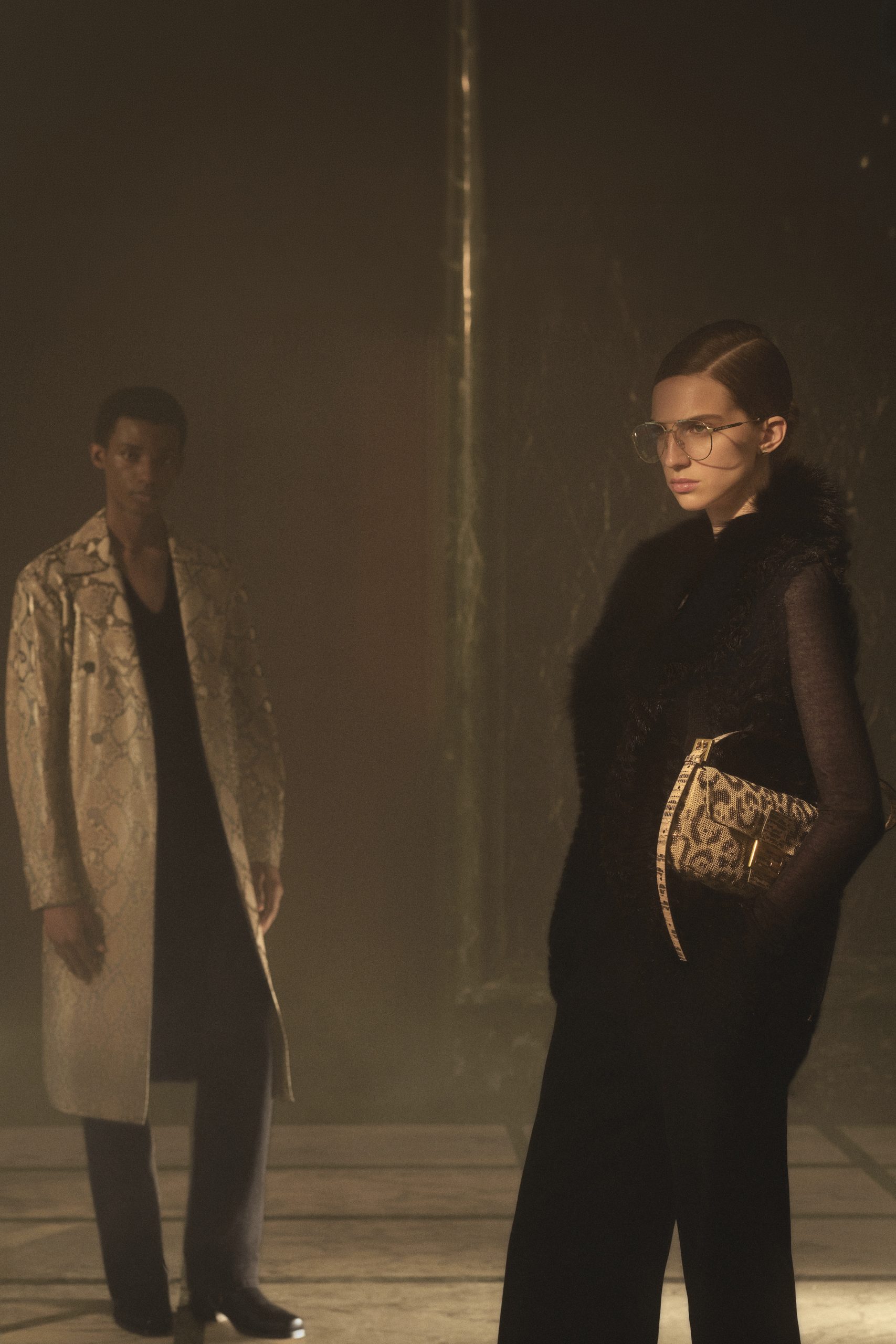
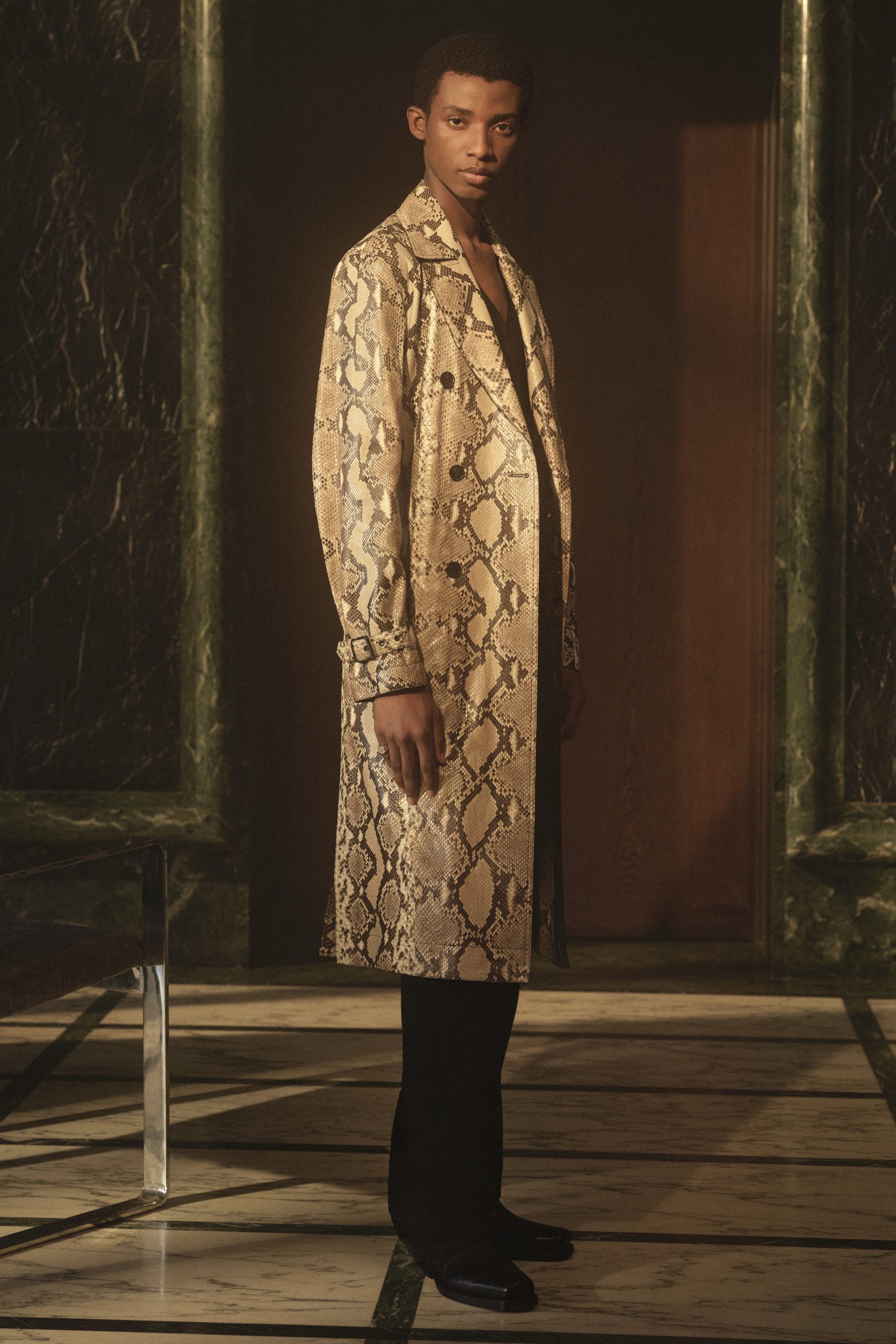
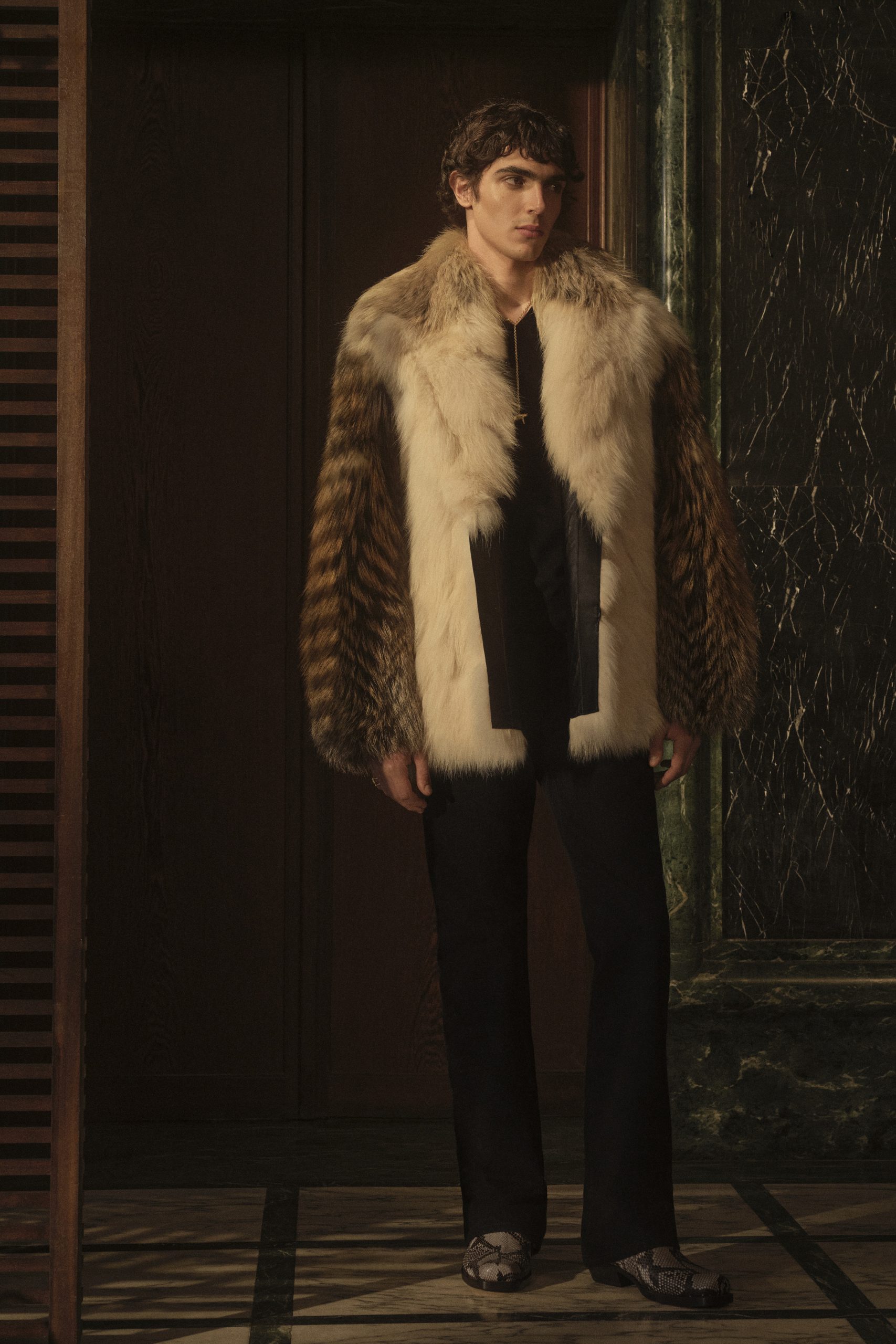
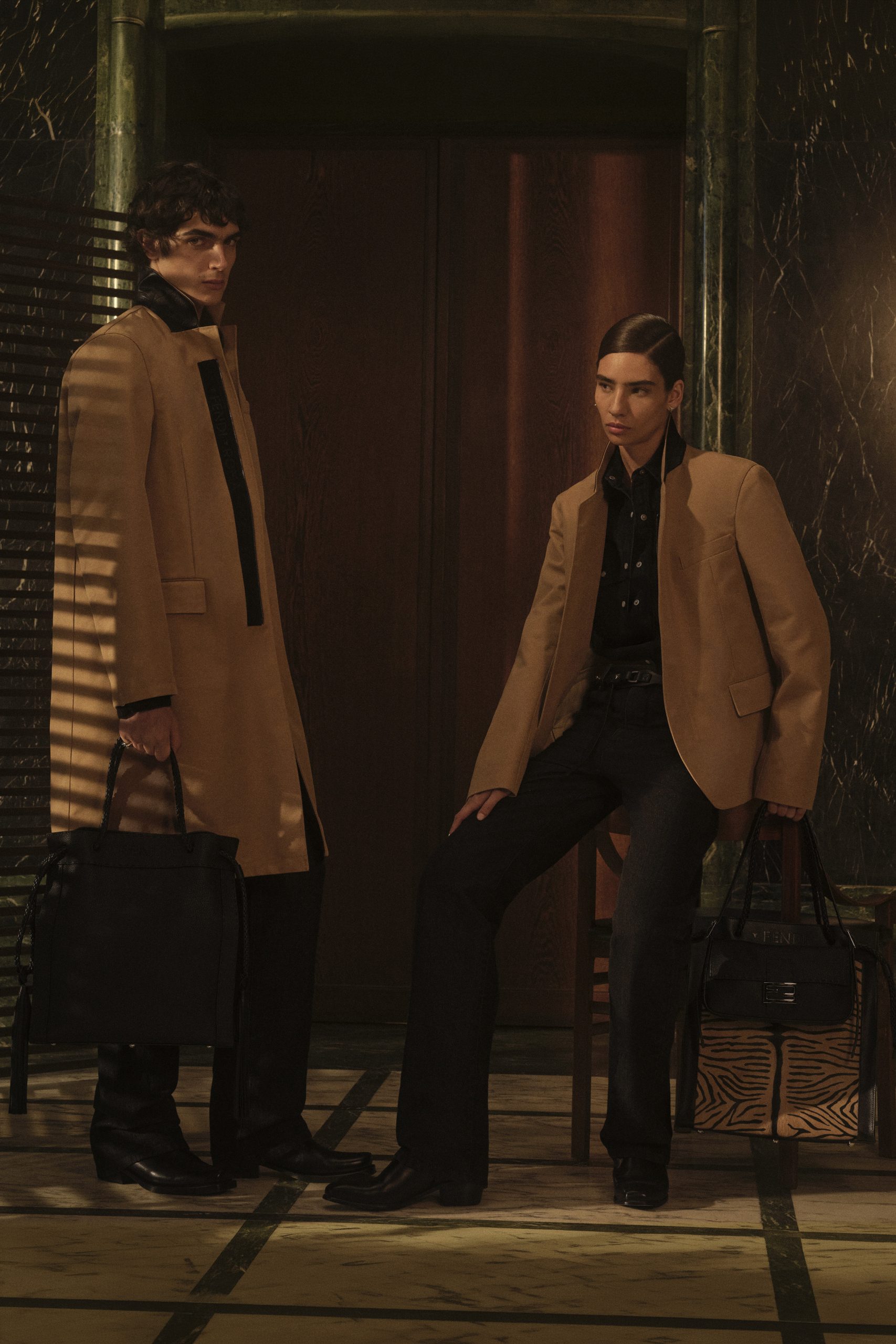
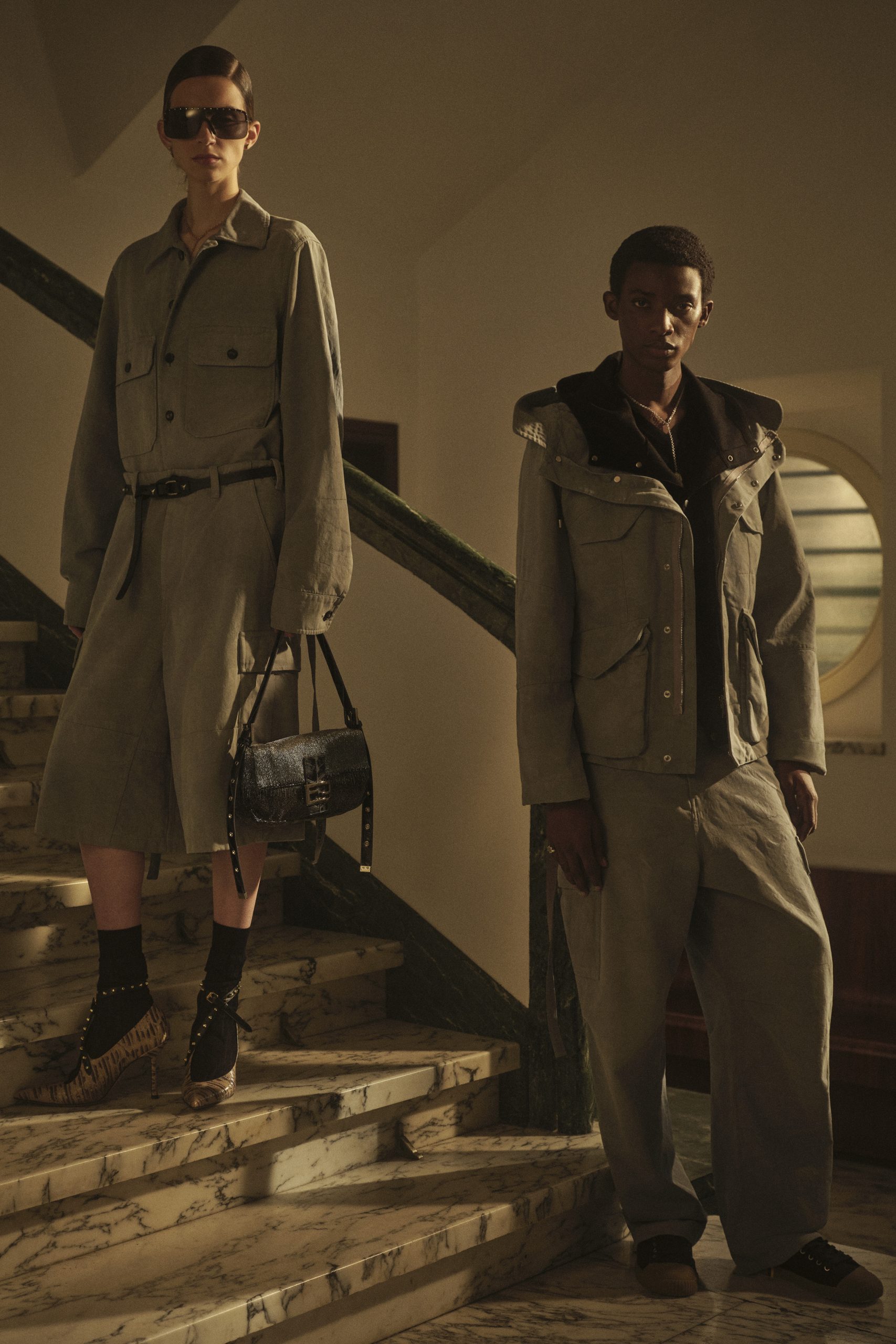
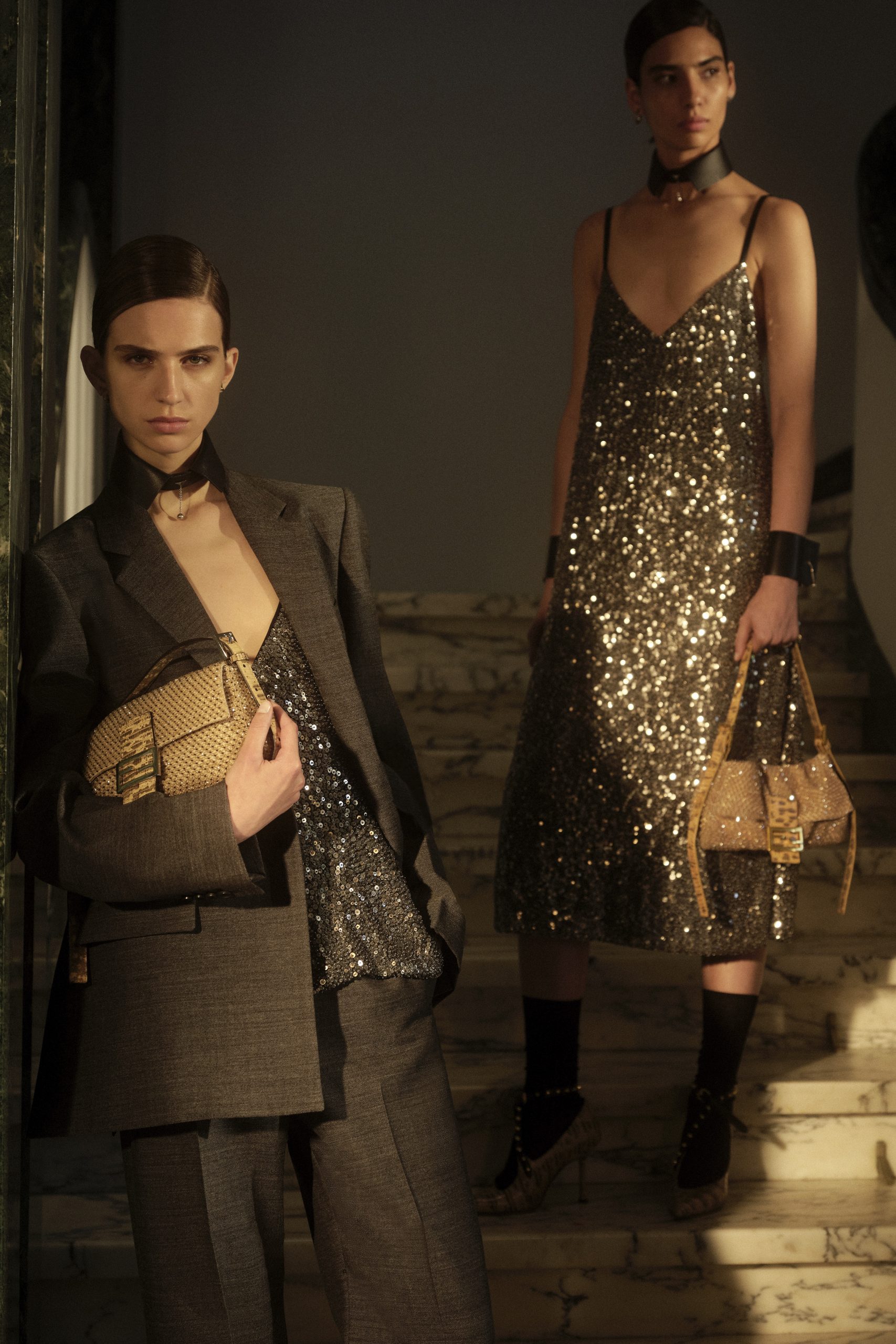
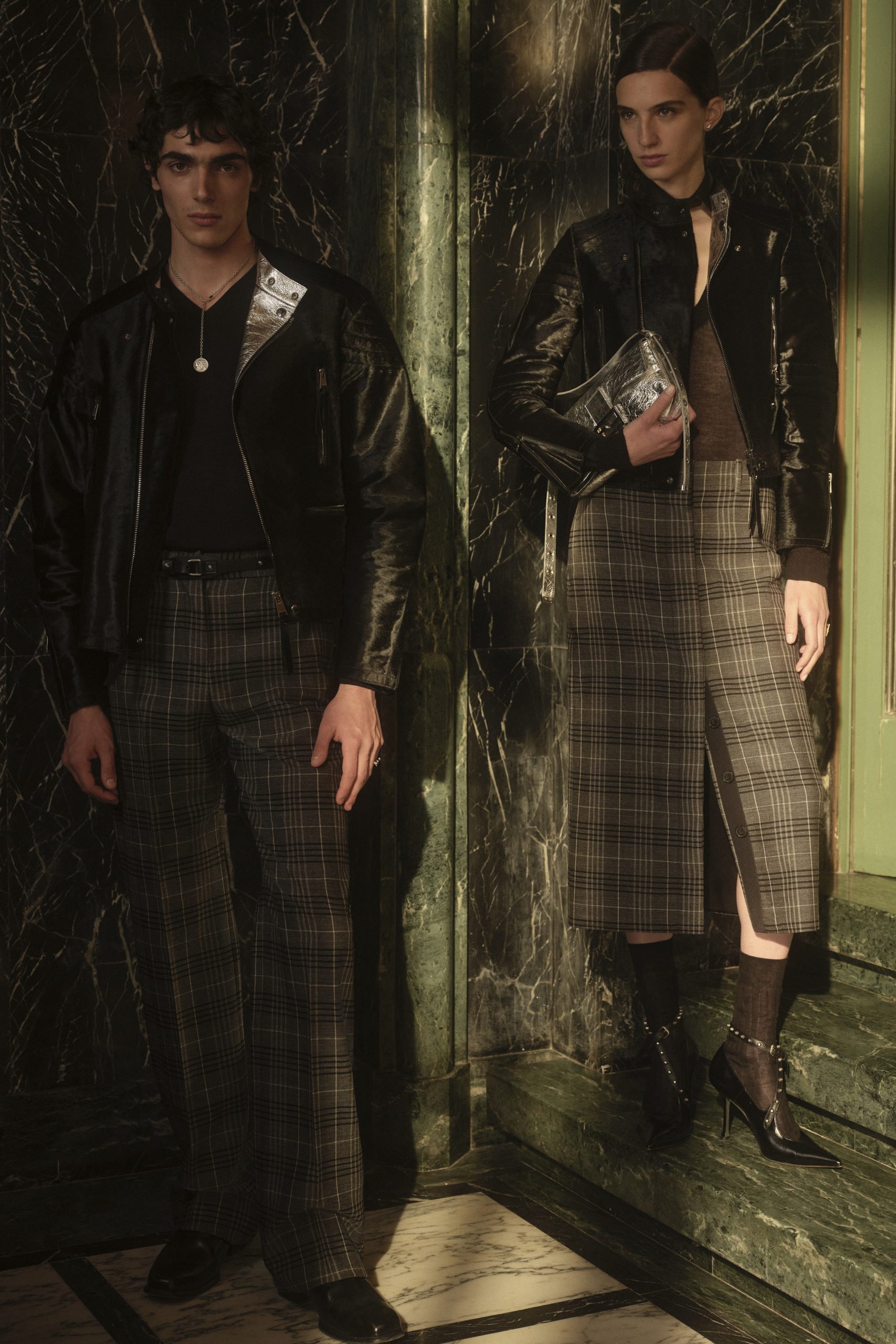
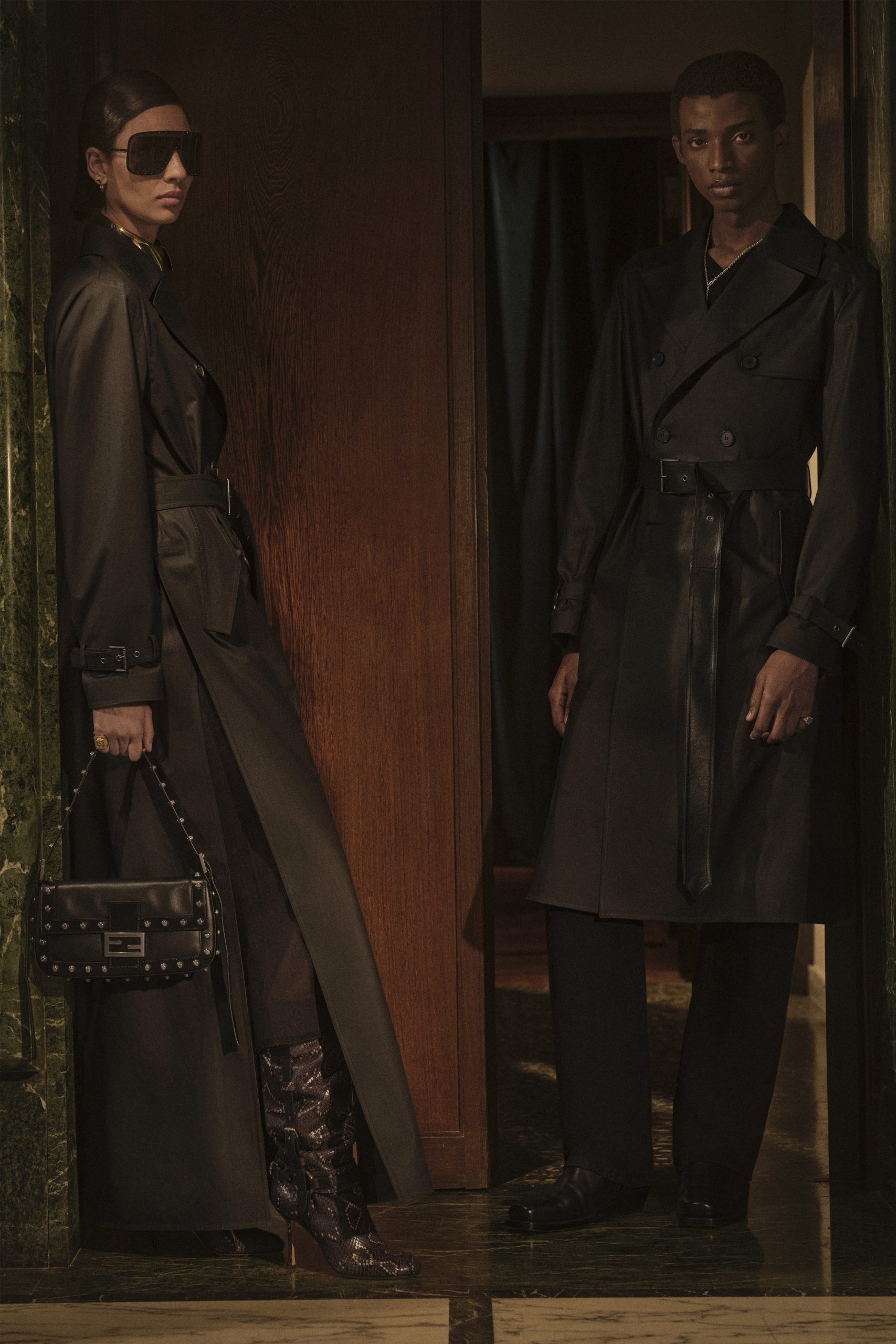
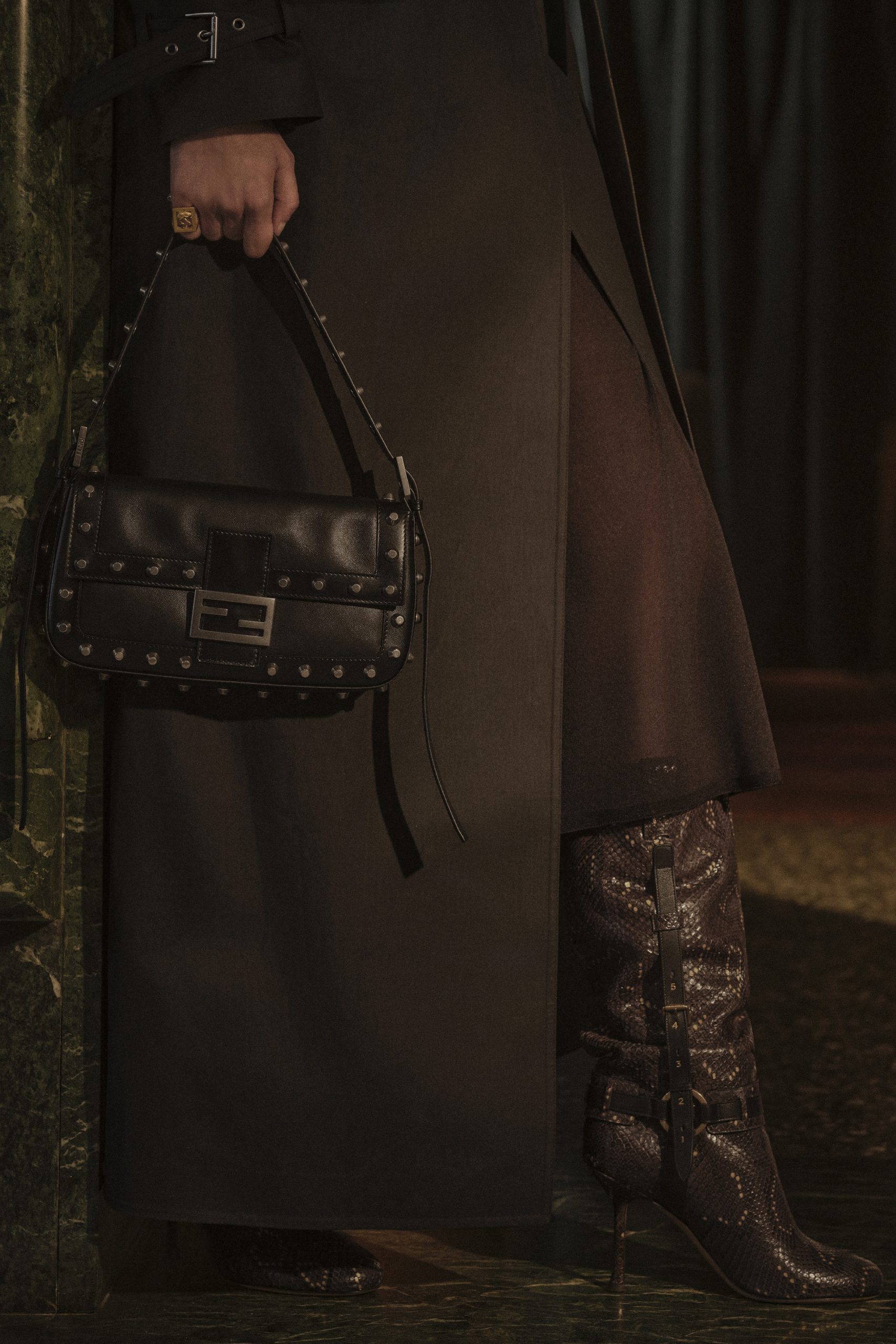
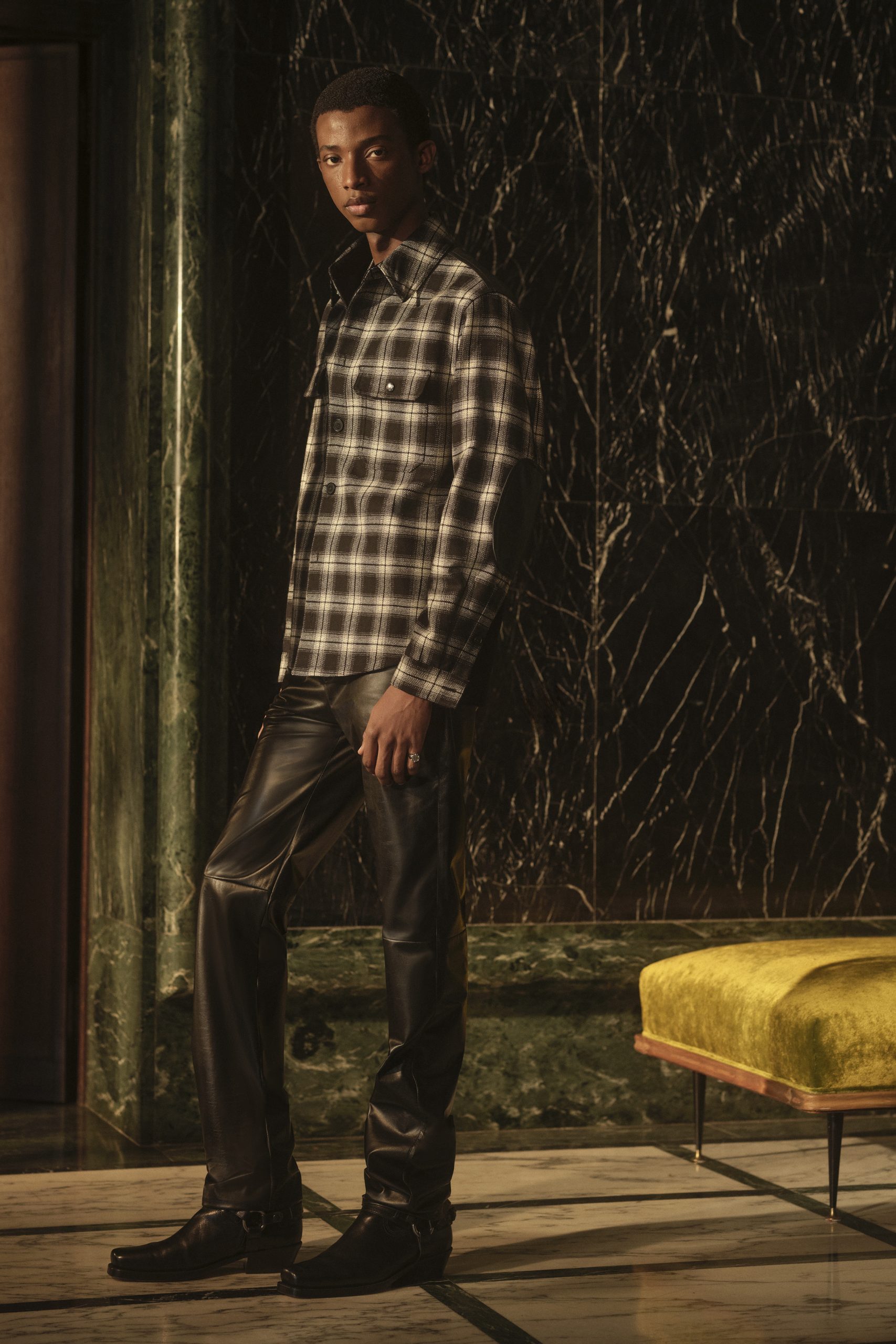
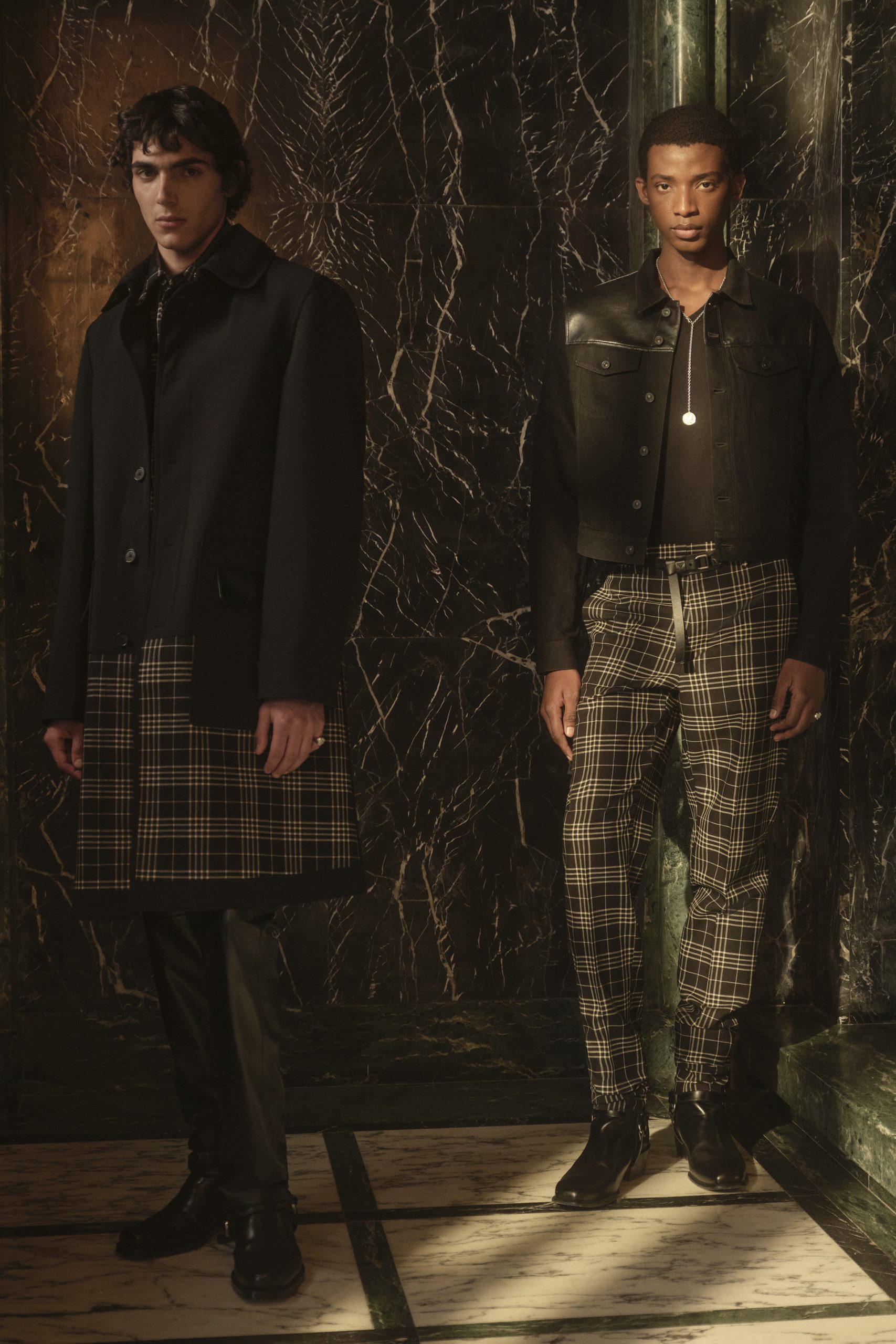
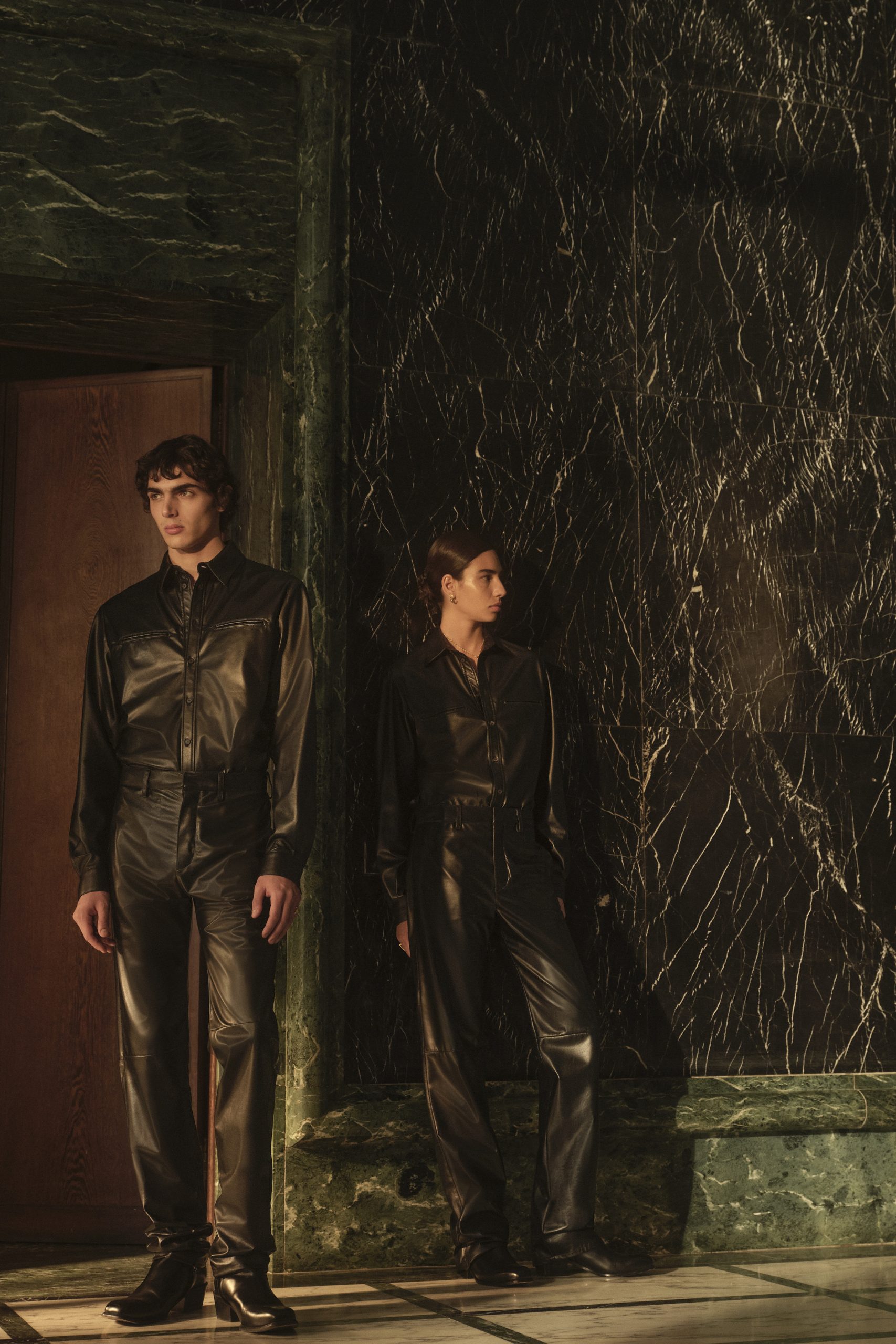
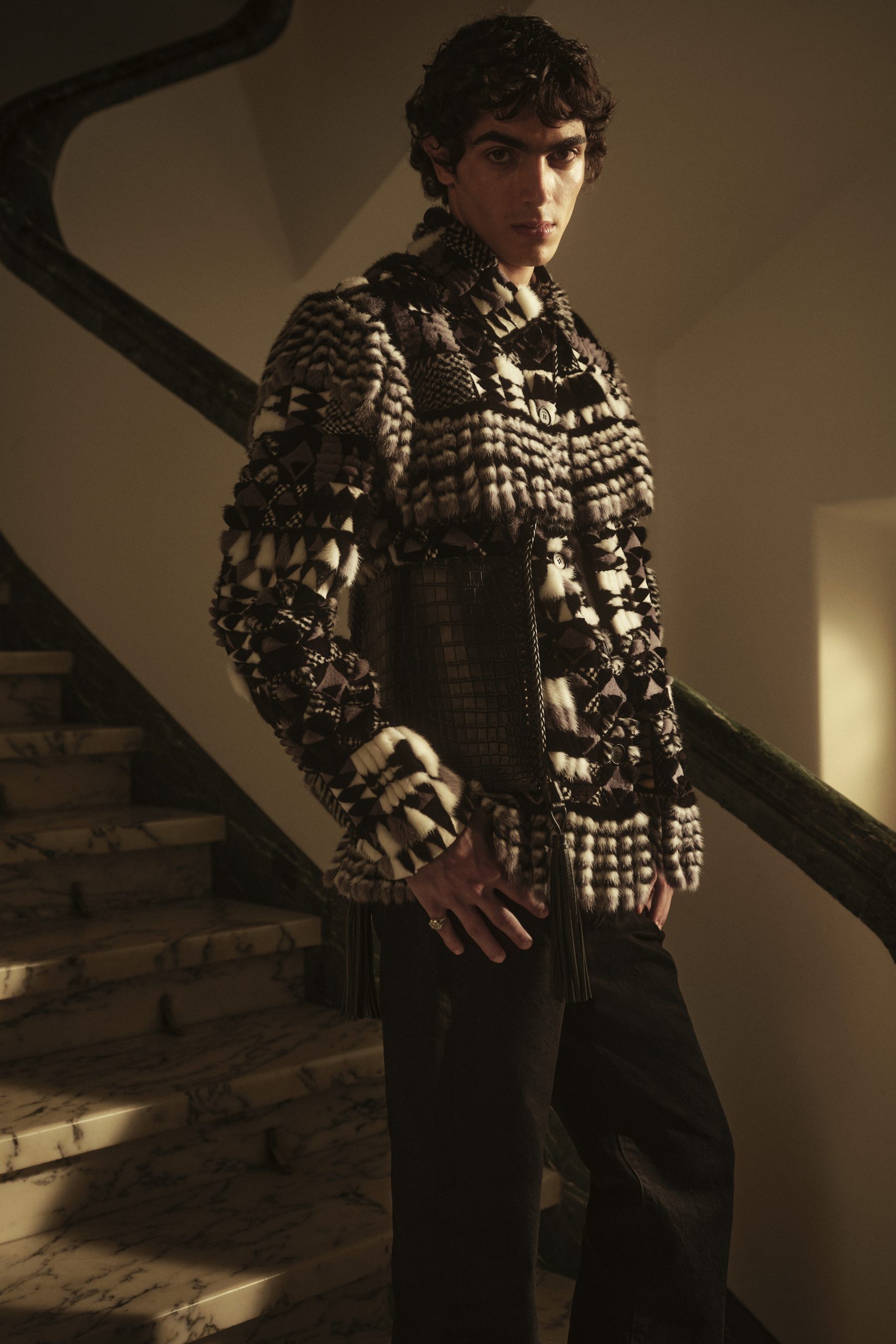
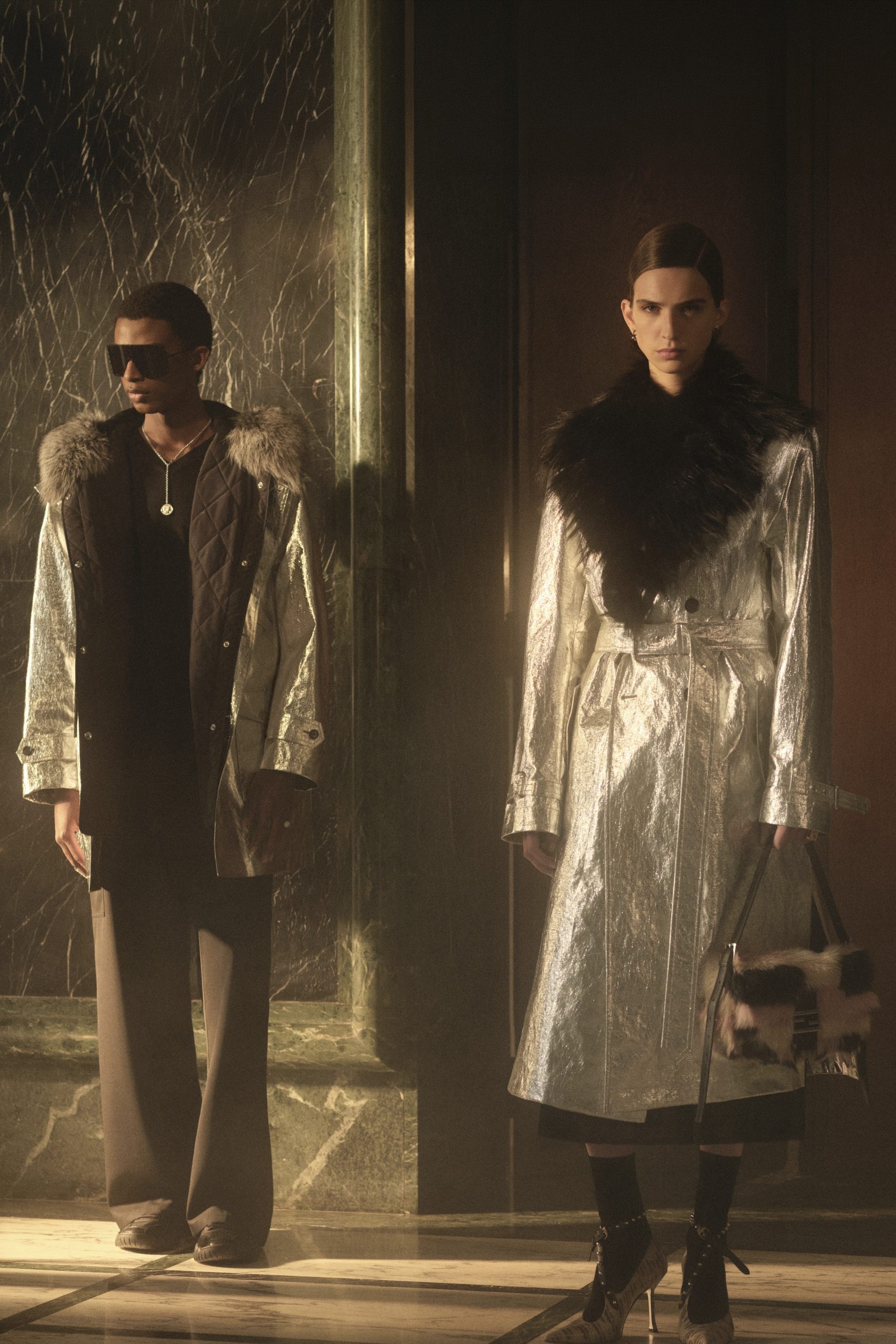
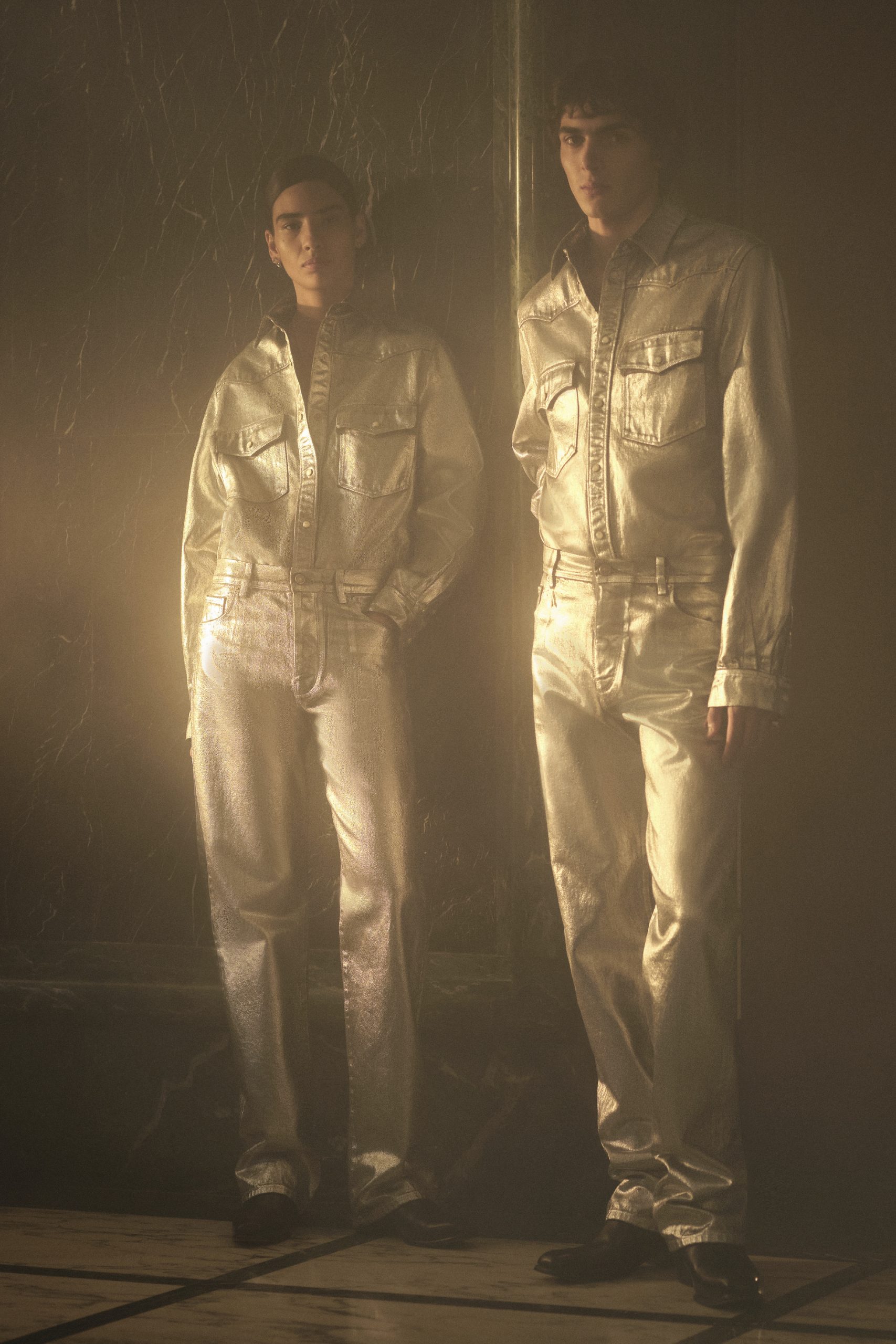
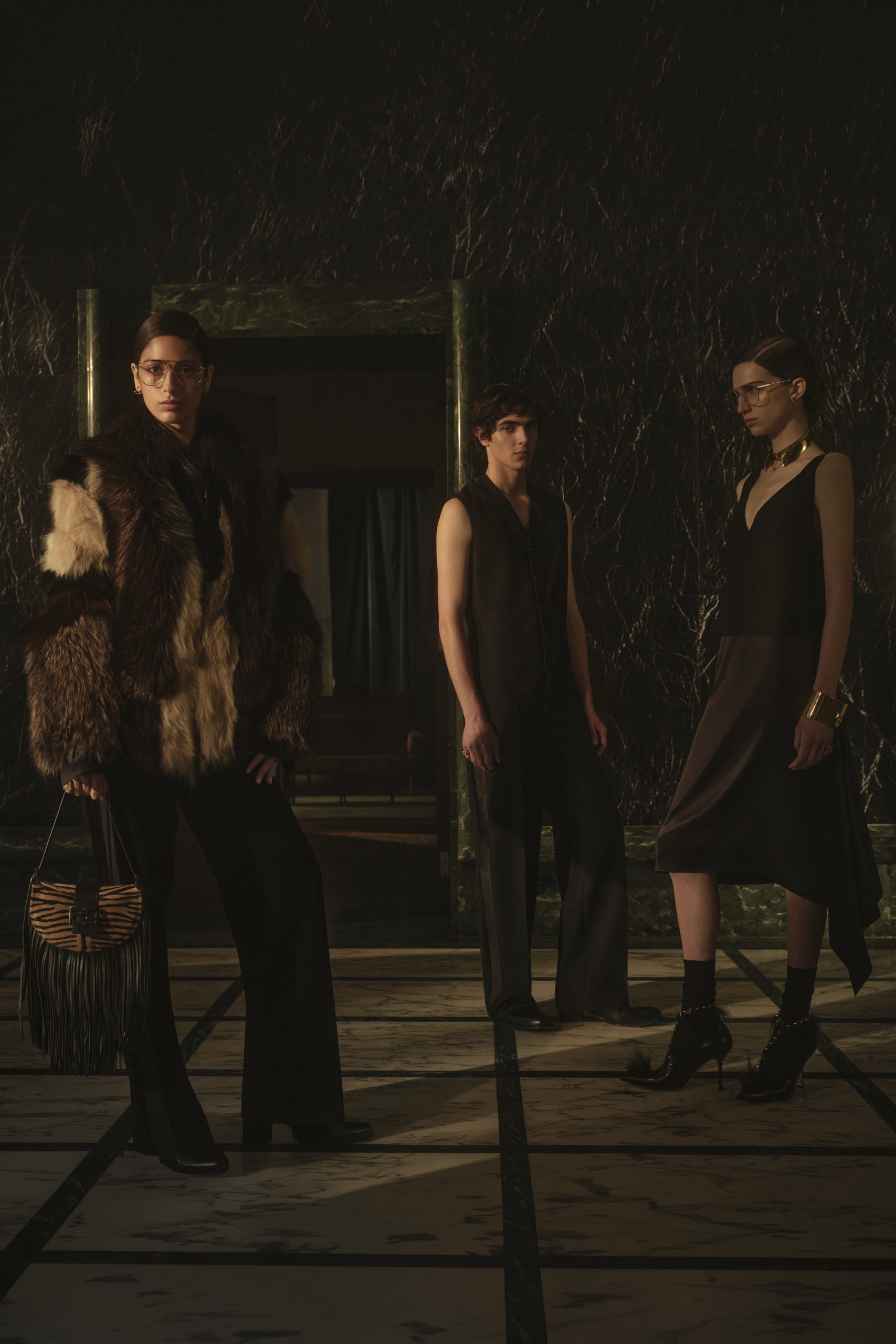
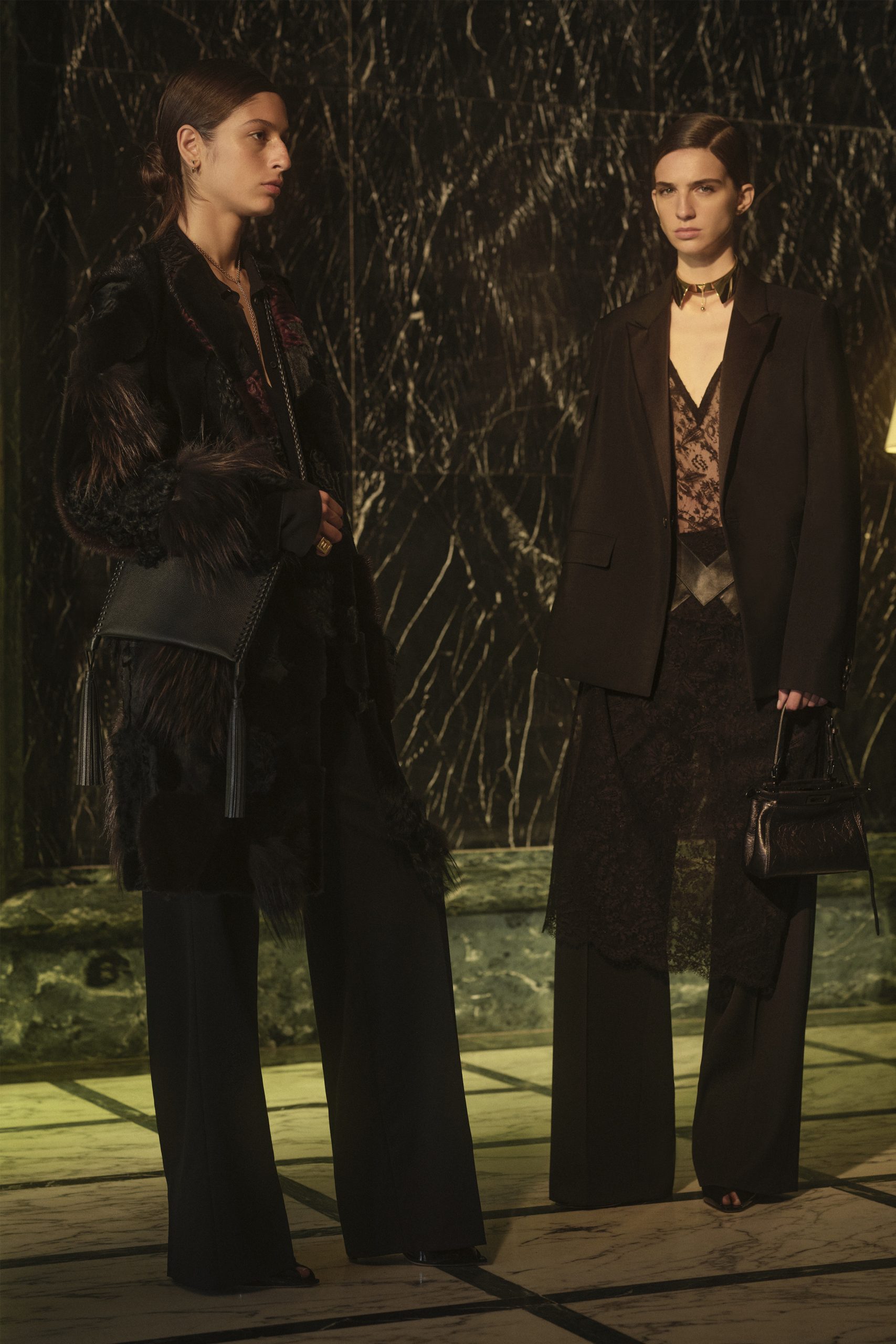
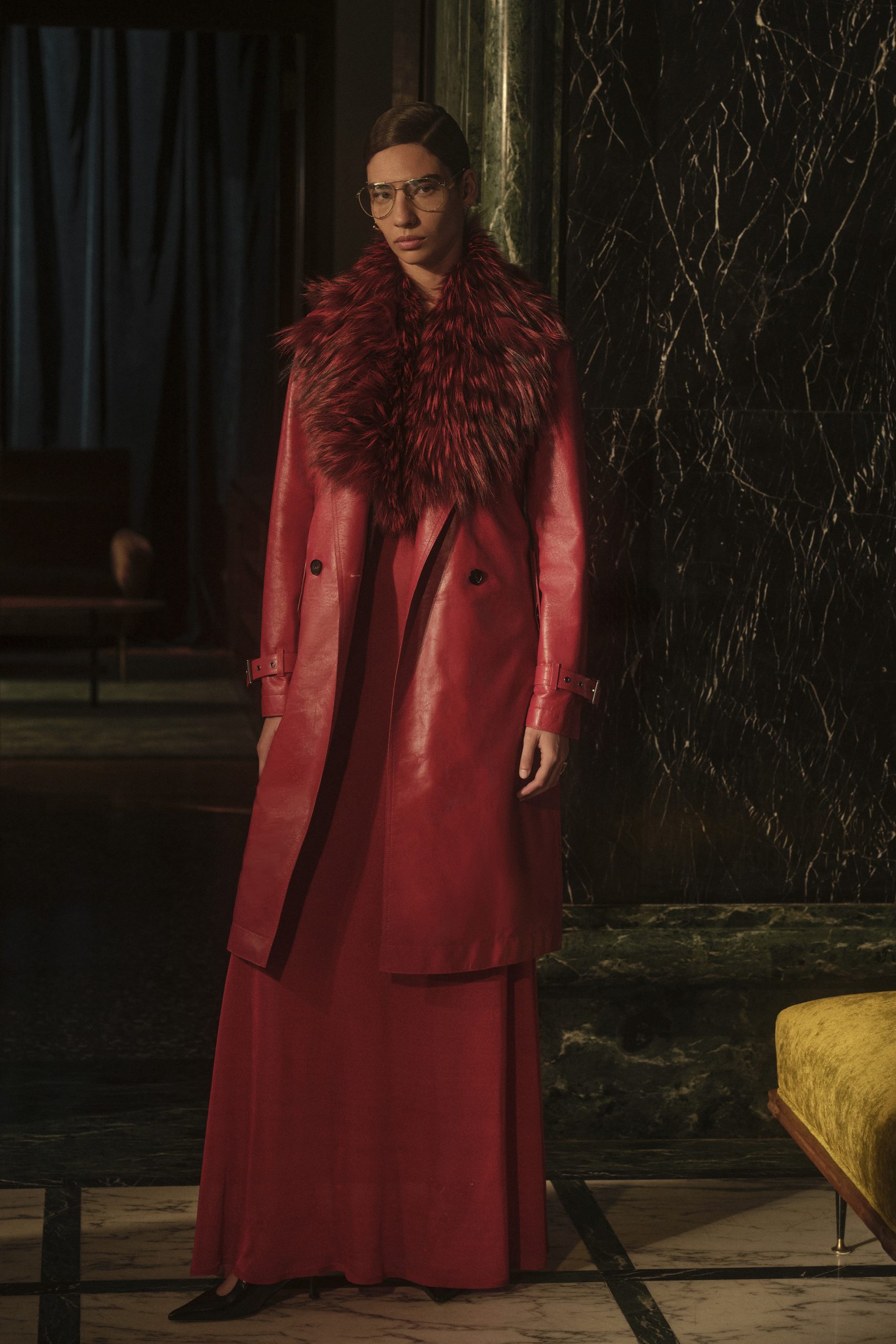
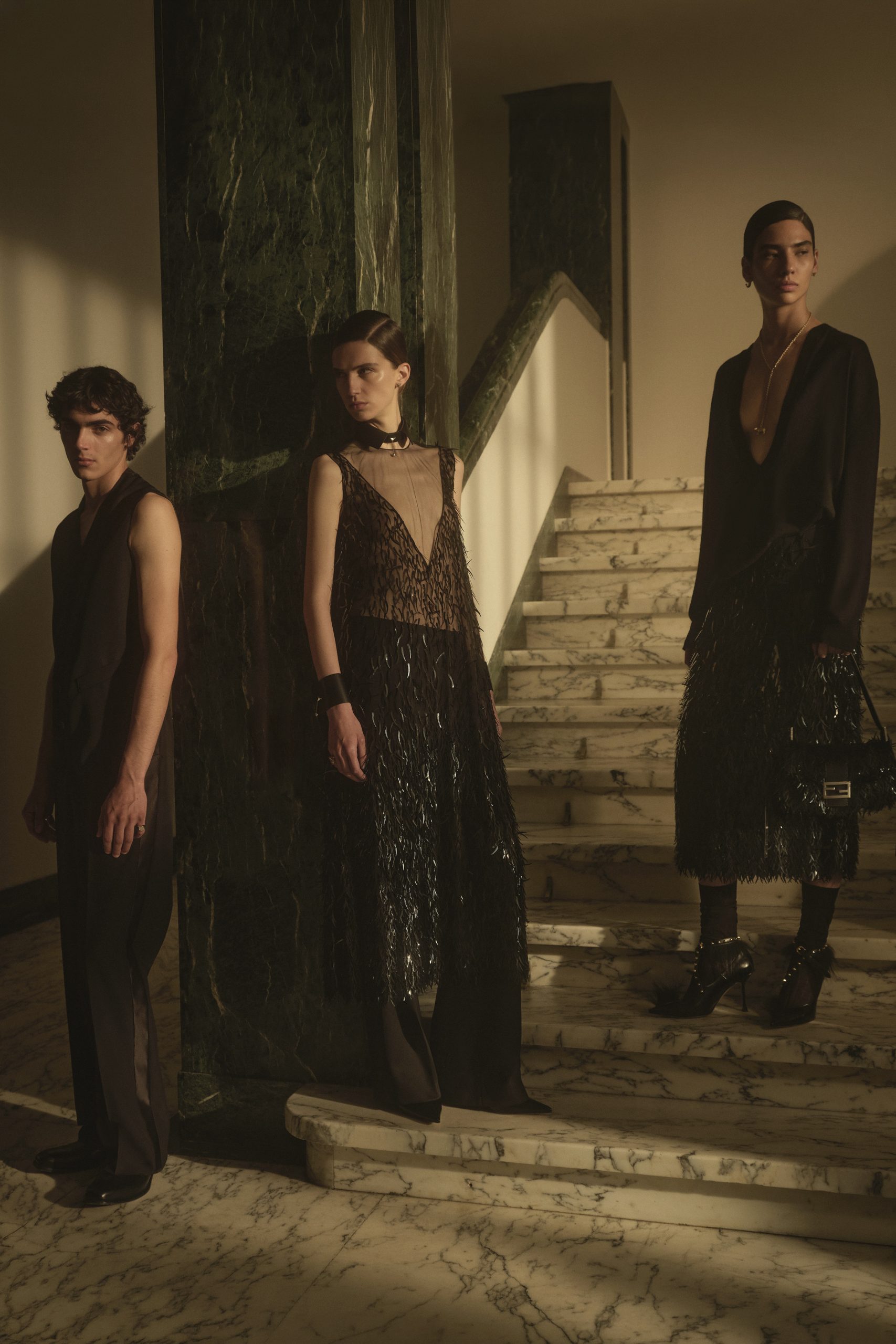
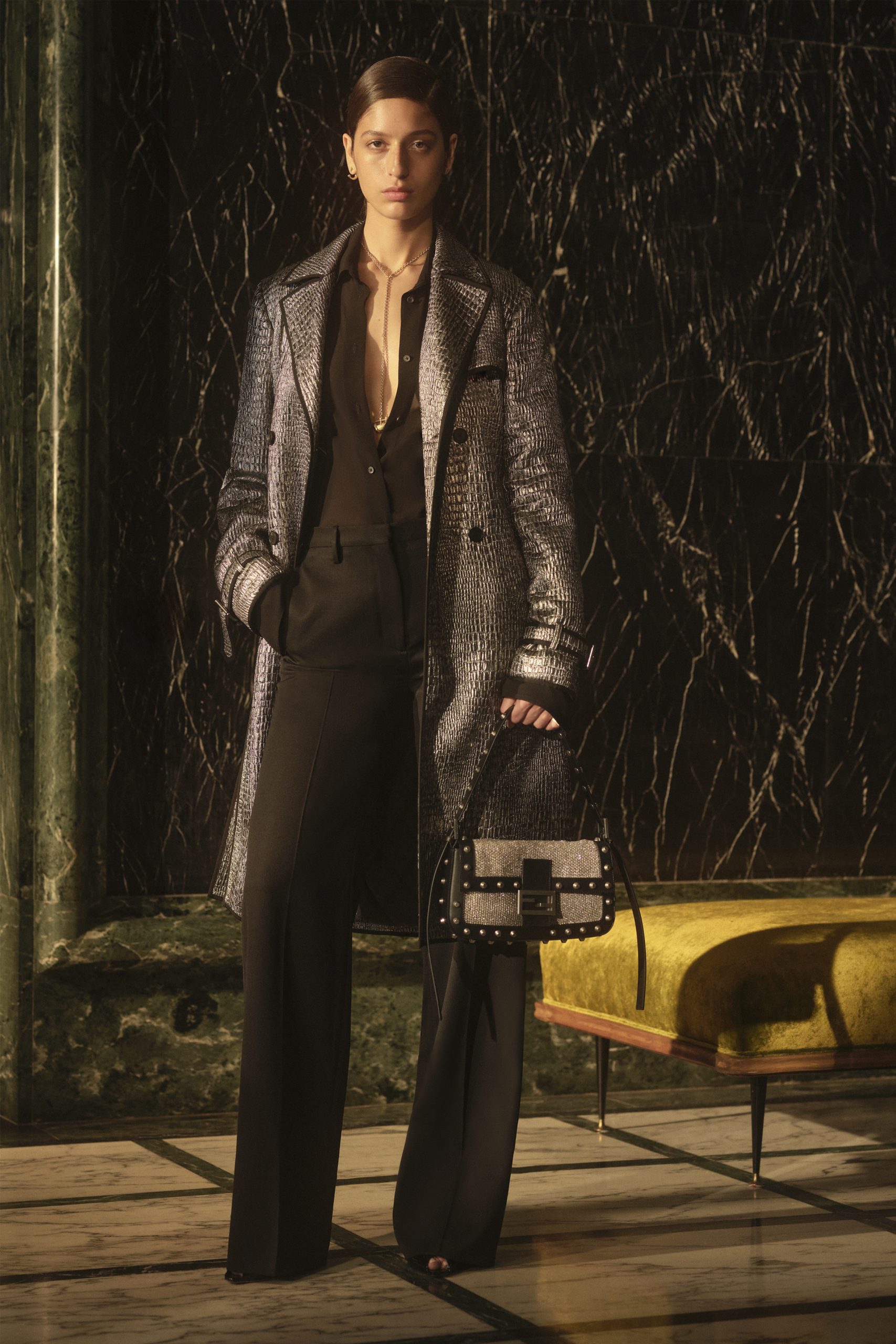
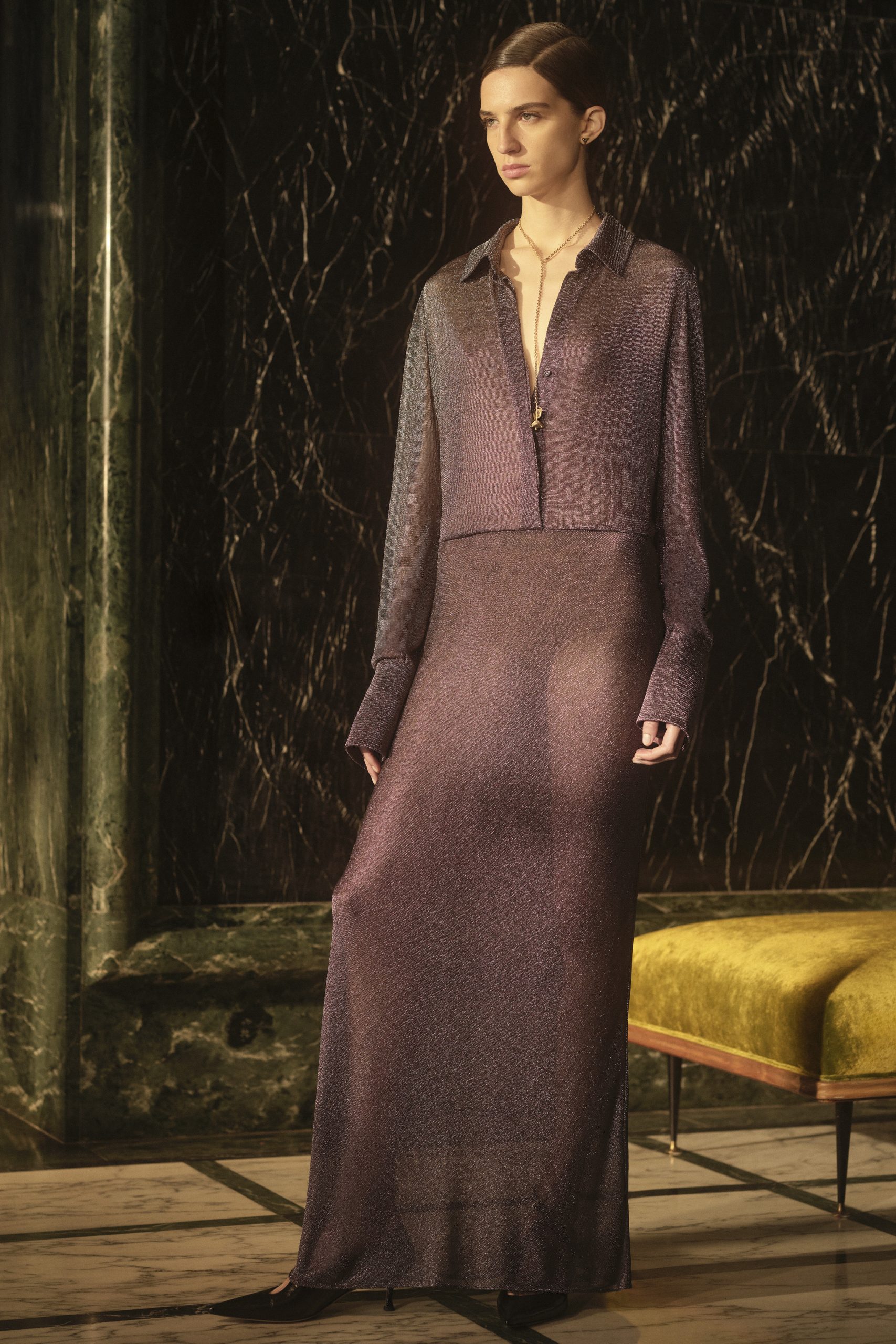
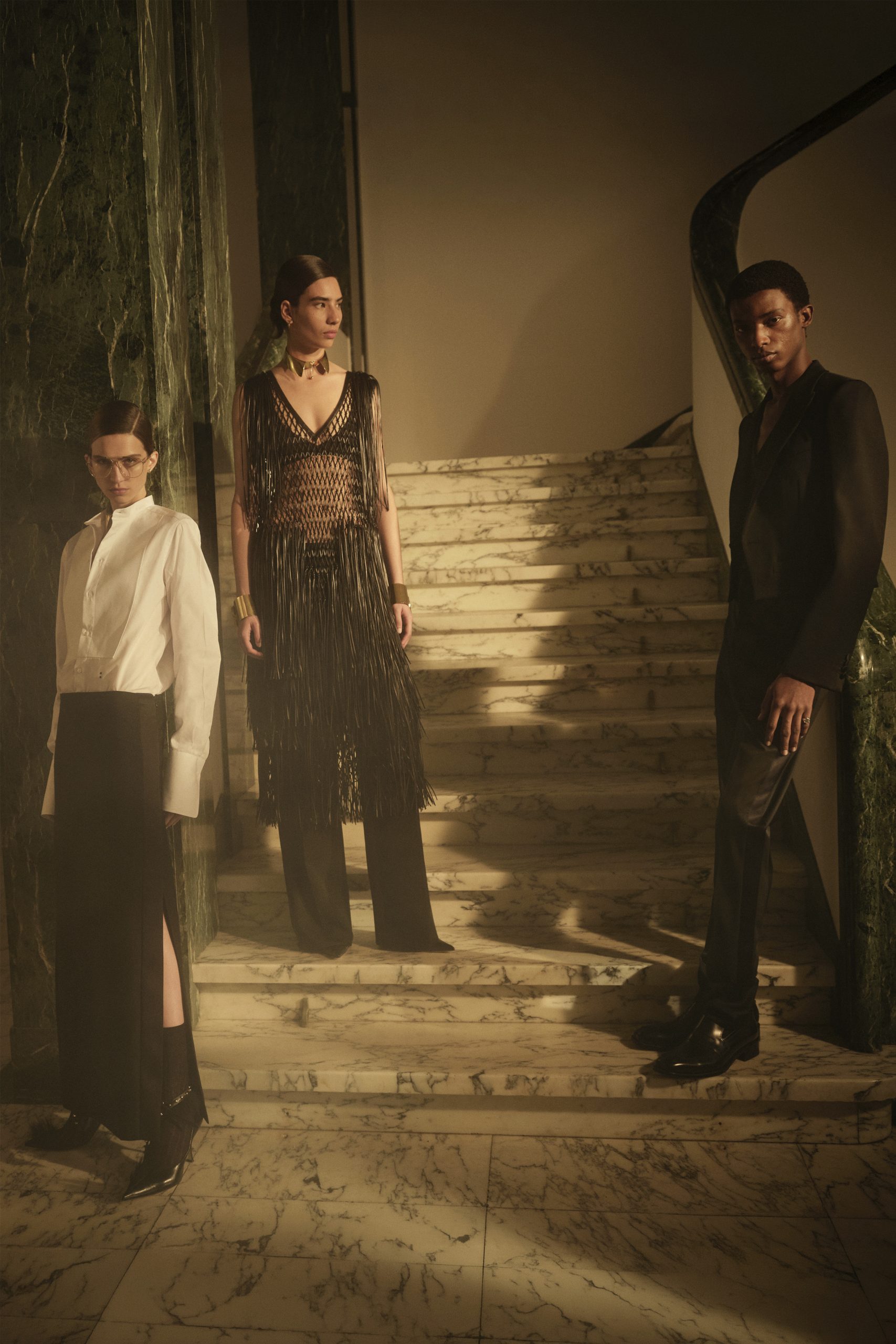
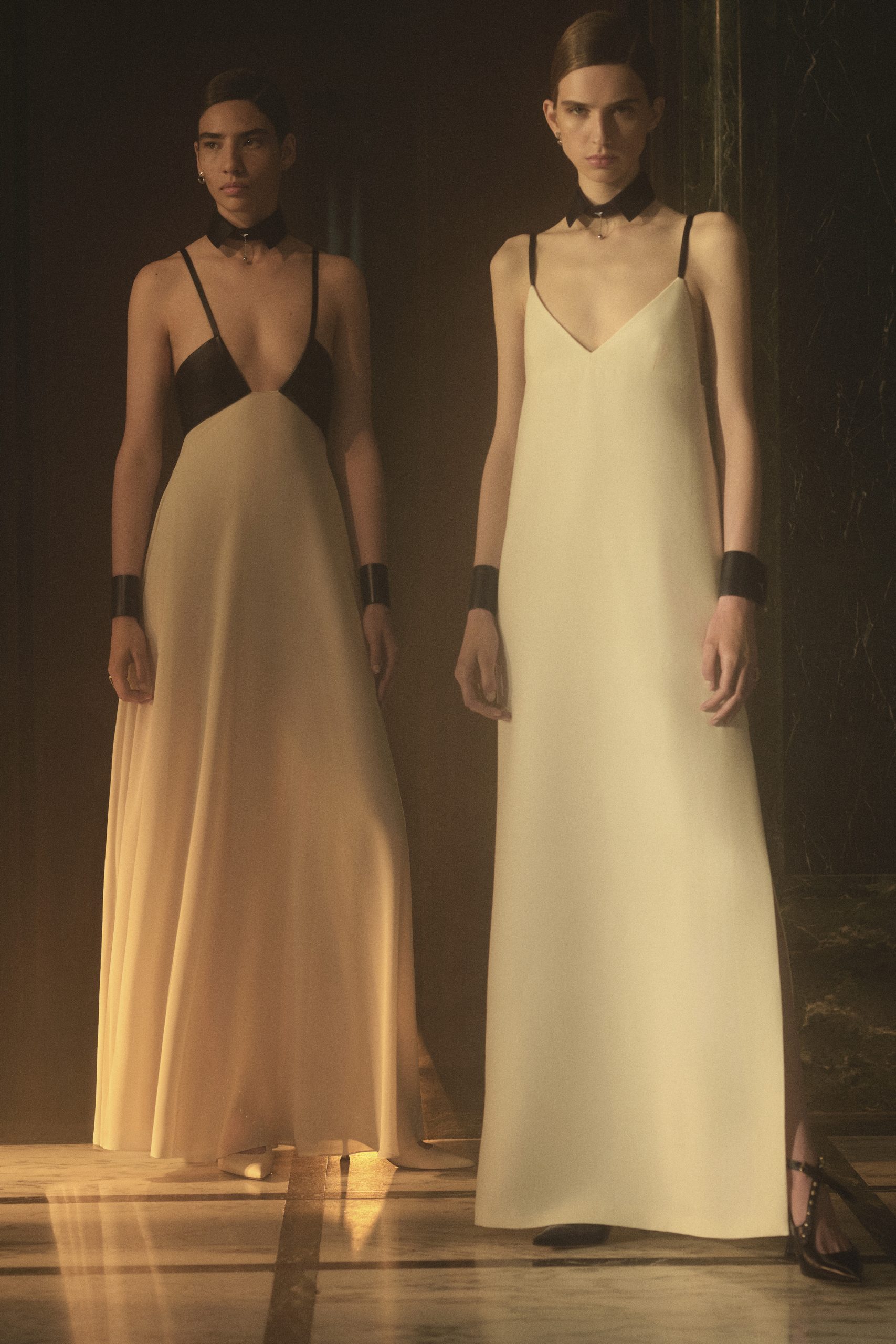
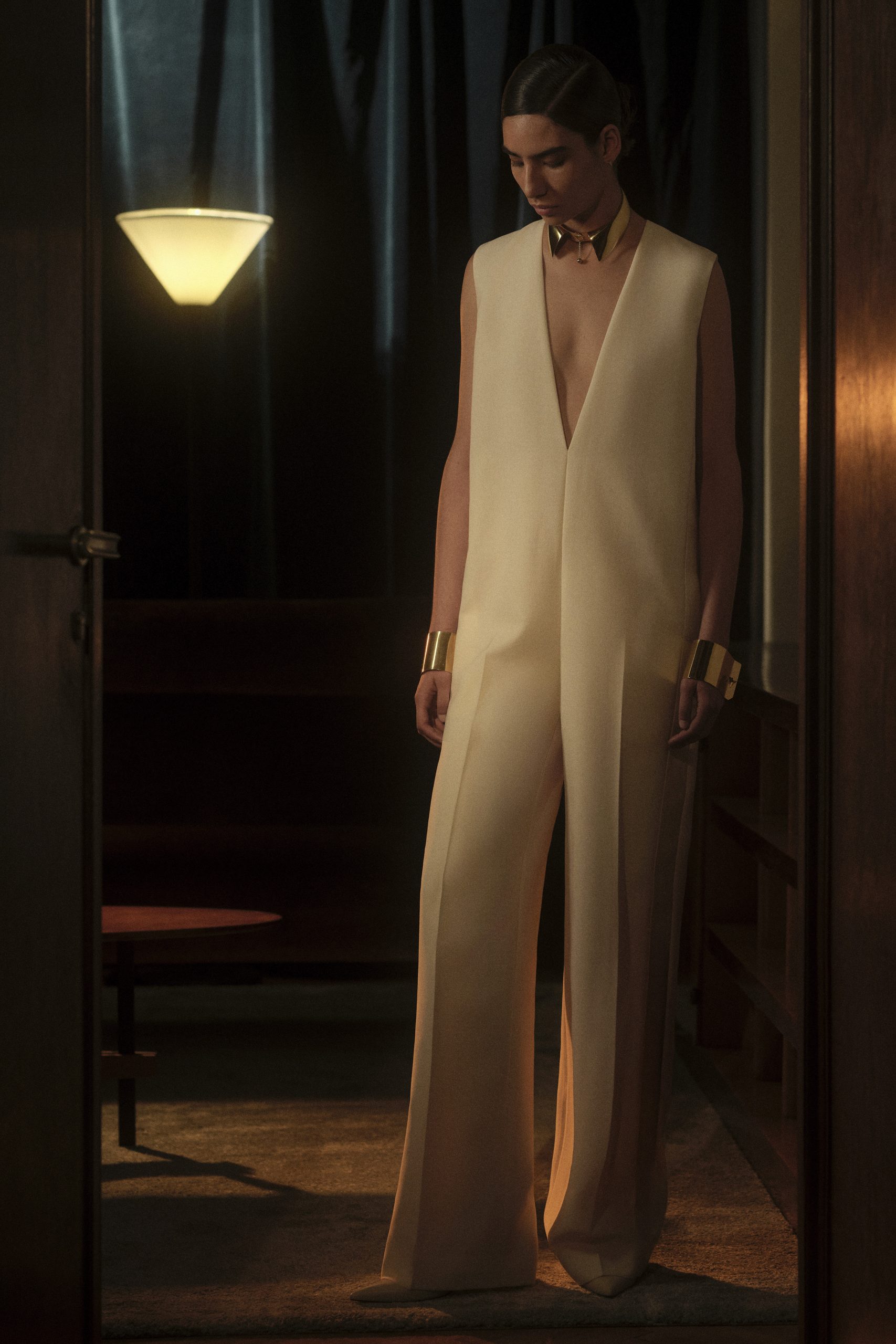
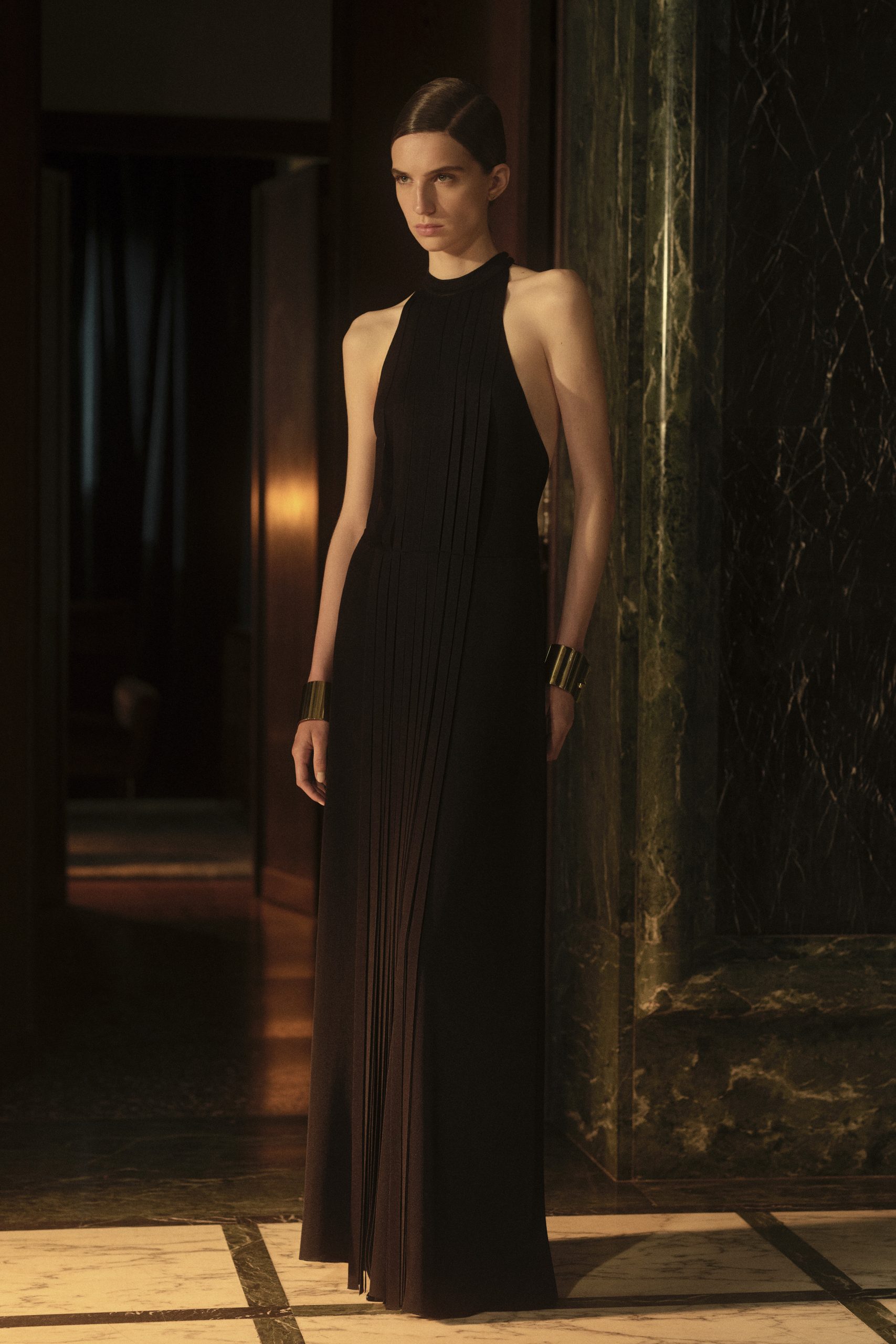
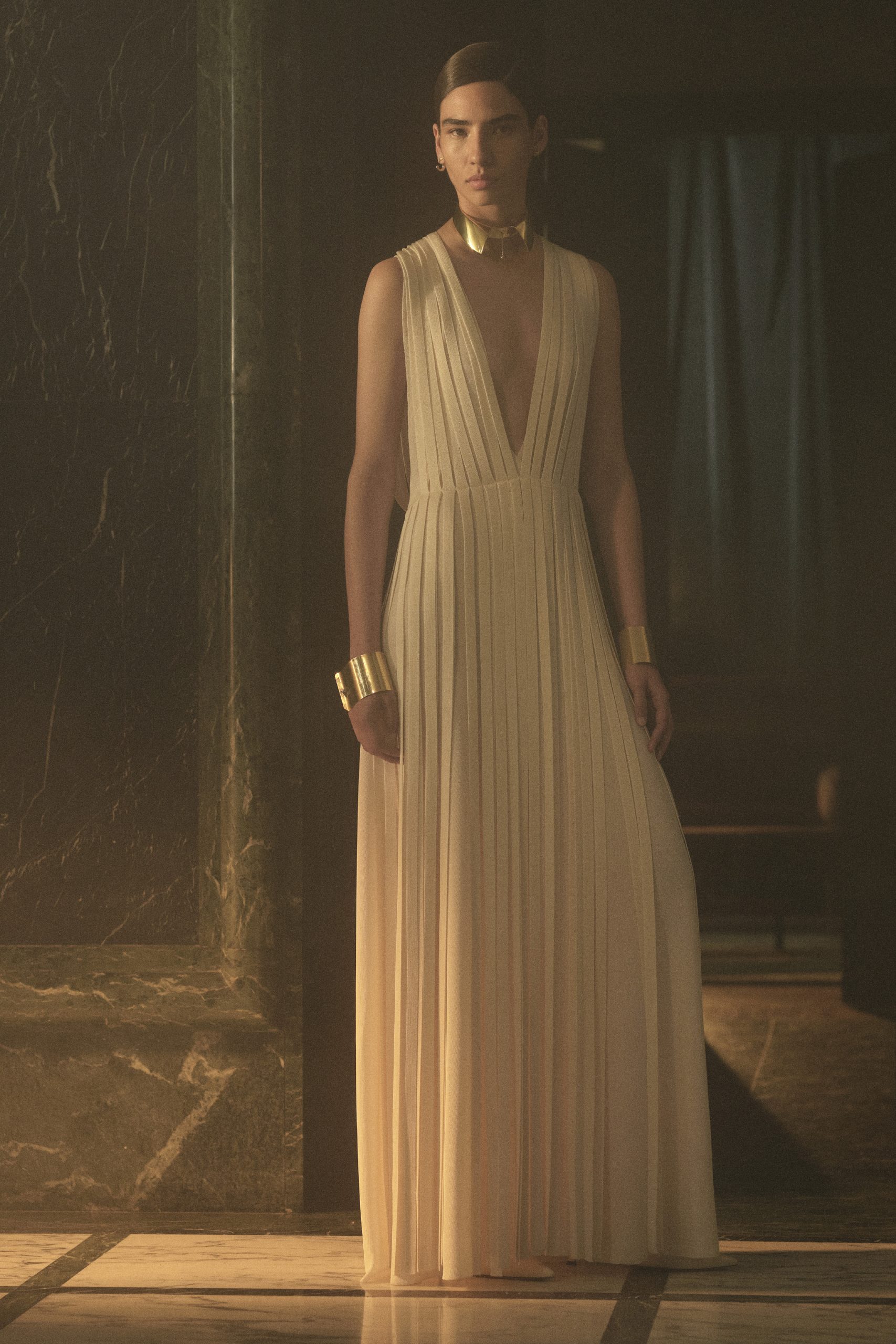
Chiuri uses the word “bourgeoisie” to evoke a broad, inclusive category that, in her project, becomes a crossroads of bodies, generations, behaviors, desires, and expectations. Bourgeoisie as a category of modernity. The garment worn in contact with the body has a crucial value. An empathetic relationship transformed by the passage of time and our restless perception of ourselves.
Man and woman walk side by side. They can wear interchangeable pieces, which are a compendium of the possibilities offered by their respective ways of dressing. There’s the shirt with trousers that, at first glance, seem like a single piece. A kind of uniform to be broken down and reassembled according to one’s needs.
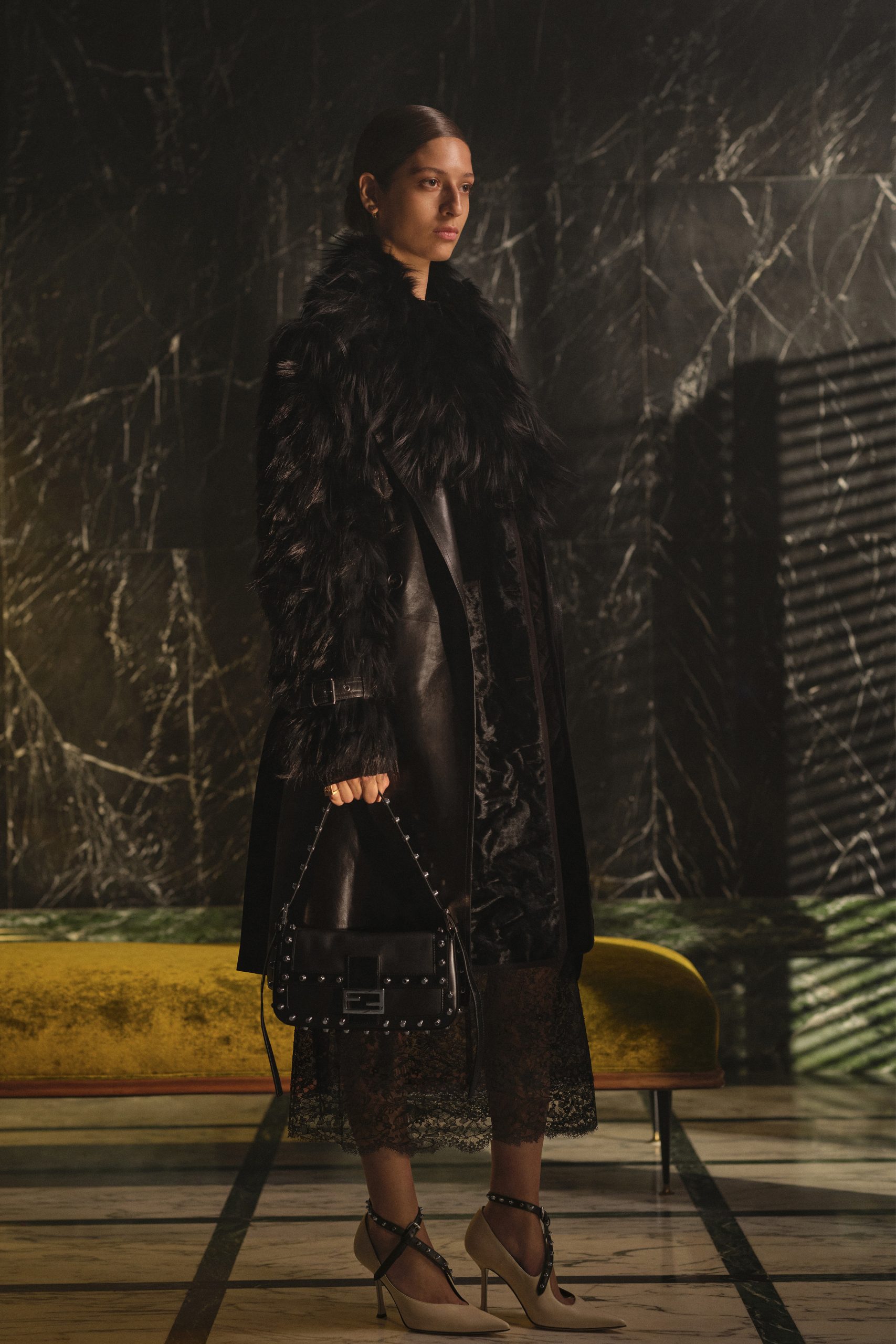
Accessories and apparel share experimentation on materials and craftsmanship. Chiuri uses parchment, a material of the brand, and places it in dialogue with studded black leather in the reactivated Baguette bag. Parchment, in clothing, becomes color, again contrasting with black.
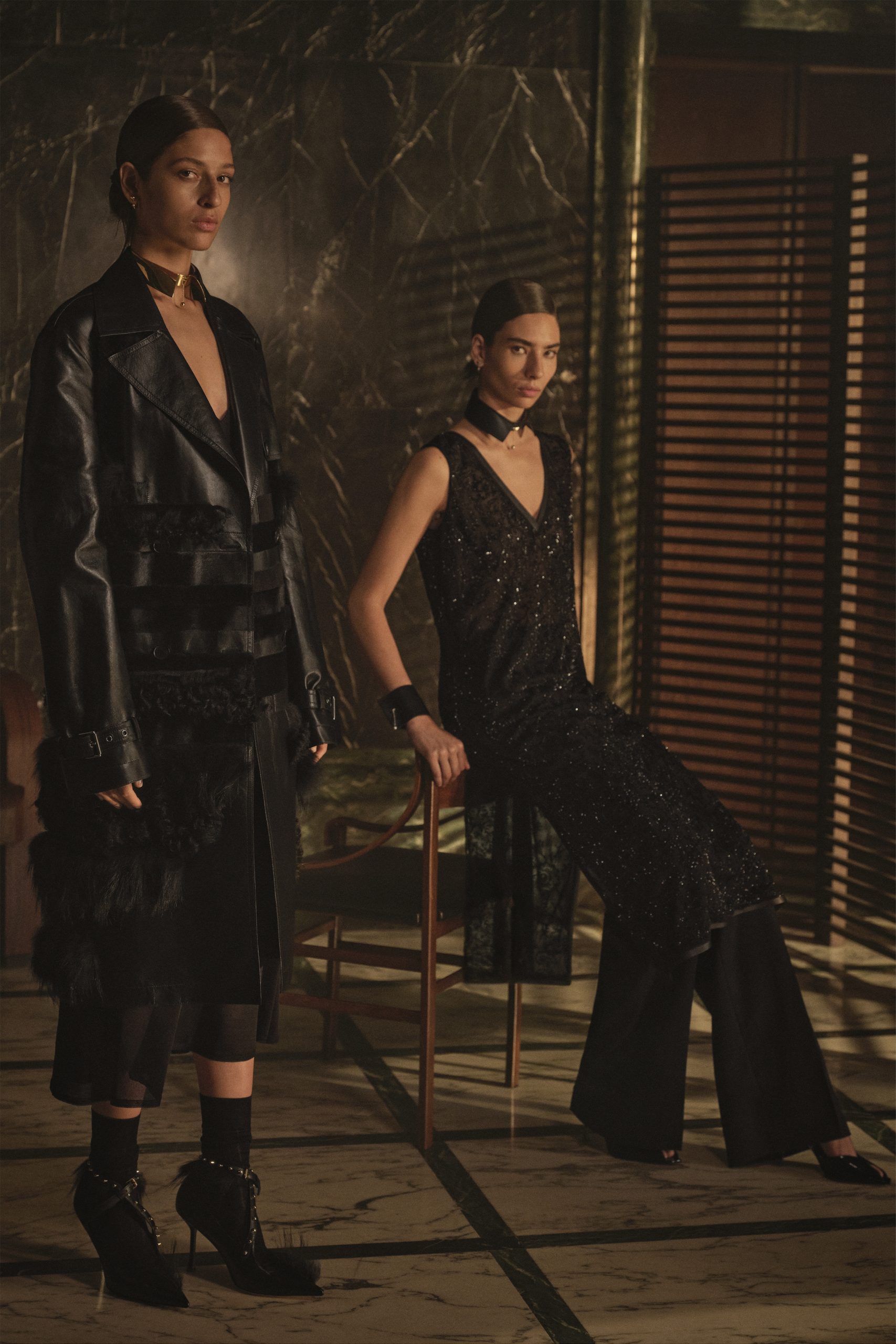
In this sartorial map, Chiuri forces the syntax to generate new attitudes, shaped by the sensibility of our time, to achieve results that redefine the perception of a georgette dress transformed by a leather plastron.
The clarity of the lines of those pieces that are cornerstones of each of our wardrobes find a new voice in material contrasts. The trench coat evolves, constructed with fur stripes, highlighted by wedge studs. Shiny leather opposes matte fabric to reconsider the impact of a jacket or a coat. Then the dresses, with their silver lace and sequin embroidery, transmit gleams.
The tree of life is the design that becomes an image, a manifesto, a utopian trace that recalls nature, humanity, reason, coexistence. And it brings us back to that Less I, more us that Chiuri has chosen as her motto.
BEYOND THE MIRROR
With the exquisite short film conceived for Maria Grazia Chiuri’s collection for FENDI, we step directly into a fairy tale in motion, a celebration of and nostalgic tribute to the first fashion movie ever made: Jacques de Bascher’s Histoire d’Eau, filmed in 1977 and commissioned by Karl Lagerfeld to launch the first ready-to wear collection designed for FENDI.
In de Bascher’s film, the protagonist, the young Suzie, wanders through a transfigured and metaphysical Rome, aiming to transform it through the power of imagination into a hypothetical Baden-Baden: a fiction within a fiction, a cinematic illusion that sublimates the power of the eye to observe and transform reality though a Carl Zeiss camera lens. In the film desired by Lagerfeld, Suzie wanders aimlessly through the city that was, and perhaps still is, the center of the world, certainly that of FENDI, but she has a meeting with a symbolic destiny and moves towards it remaining as untouched as possible by reality, unconsciously abandoning herself to the sun that nourishes her, visiting the fountains that vibrate with a centuries-old murmur, the same fountains which Maestro Respighi had reimagined into a symphonic poem, the fountains and pines of Rome cadenced across his musical staff. At last, Suzie meets with the Fendi sisters, in an encounter with history, a small departure from the dreamlike nature of the piece.
In this short film, at an undefined hour and in the soft light of Delvaux’s deserted railway stations, called to an appointment with no one and with all her projections of femininity, Chiuri’s Suzie enters with slow, measured steps into a deserted building in Rome, designed in the first half of the twentieth century according to a classical ideal that imitates the Latin language itself: extreme synthesis, methodical superimposition of ornament and function, nothing that is not necessary, in a composed interplay between the void that respects the power of light and the matter that contains it, thanks to inexorable mechanisms of spatial interpretation, and the rigorous beauty immune to time of the garments that become, like the living figures that appear as unsettling muses, the essence of a feverish architecture, flickering and abstract yet terribly real in the impermeability of their expressions.
Chiuri’s new Suzie is dressed in a black that encapsulates all other colors that have ever existed. Draped in feathers, she establishes herself with a simple thrust as an ambassador of strength, courage, knowledge; like the Garuda who takes flight above the fragile destinies of ordinary humans. Her divine nature protects her and exalts the power of her genius, infused in the garments that adorn her and the figures surrounding her, the many versions of herself that provide a tacit counterpoint in a game that seems to consist of fencing, chess, classical dance, prophecy, and omnipotence, while the marble surfaces speak their ancient and martial language, solemn light and dark pages punctuate, like piano keys, the absent score of this passage through the twilight on a thread suspended at an unknown height that divides the unconscious from reason. On the silk thread of human wanderings, the revived Suzie proceeds solemn and incorruptible, because she is the Woman who is always herself, unique and unrepeatable. Dreams overcome the black and-white / color dichotomy imposed by the law of silver nitrate: here the young woman enters the building as one enters a dream, and behind the wrought iron and glass gate, colors fade and everything the director’s eye portrays seems to lose meaning, step by step, instant by instant.
Thus enters the Scene itself: the true protagonist of this work that ceases to be cinematography to become painting in motion, between Kubrick and Sokurov. Every frame – because it is indeed a matter of frame in the language of film where every instant is irreversible – could be definitive; every movement could be forever halted, corrupted by the nefarious intrusion of reality. Again, the Scene enters: the stairs loom over every living presence. The steps indeed take
possession of Suzie and her supporting characters, another allusion to the keyboard, to the instrument that evolved from the harpsichord to the piano and accompanies the march of the world towards the end of time, whether in five billion years as astrophysicists say, or in a lament to be recited before tomorrow as the poet says. The stairs become a mechanism of appearances, disappearances, reappearances. The spectator begins to question the meaning of those increasingly slow steps, characterized by an unattainable solemnity. Slowly, from the mystery, the Beauty of the garments designed by a genius emerges, asserting itself over the strength of the marble and the fleeting charm of women and men whom youth deceives and imprisons.
Within the secrecy of the rationalist building that defines the temporality of this runway, one expects Suzie’s hand, or the hand of another character, to reach out to us, inviting us to be part of the spectacle, violating the suspension of disbelief that governs the game. But it is only the vertigo of an instant, a Montalian fraction of a second, a brief rebellion against the need to adapt to the great illusion of an all-encompassing truth. Thus, when Suzie, adorned with the dark and pulsating wonder of her artist’s garments, having shed her fantastical plumage, leaves the building and its desolate slumber behind, she does not return to the Rome she dreamed of, nor perhaps to the world she didn’t belong to. She moves towards her own closing credits, thinking of entering another dream. And she takes flight.
Discover more about FENDI here.
FENDI FENDI Cruise 2027 Maria Grazia Chiuri