
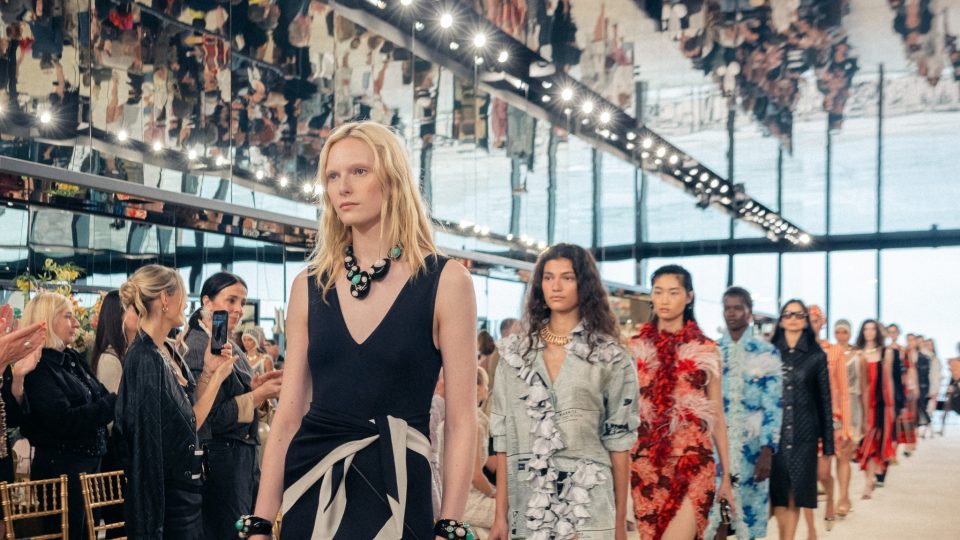
SOUS LE SALON LA PLAGE
“Far from the Paris salon, Chanel found in Biarritz different ways of being and seeing, of movement and freedom. She made them her fashion pedestal. It is a place that offers the perfect balance between function and fiction. Among artists, workers, nobility, sailors and the natural world, everyone and everything shared the same stage, living together as a norm. All had a role to play.”
Matthieu Blazy
Sous le salon la plage: In Biarritz, Gabrielle Chanel opened her couture house and presented her first collections. Here she aligned the timeless natural world with the timely modern one, and in so doing definitively changed the existing order of fashion.
Helping to free women from the literal constraints of convention found in a salon-bound existence, it was the world of the outdoors, of the elements, of the sea, the beach, the sun and the wind, that demanded practicality and comfort in movement. In her new jersey and sportswear, Gabrielle Chanel so provided. In his first CHANEL Cruise collection, Matthieu Blazy, Artistic Director of Fashion Activities, celebrates the Basque coast, both purposefully and playfully. Experimenting with effortless ways of being and seeing, from the functionality of the black dress to the fiction of the mermaid, a new CHANEL folklore is formed.
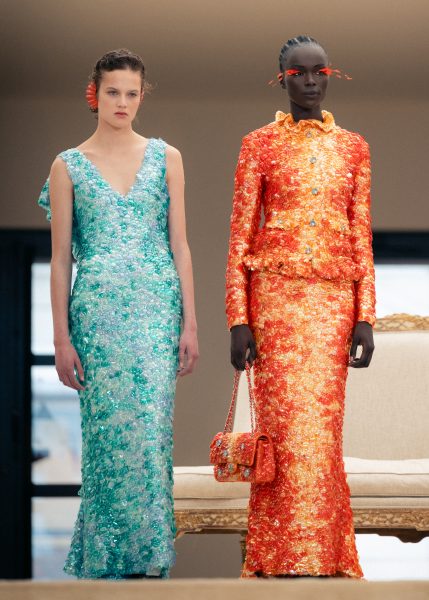

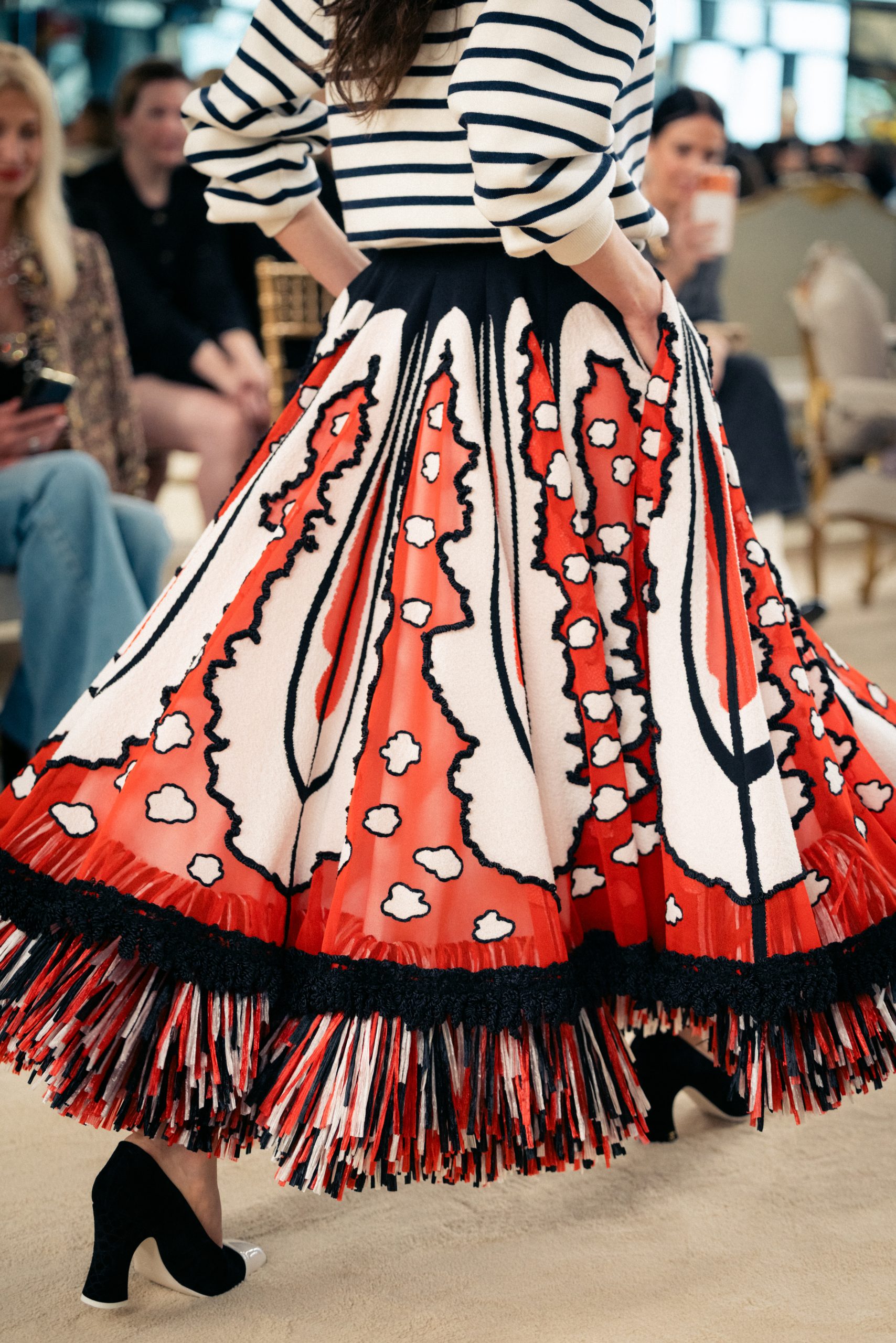
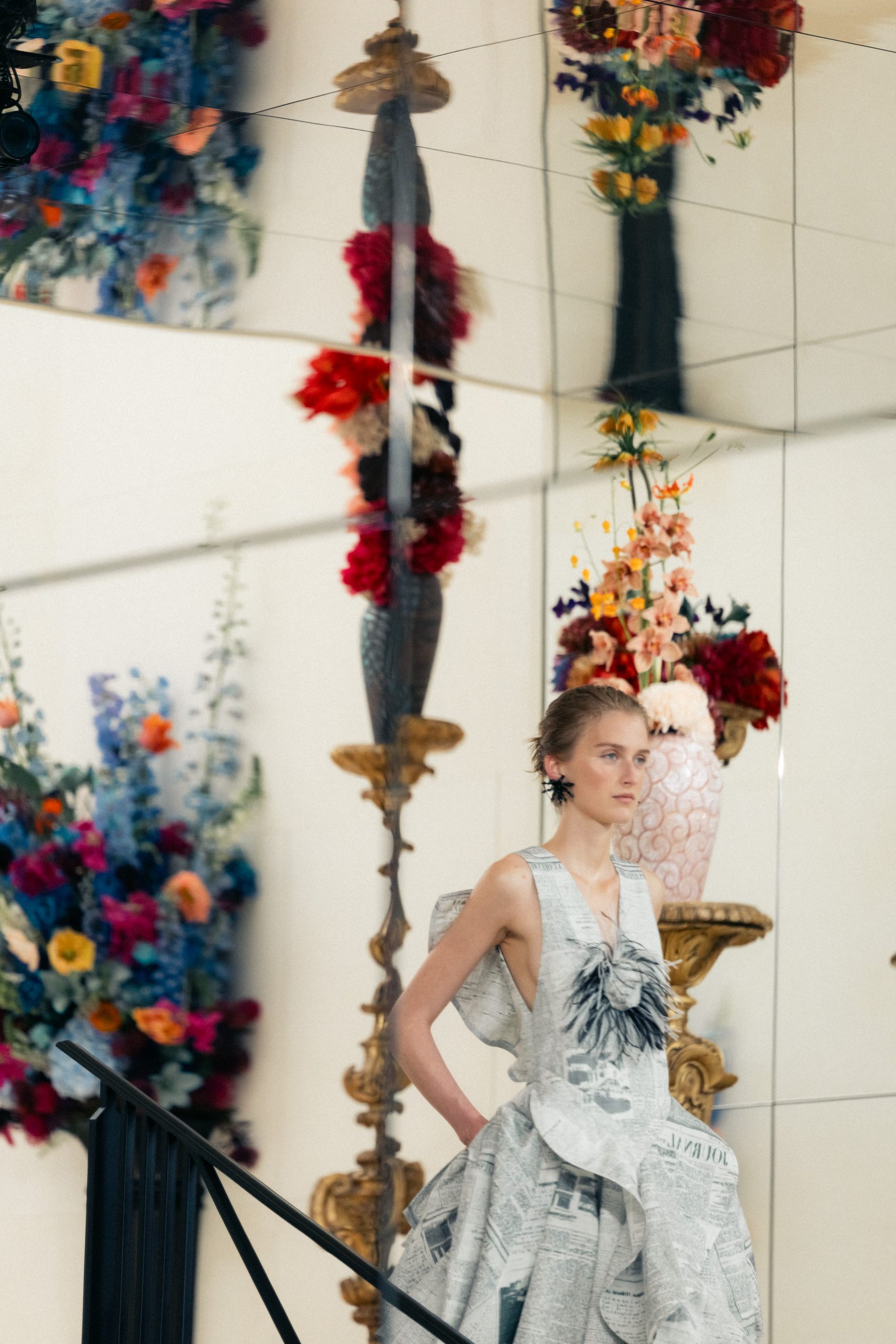
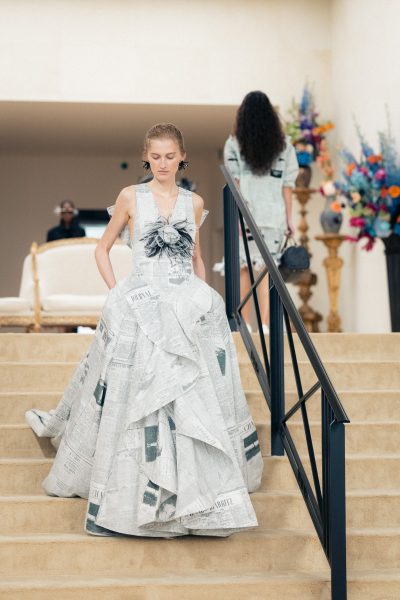
Uniting French workwear, leisure wear and grandeur, the effervescent with the rigorous, from the uniforms of sailors to the flourish of gowns, hierarchical clothing codes are dispensed with. The salon slips into the beach, comfort is allied with sophistication, and the Basque stripe is a linking line throughout.
Perpetually in motion, from fluttering silk foulard ensembles and rustling raffia skirts to washed cotton canvas suiting, the essential enjoyment of dressing and undressing – the bathing suit is also key – guides the collection. Sensorially pleasurable and experimental, peerless fabrications echo the abundance of the surrounding natural world in fluid silks, springy tweeds, compact flocks, soft beaded knits, and shimmering fish-scale paillettes.
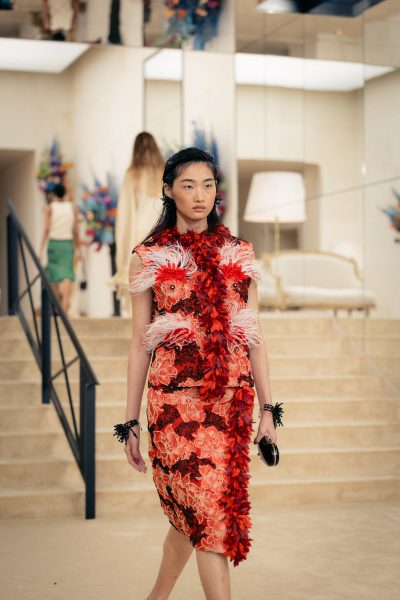


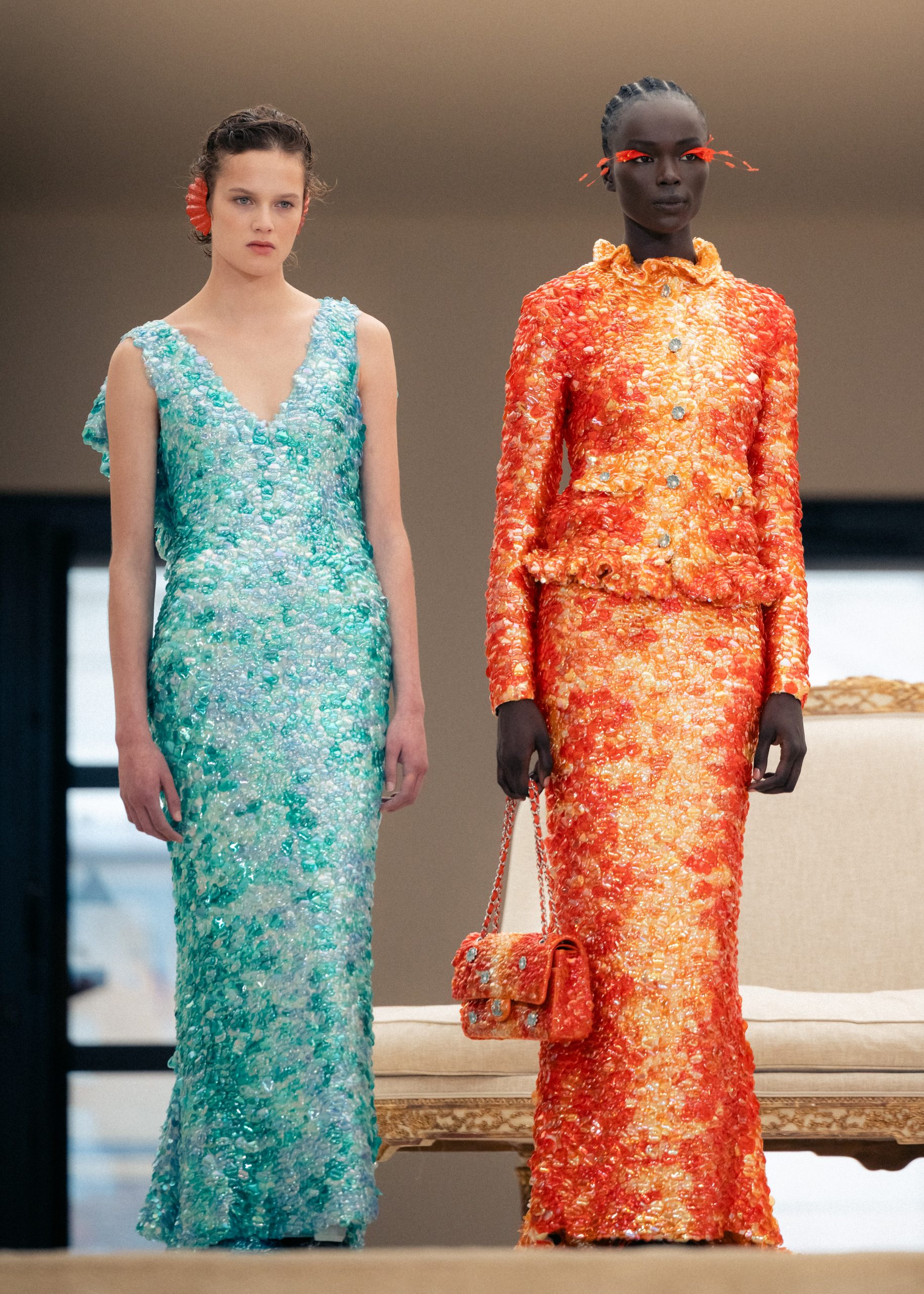

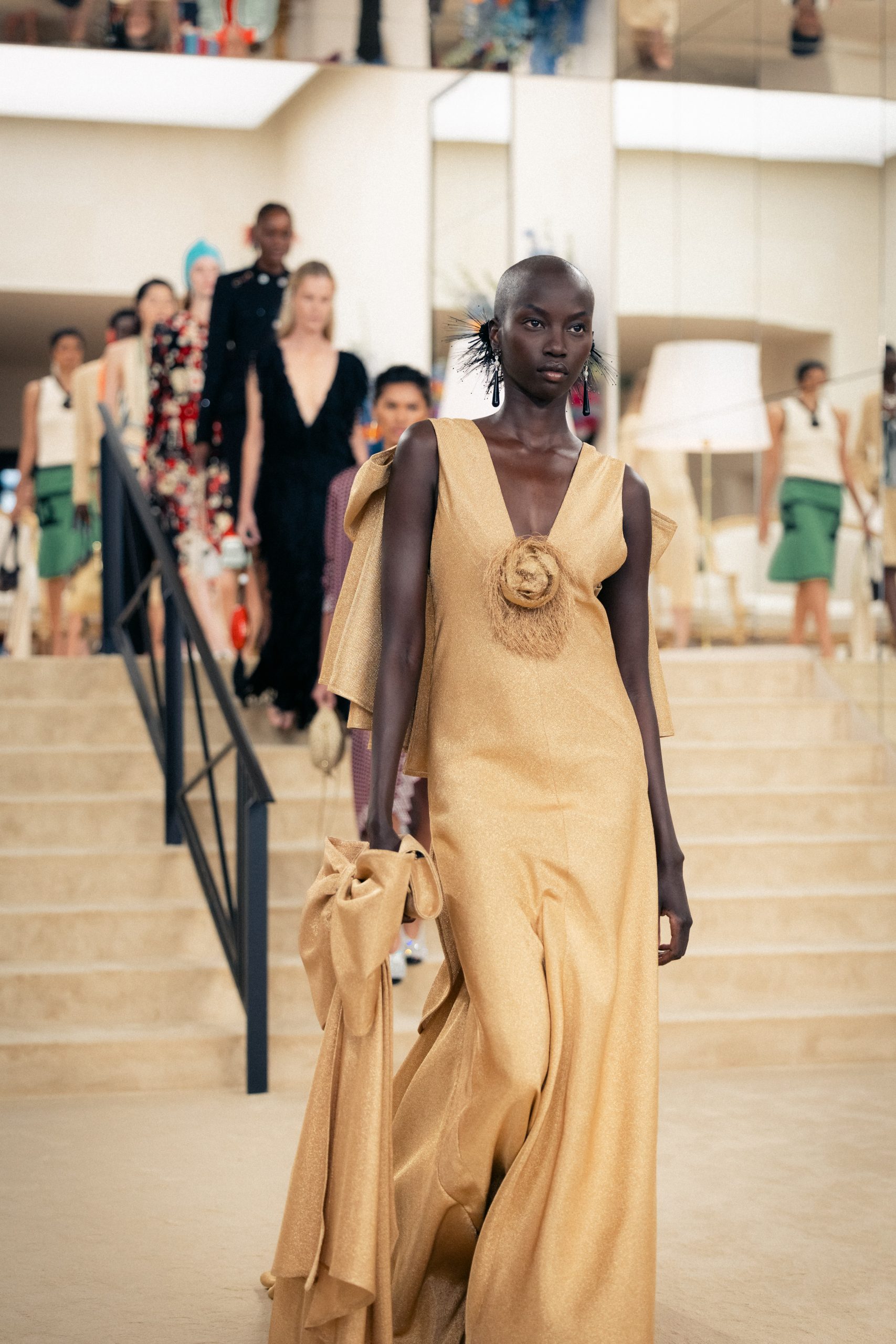

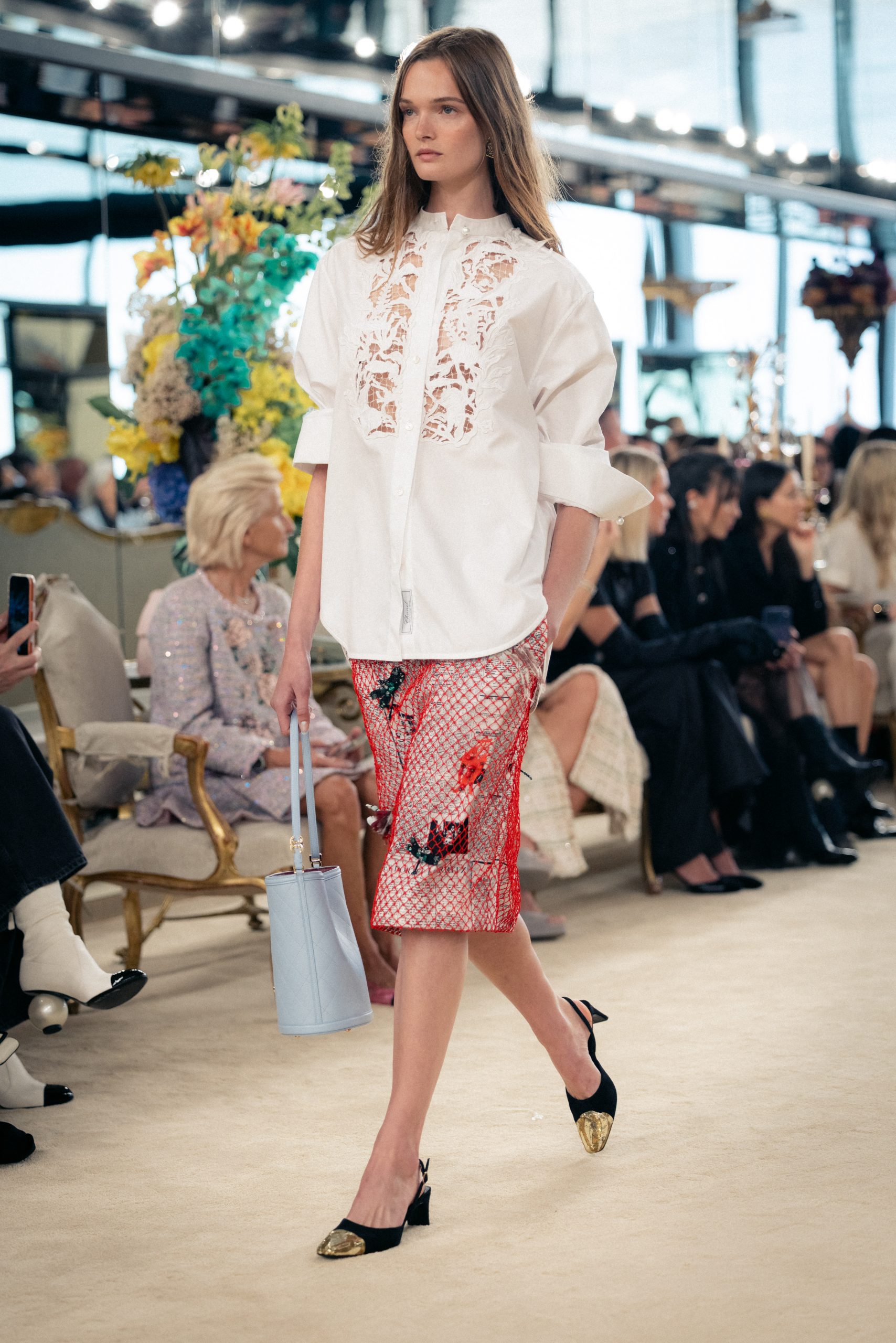
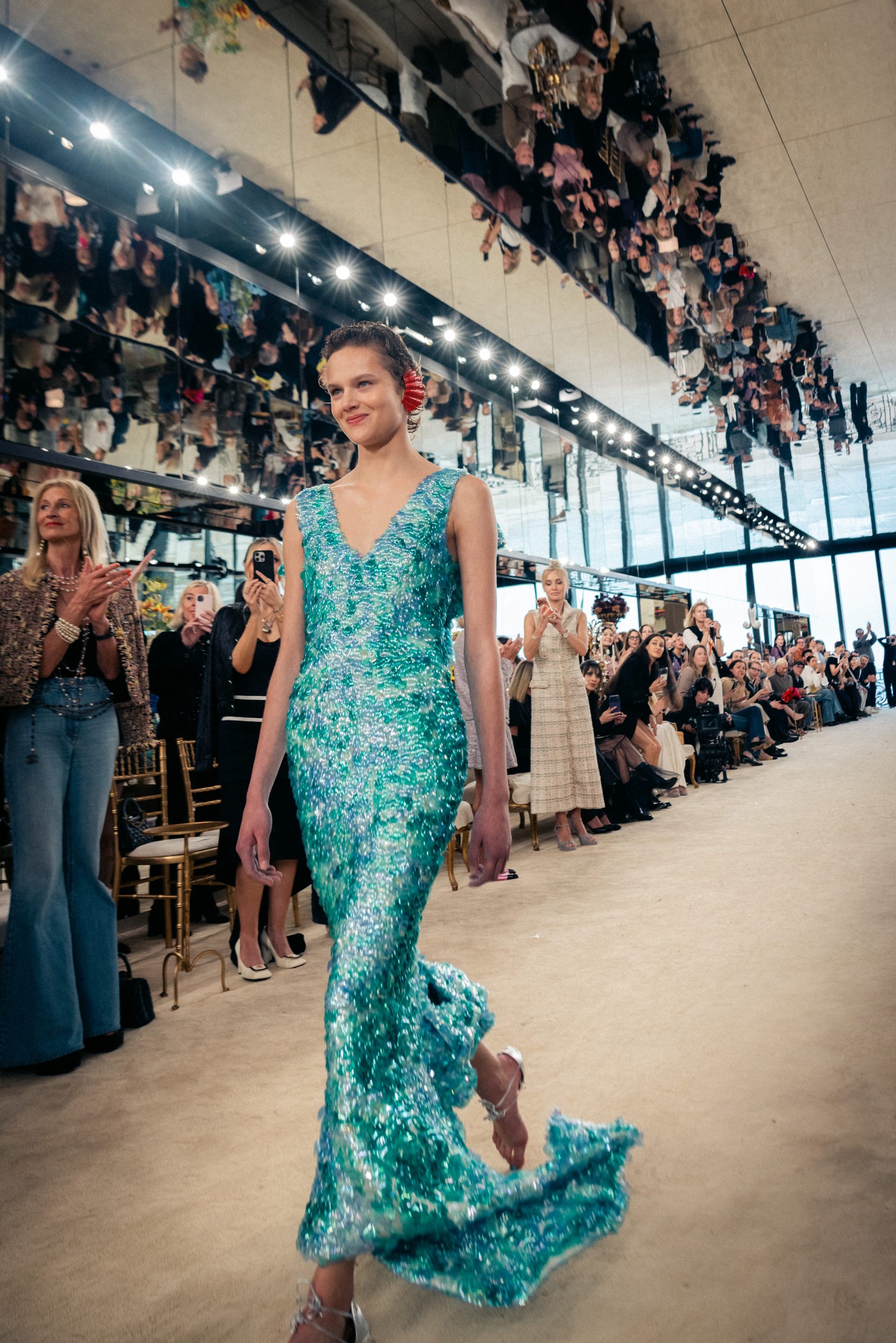

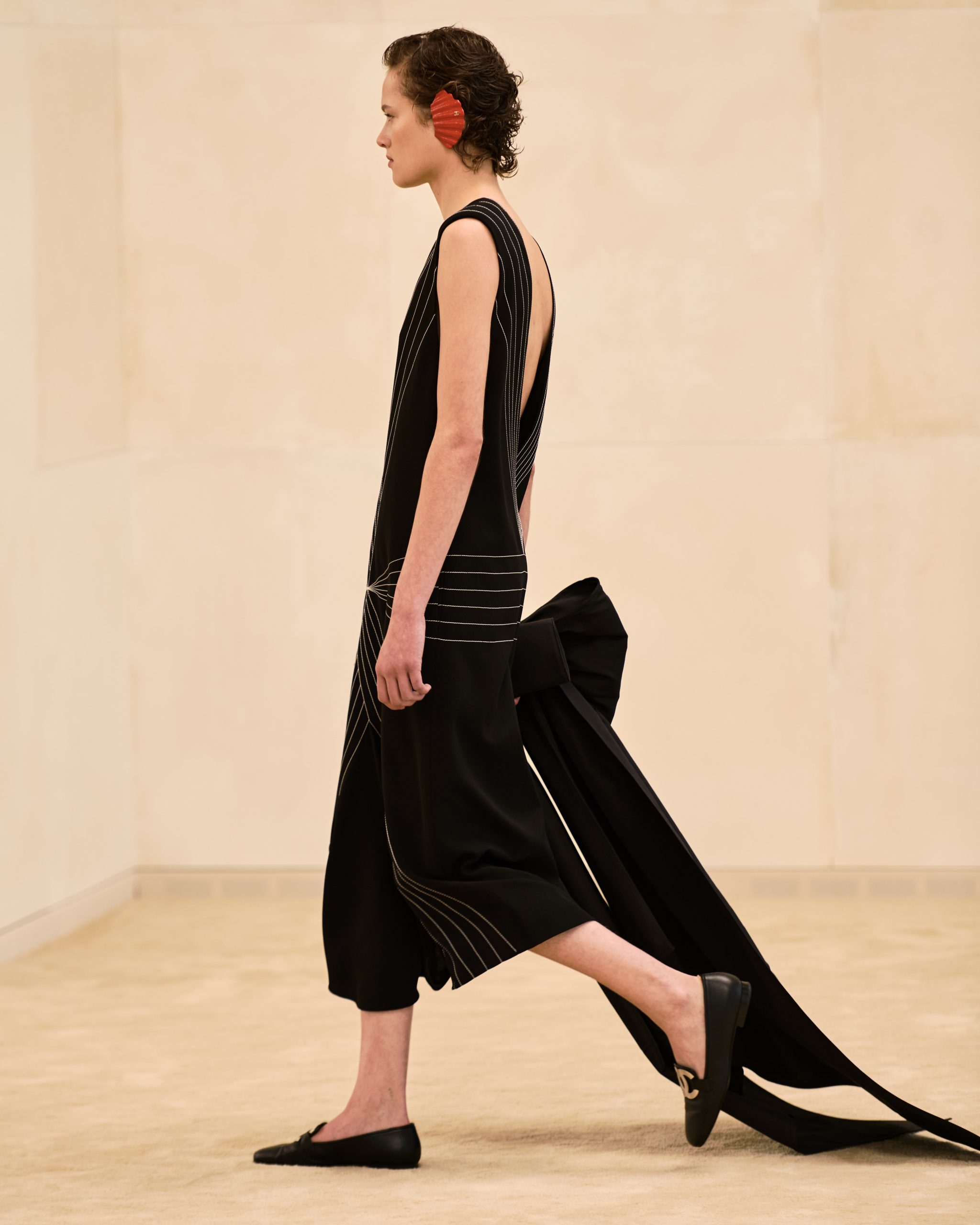
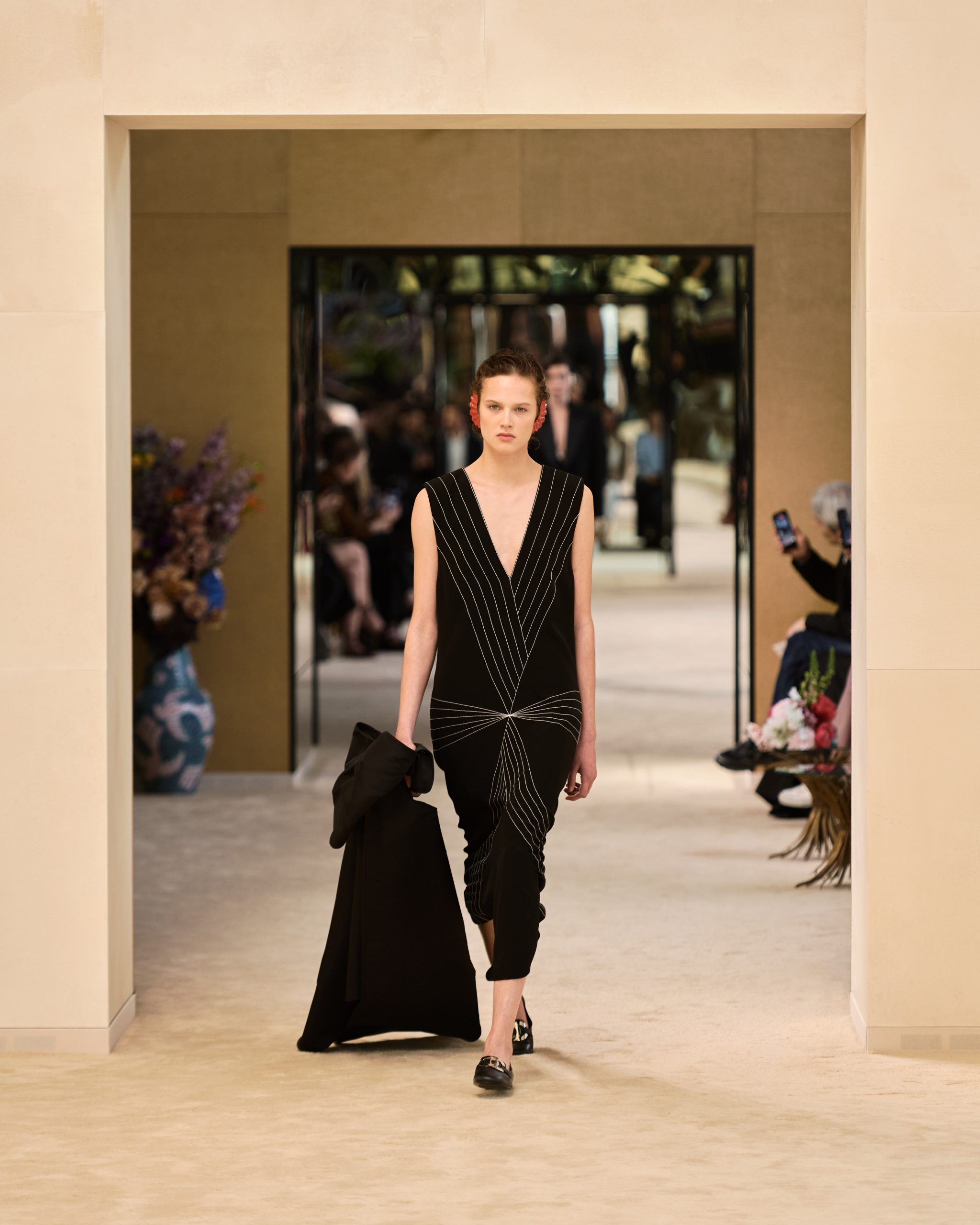
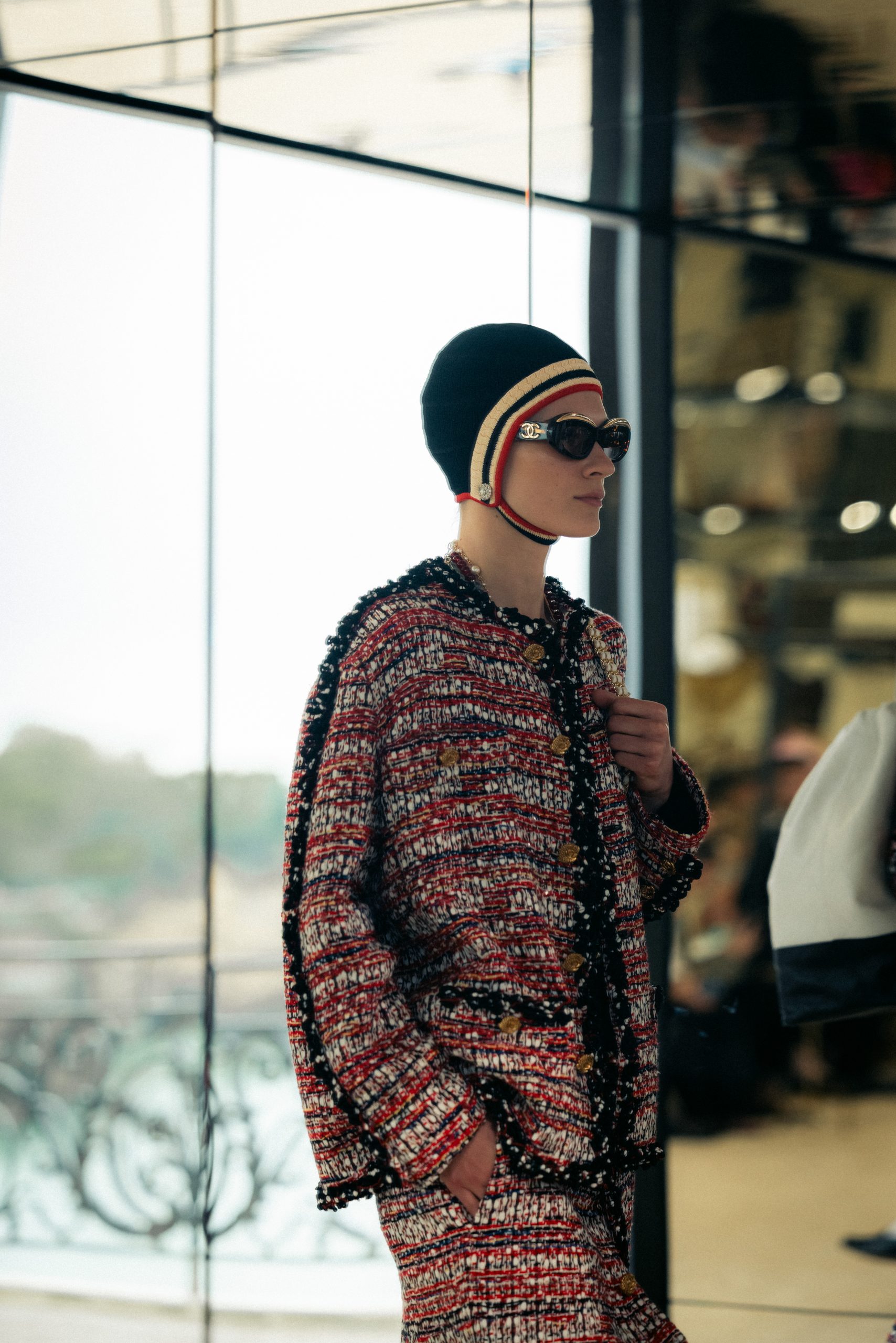
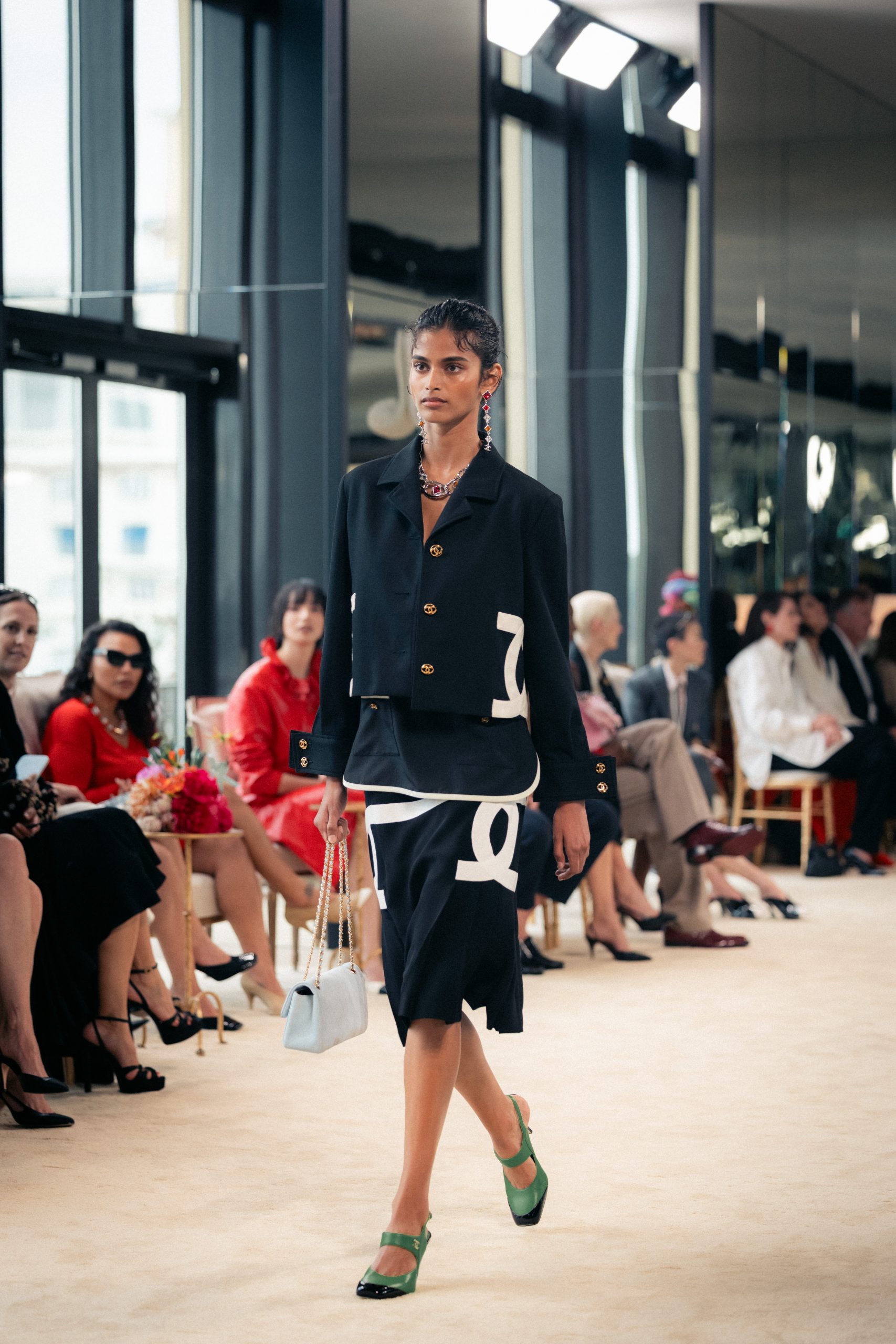

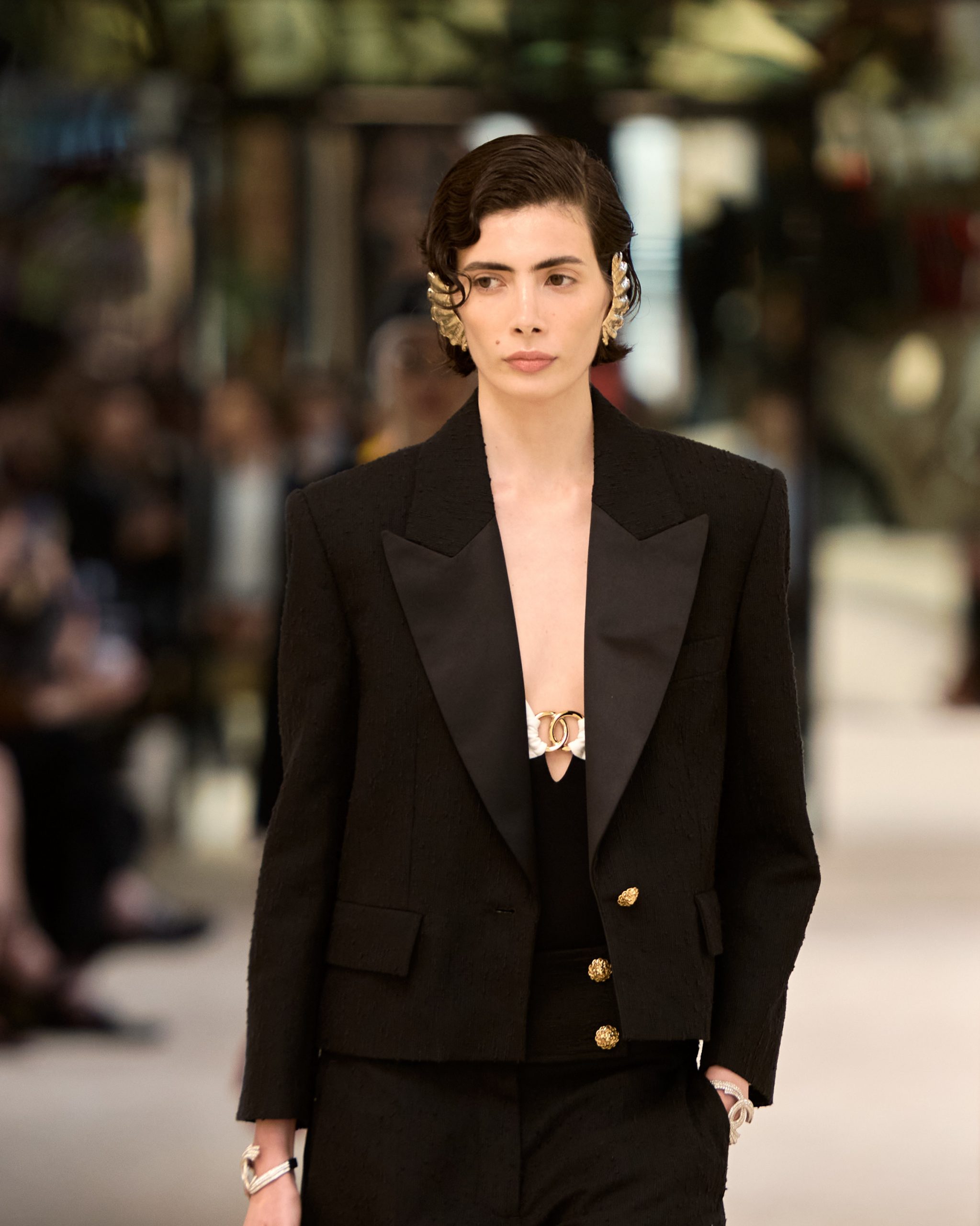
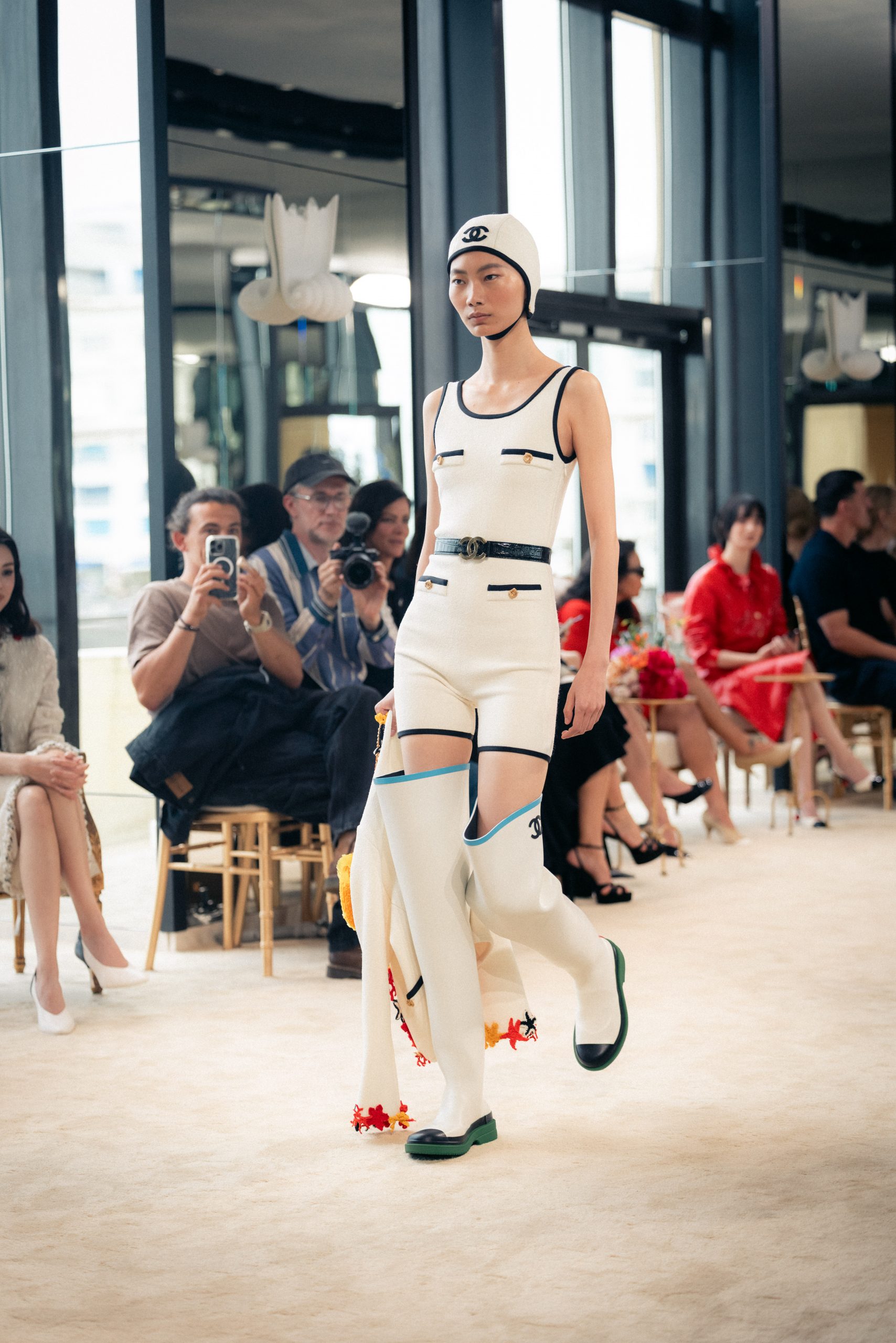
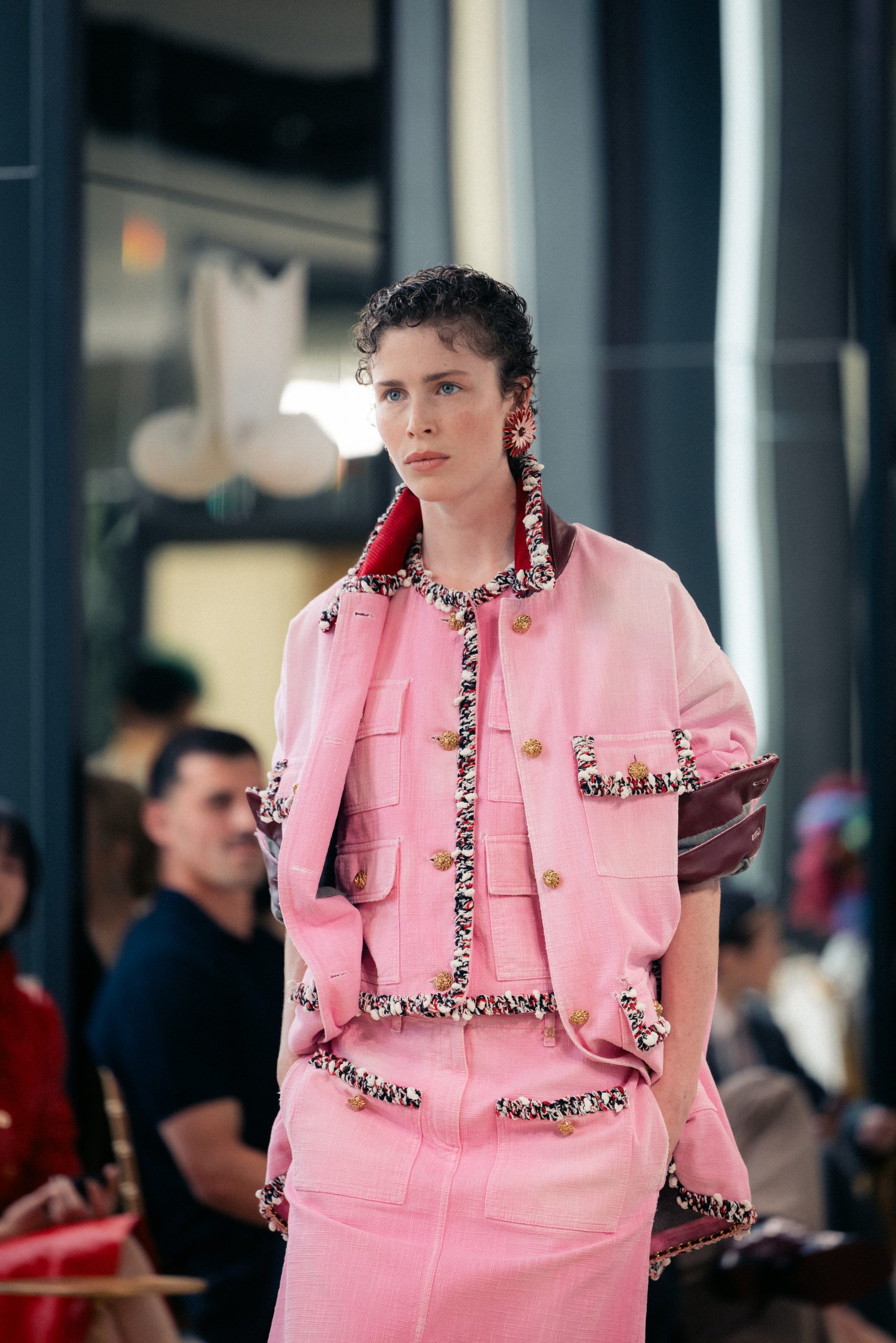
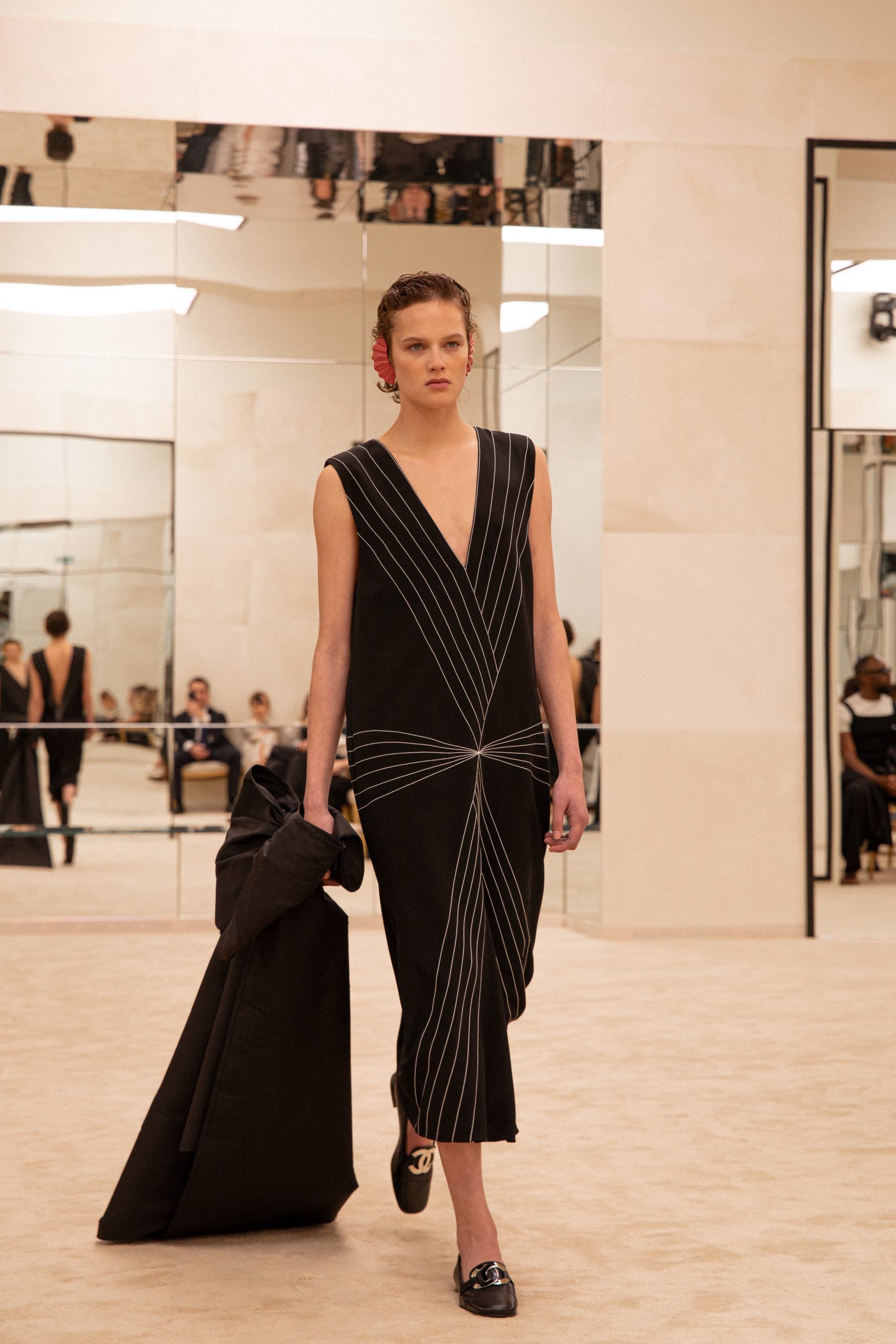
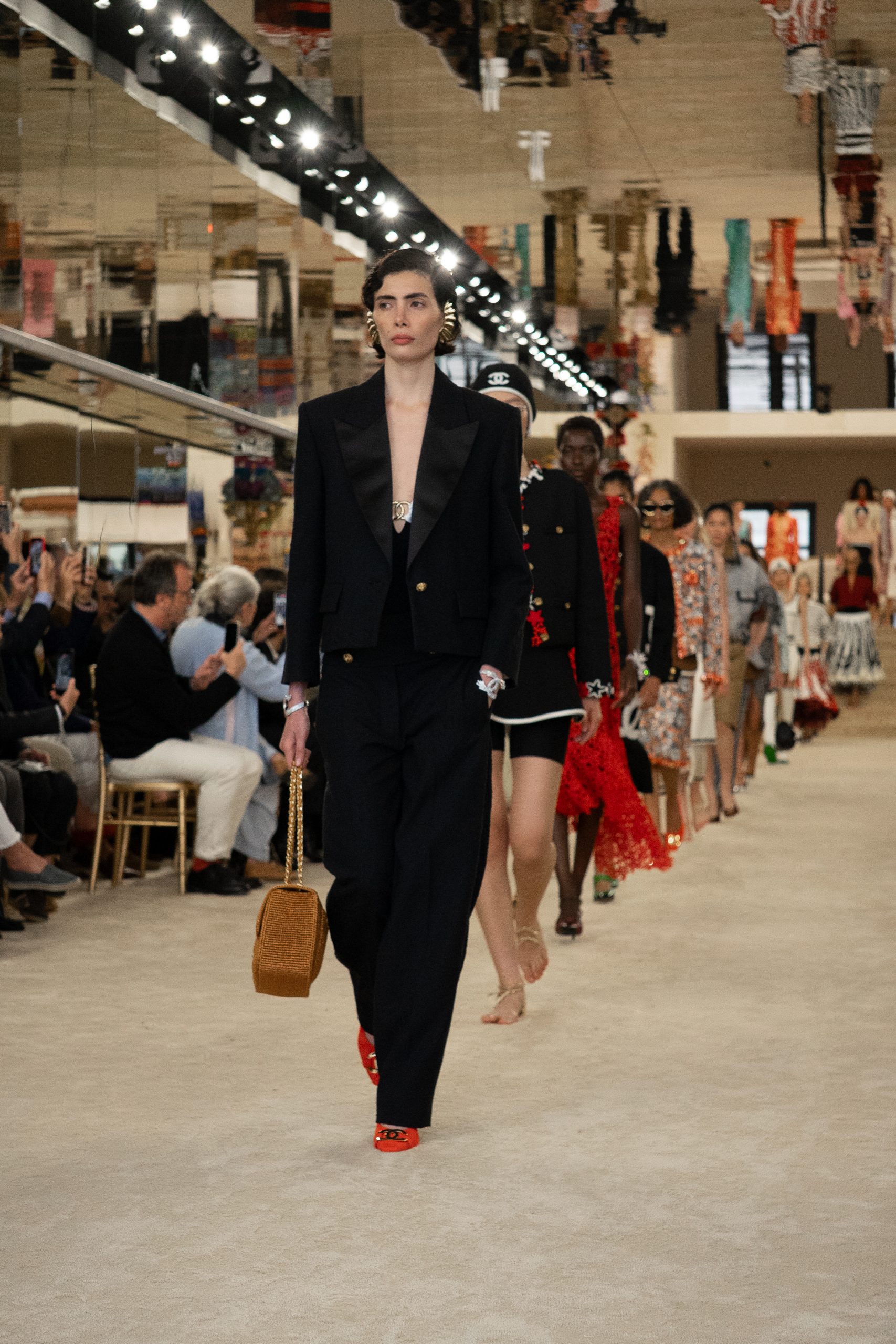
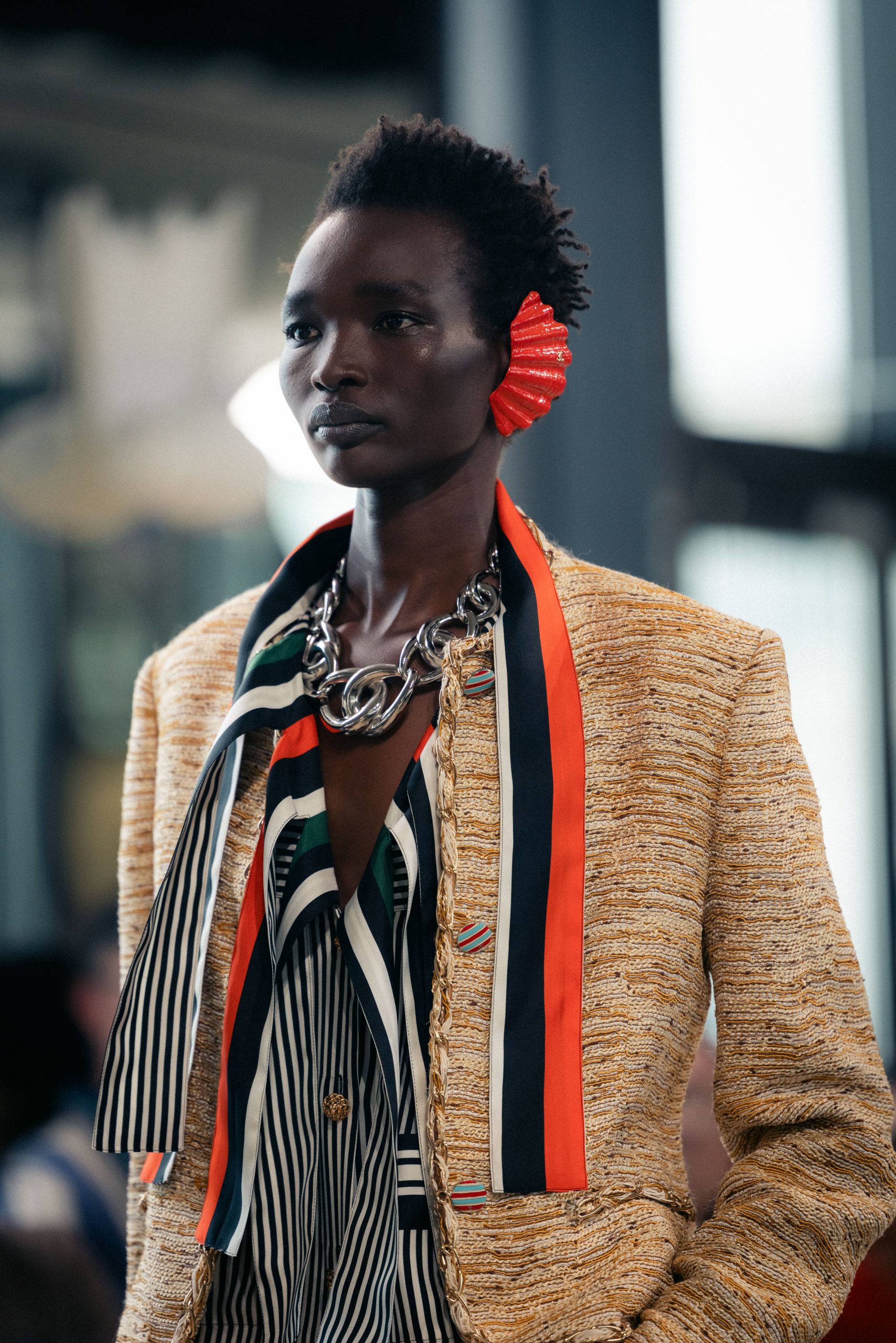
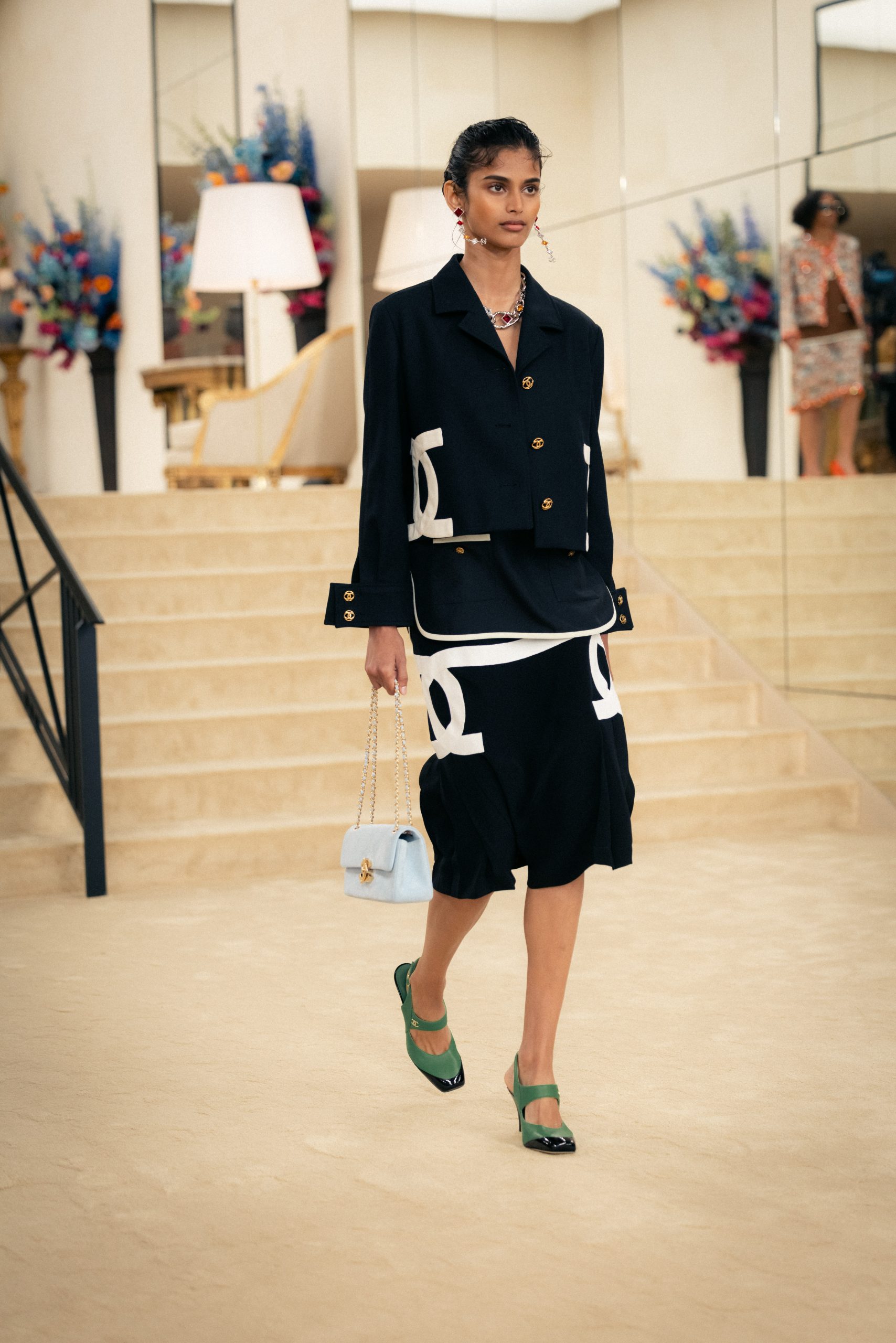
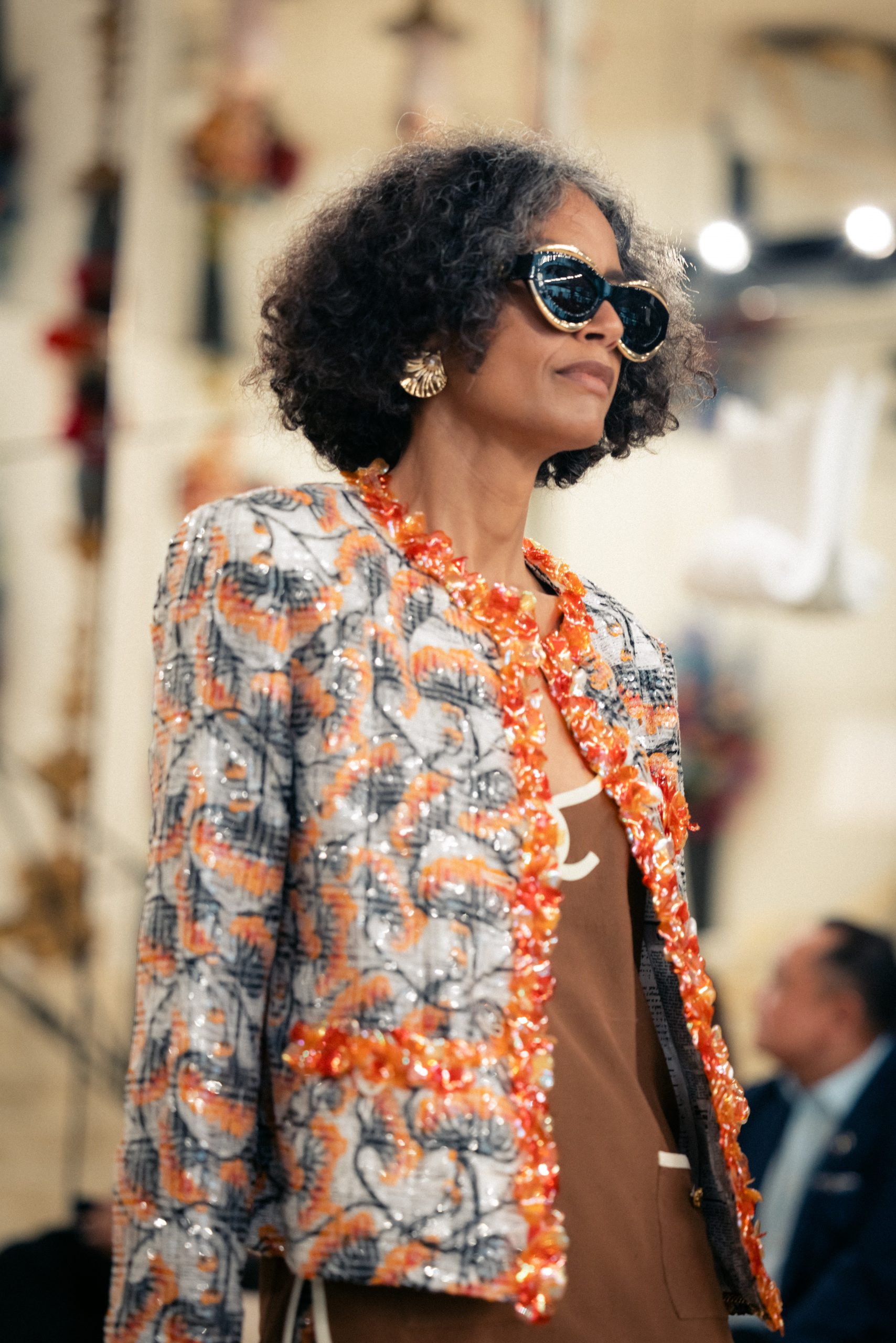
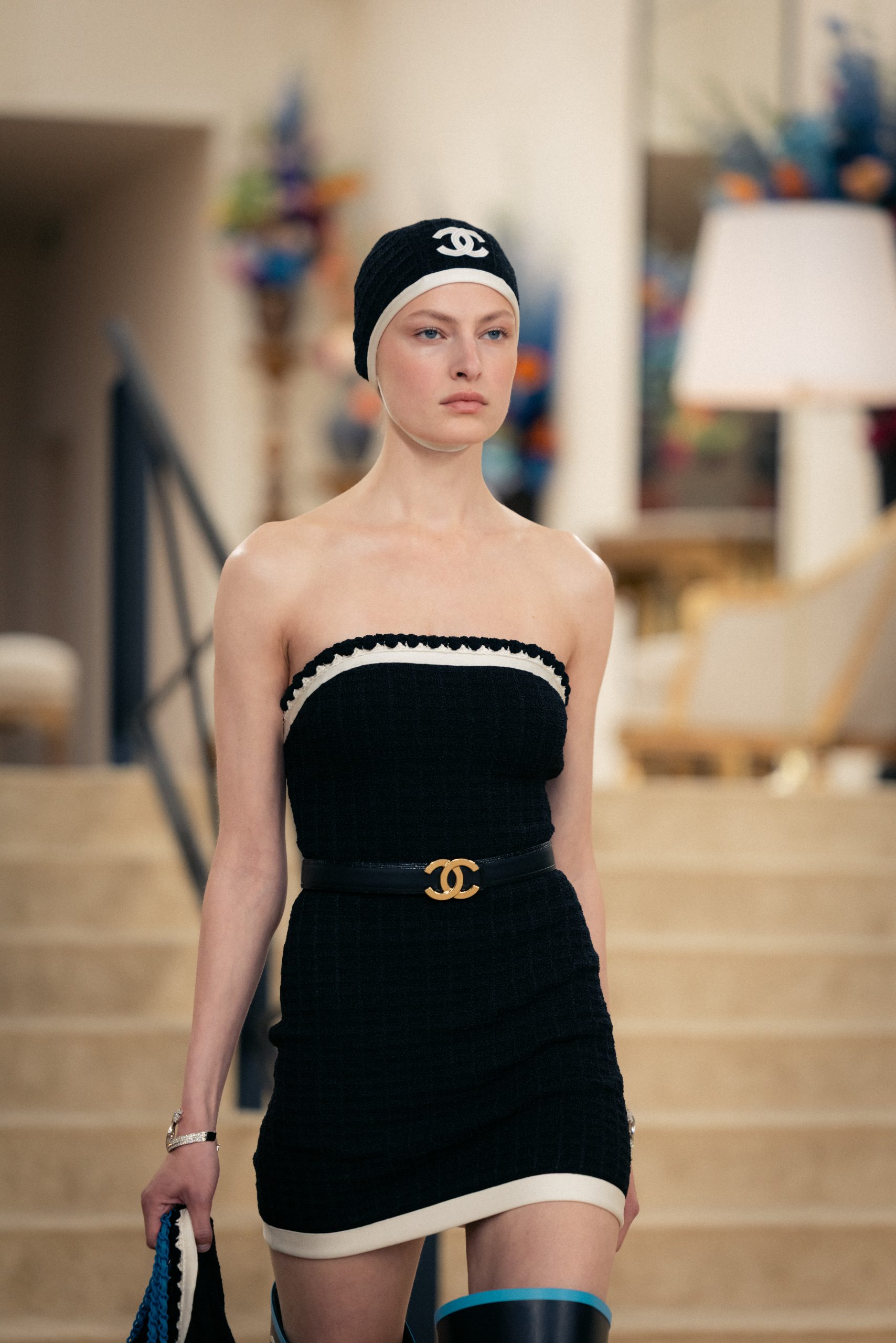
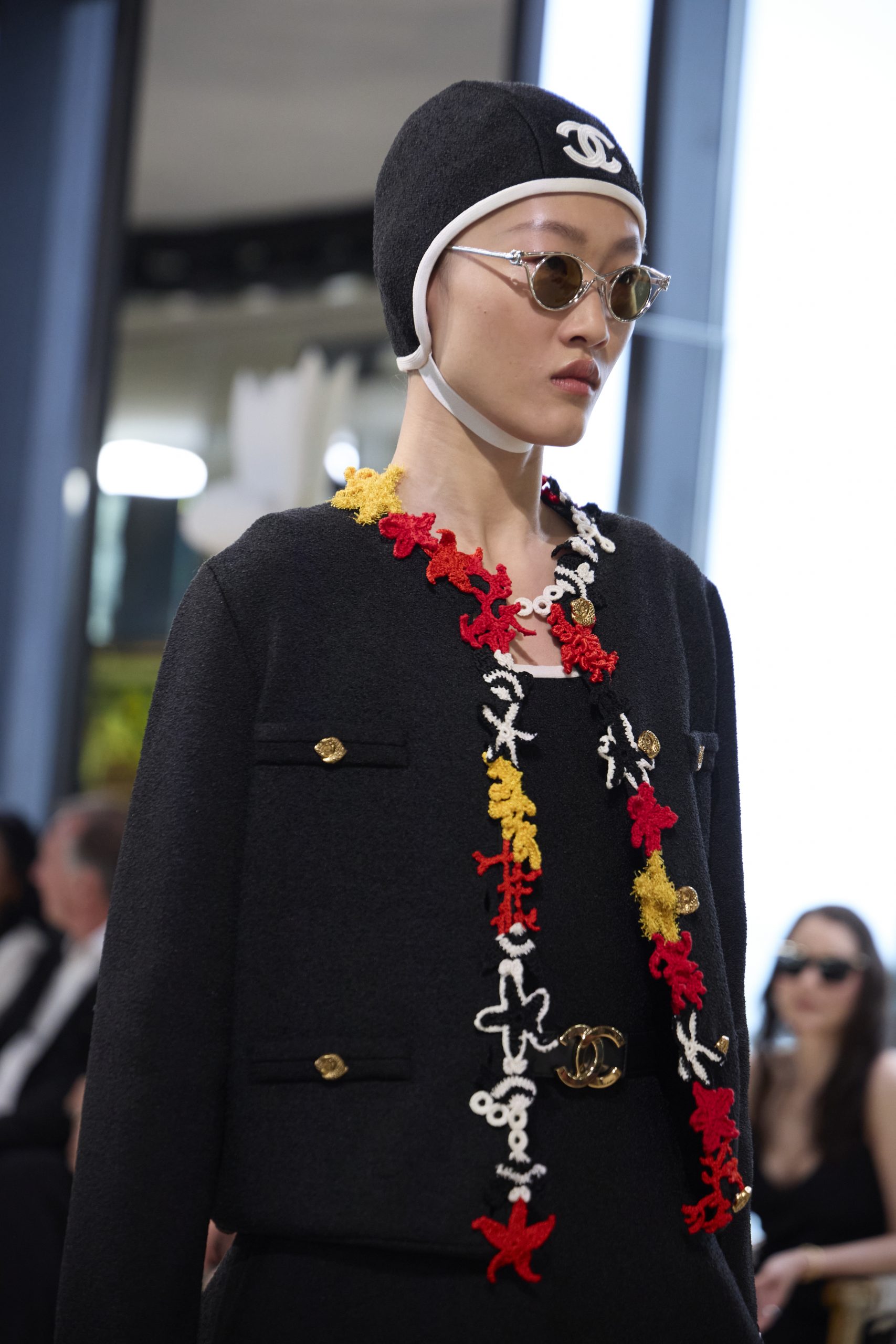
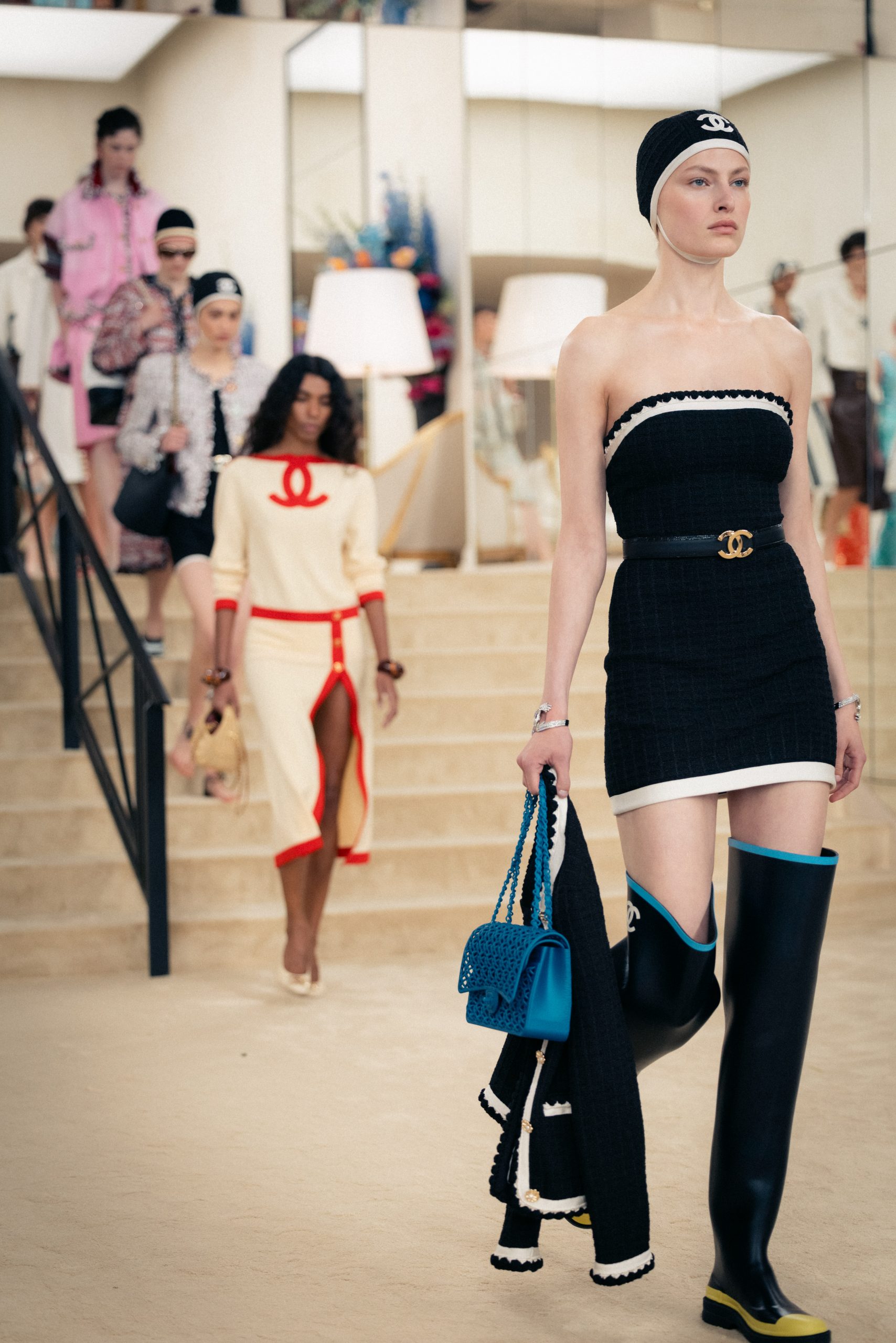
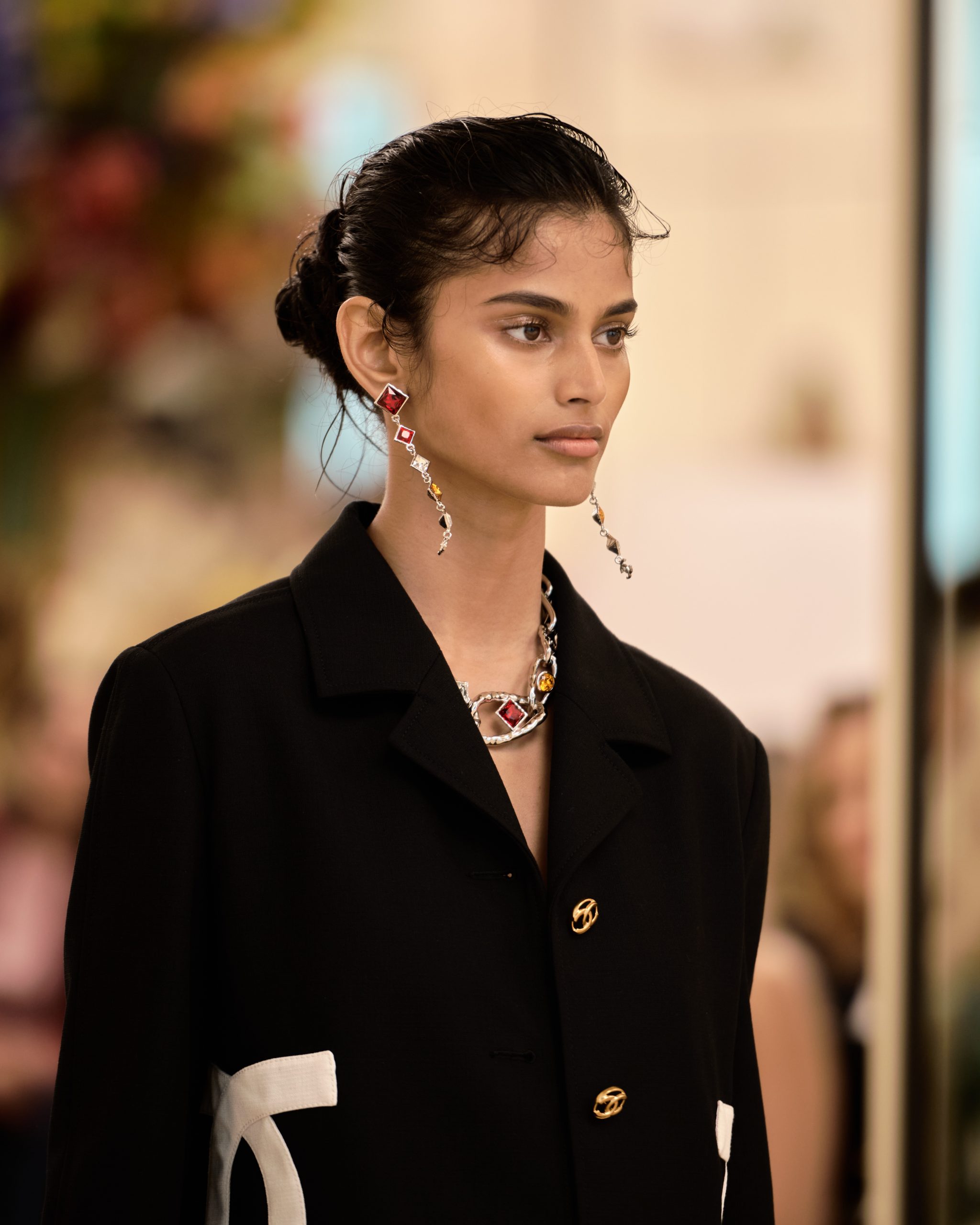
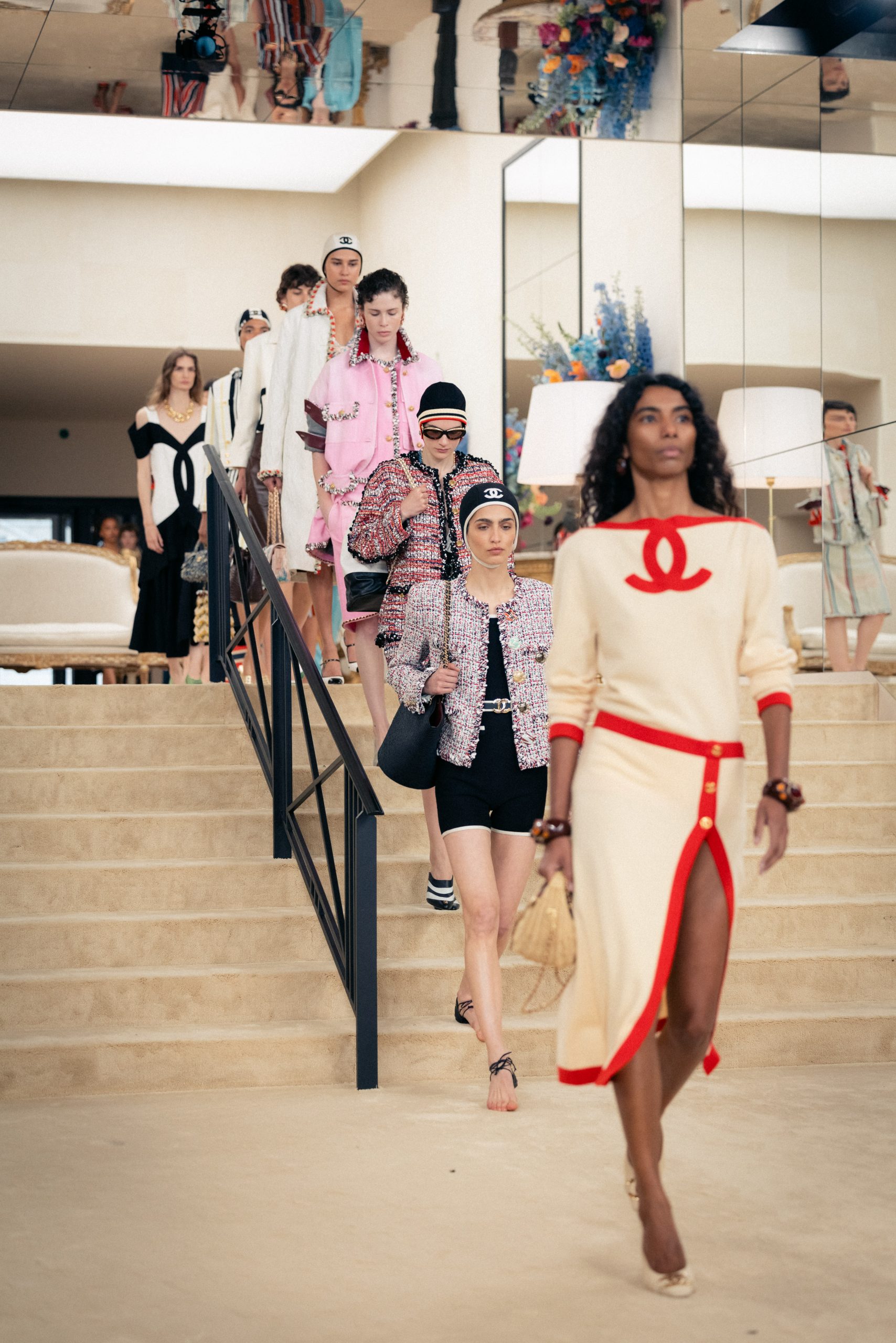
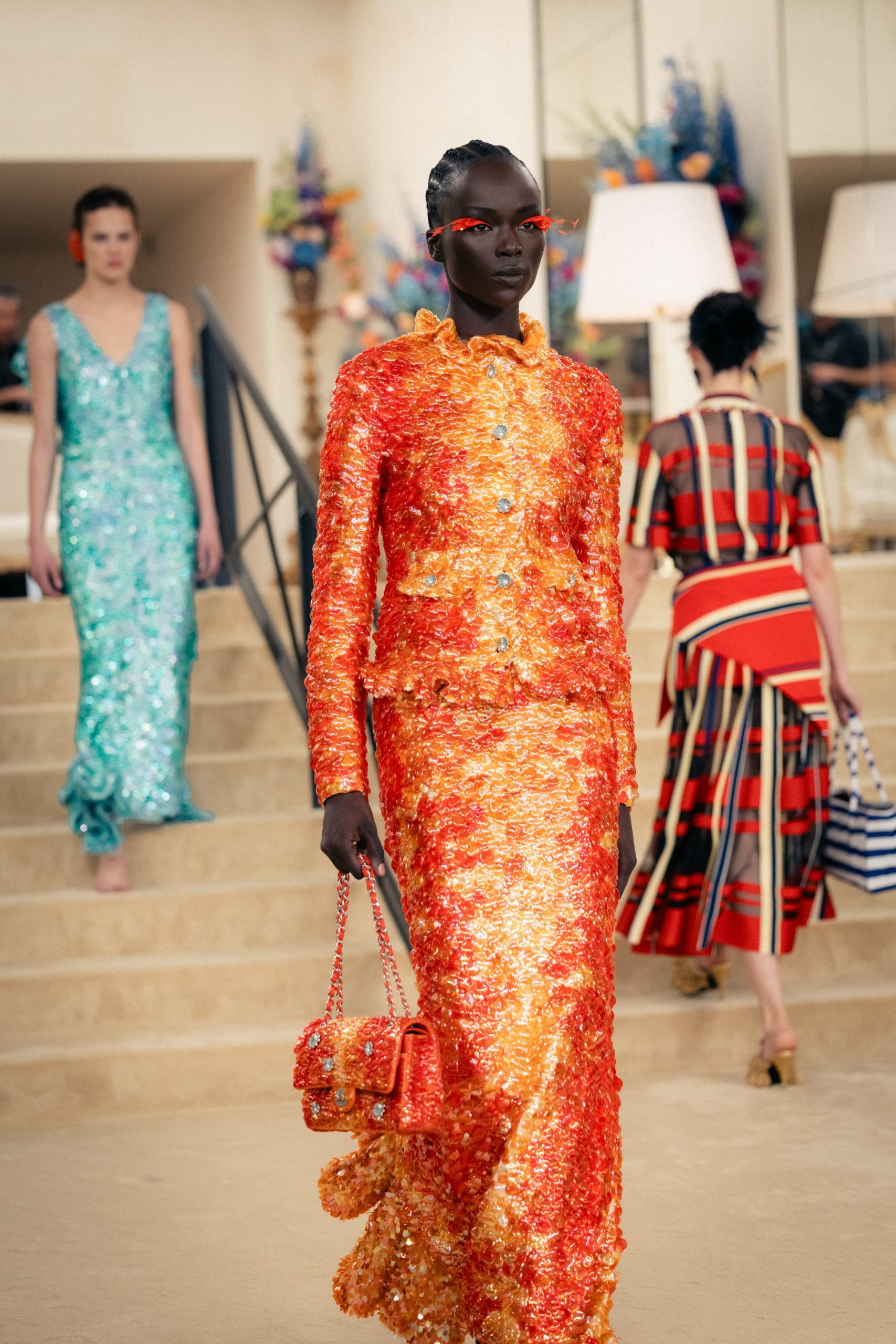
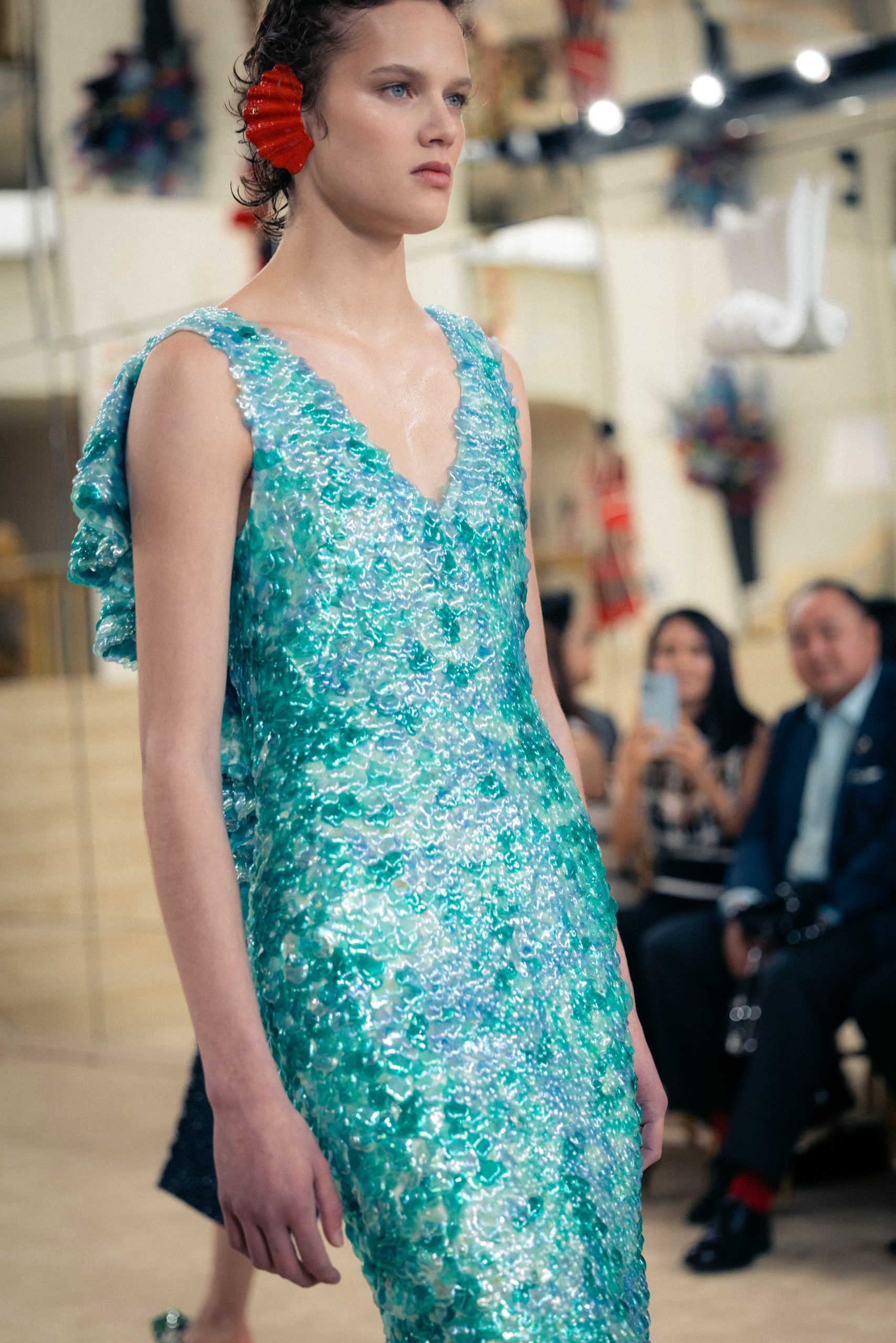
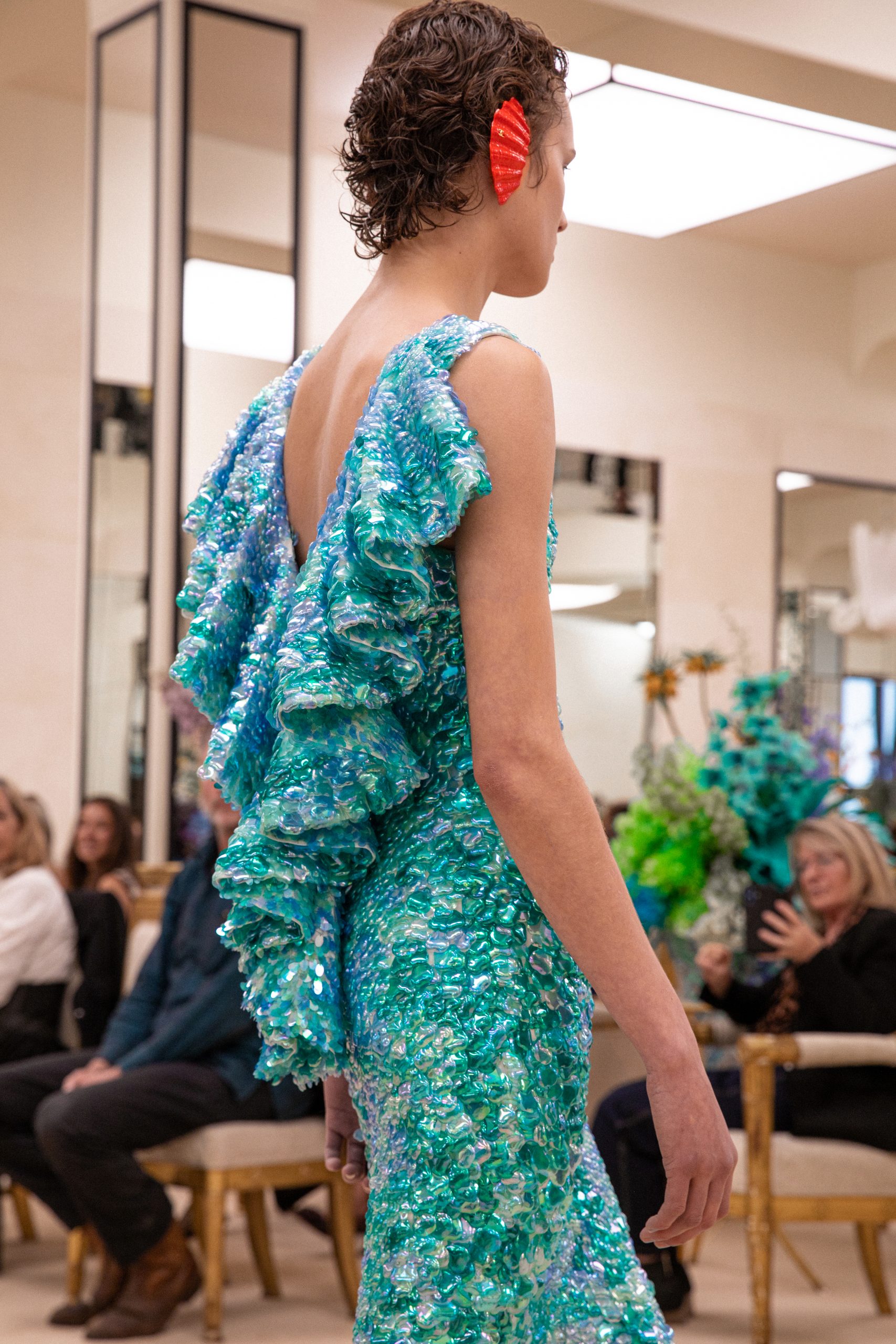
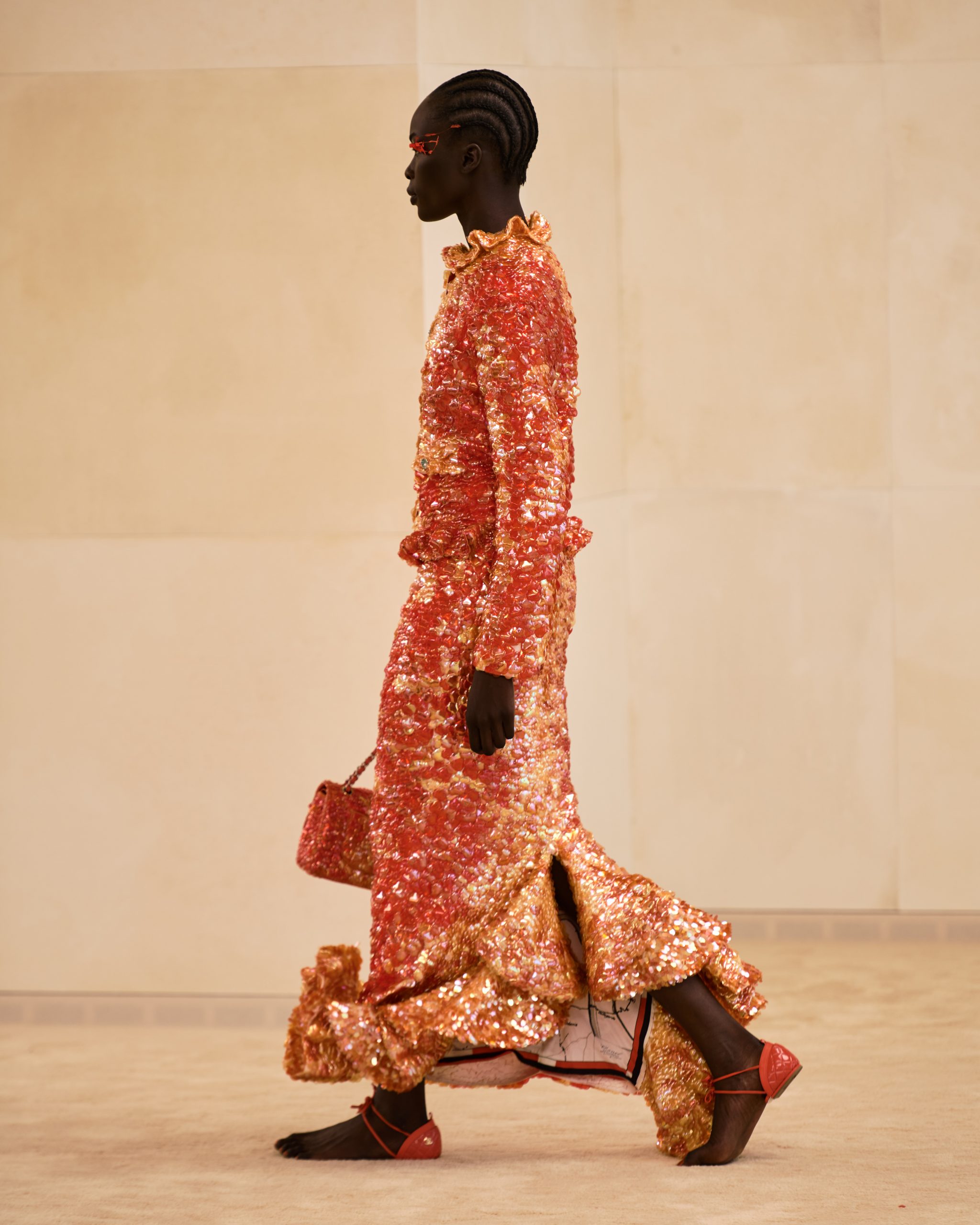
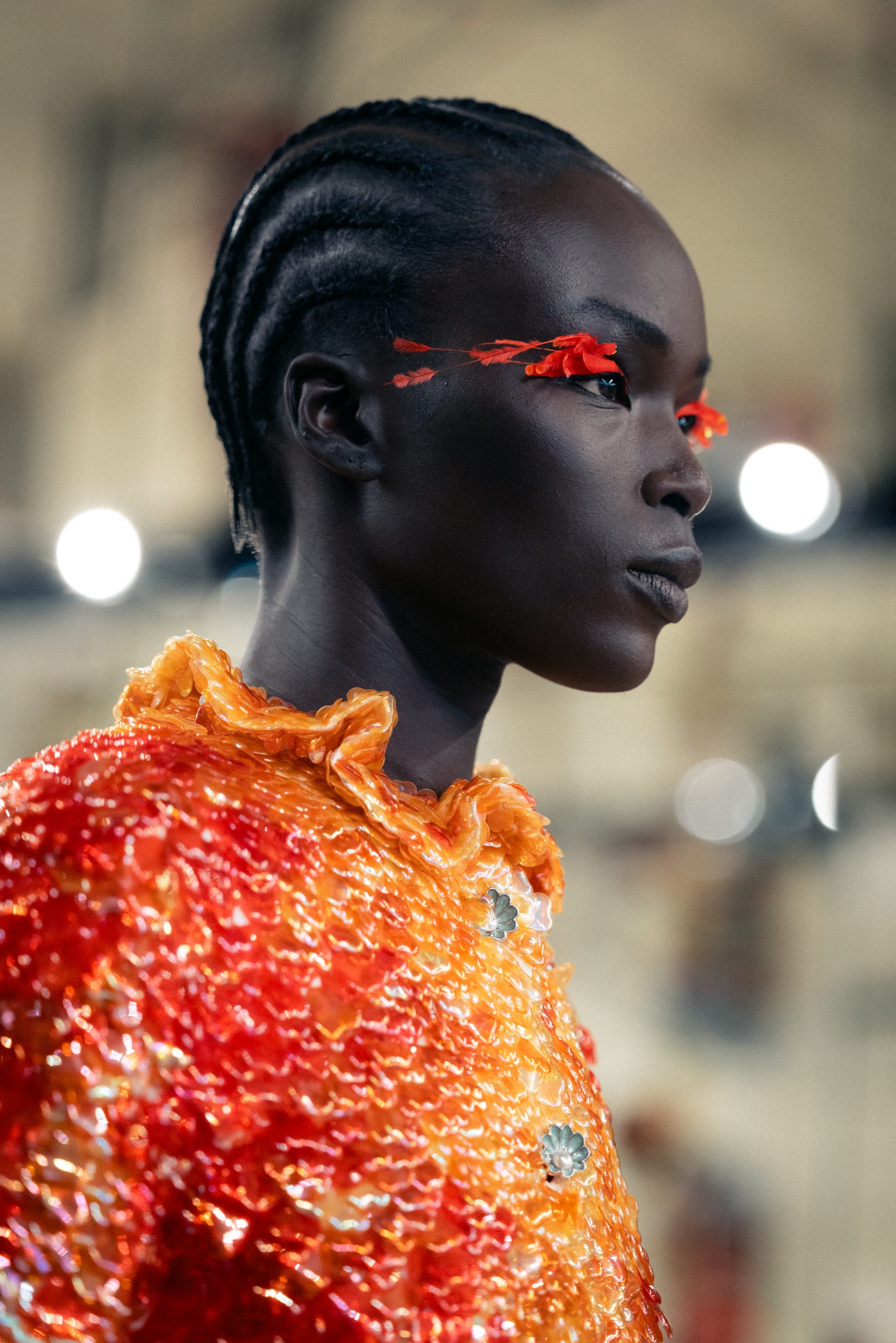
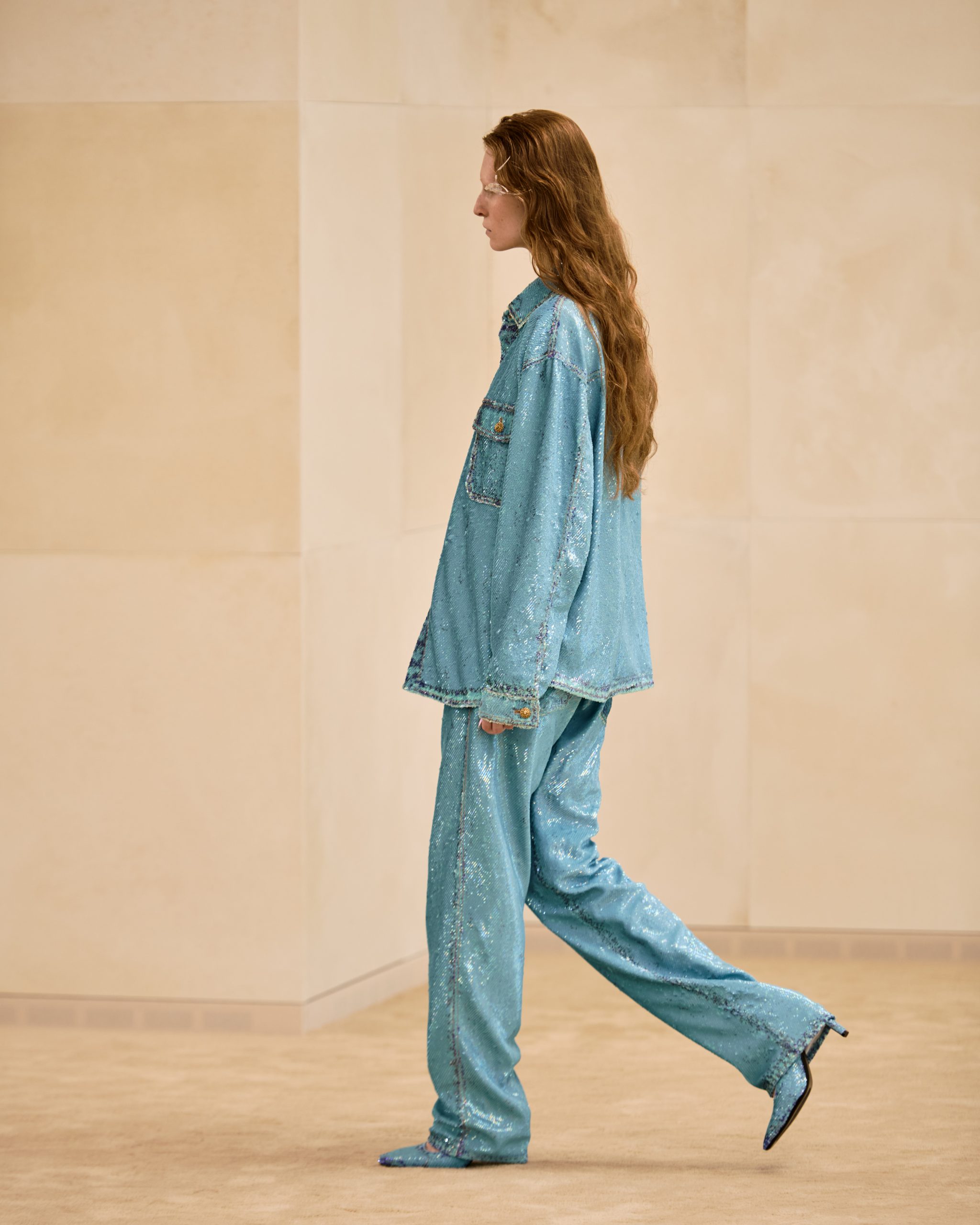
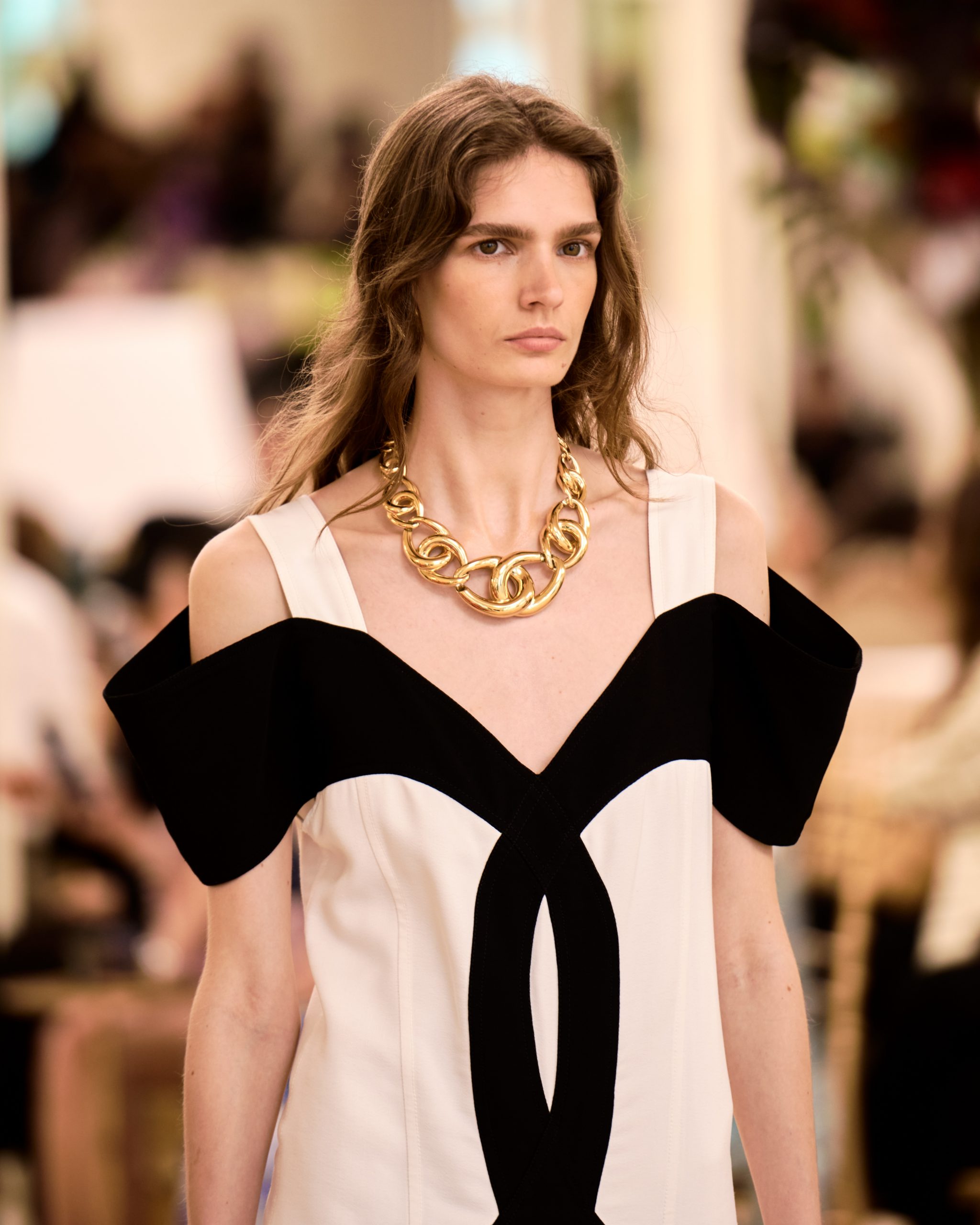
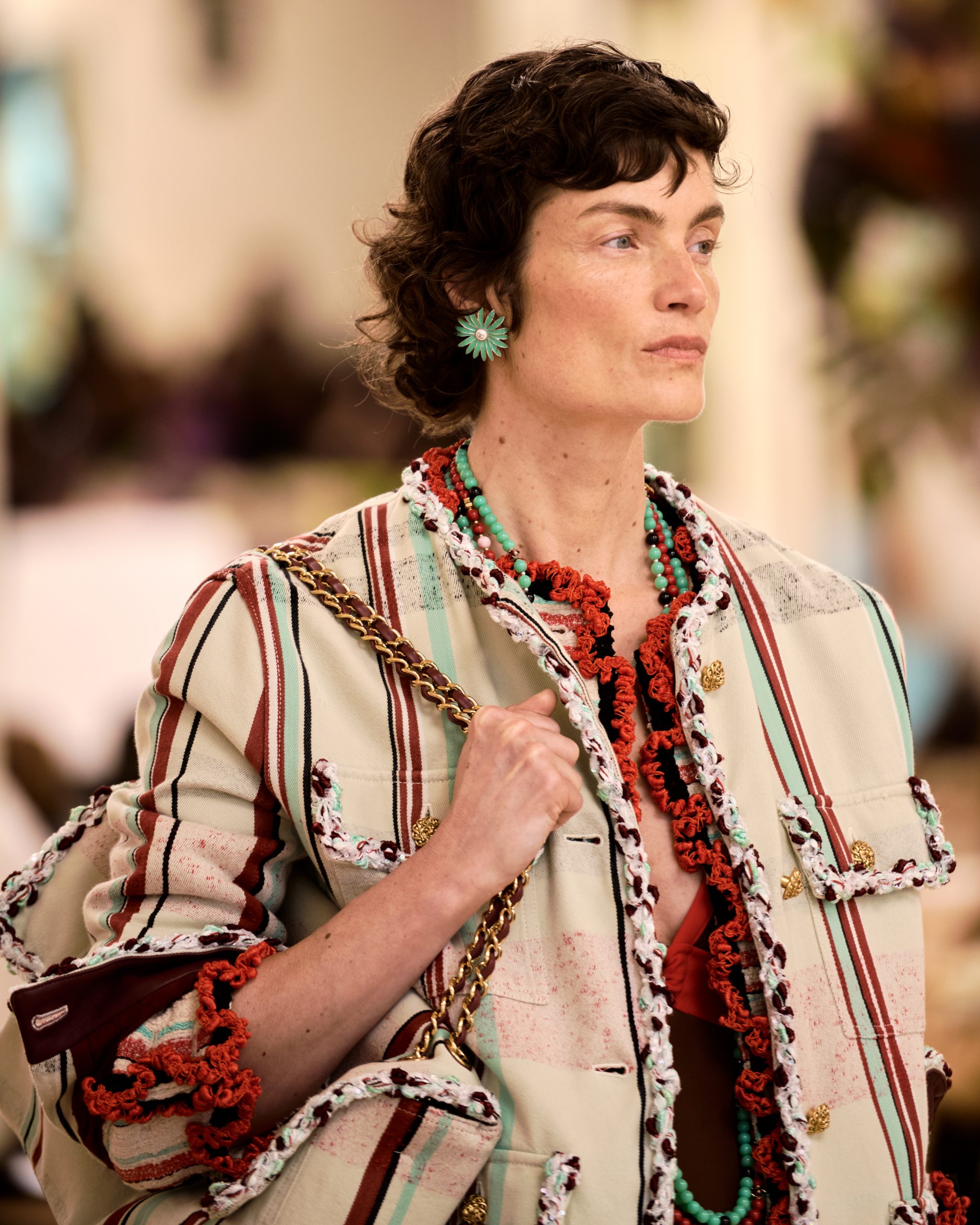
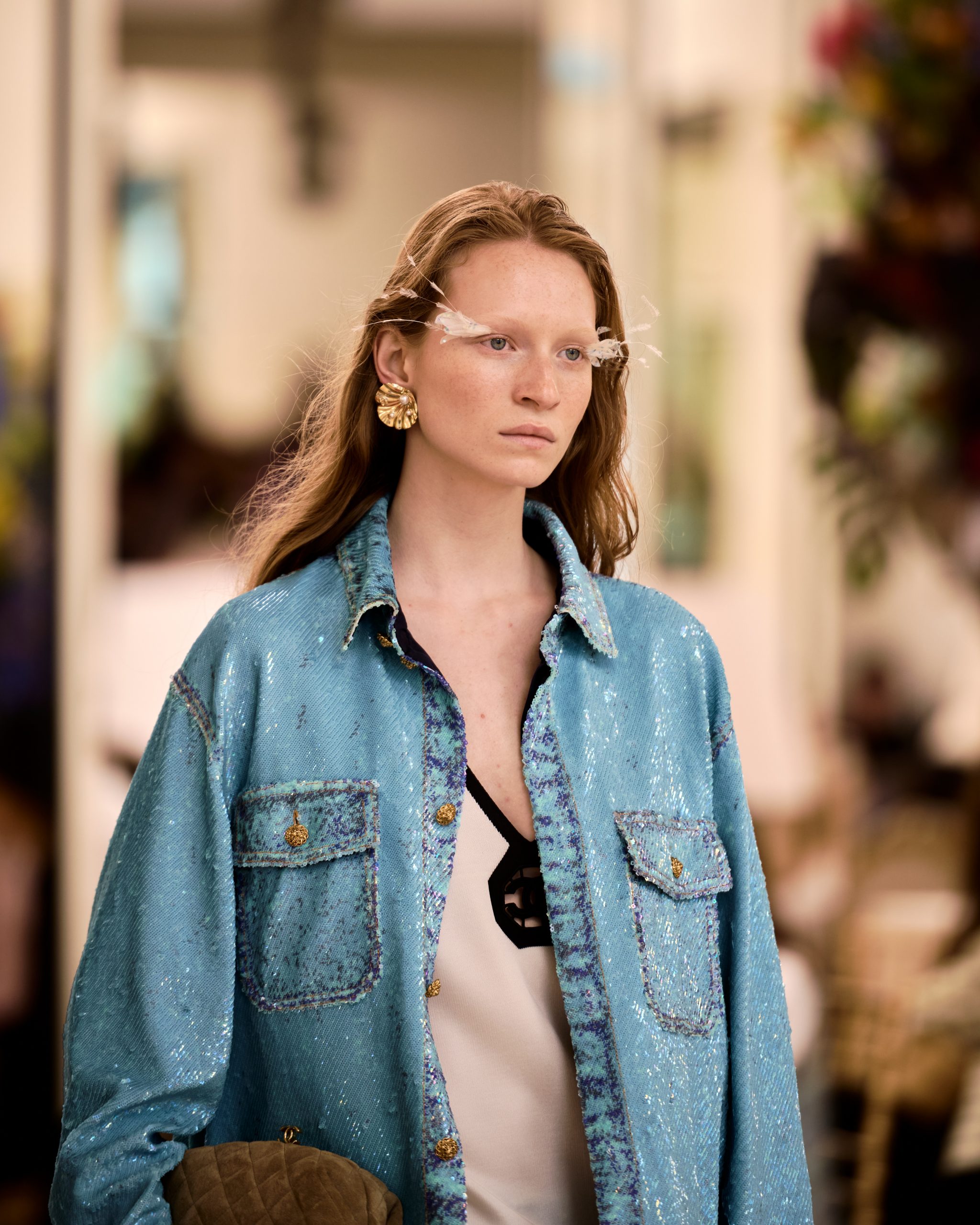
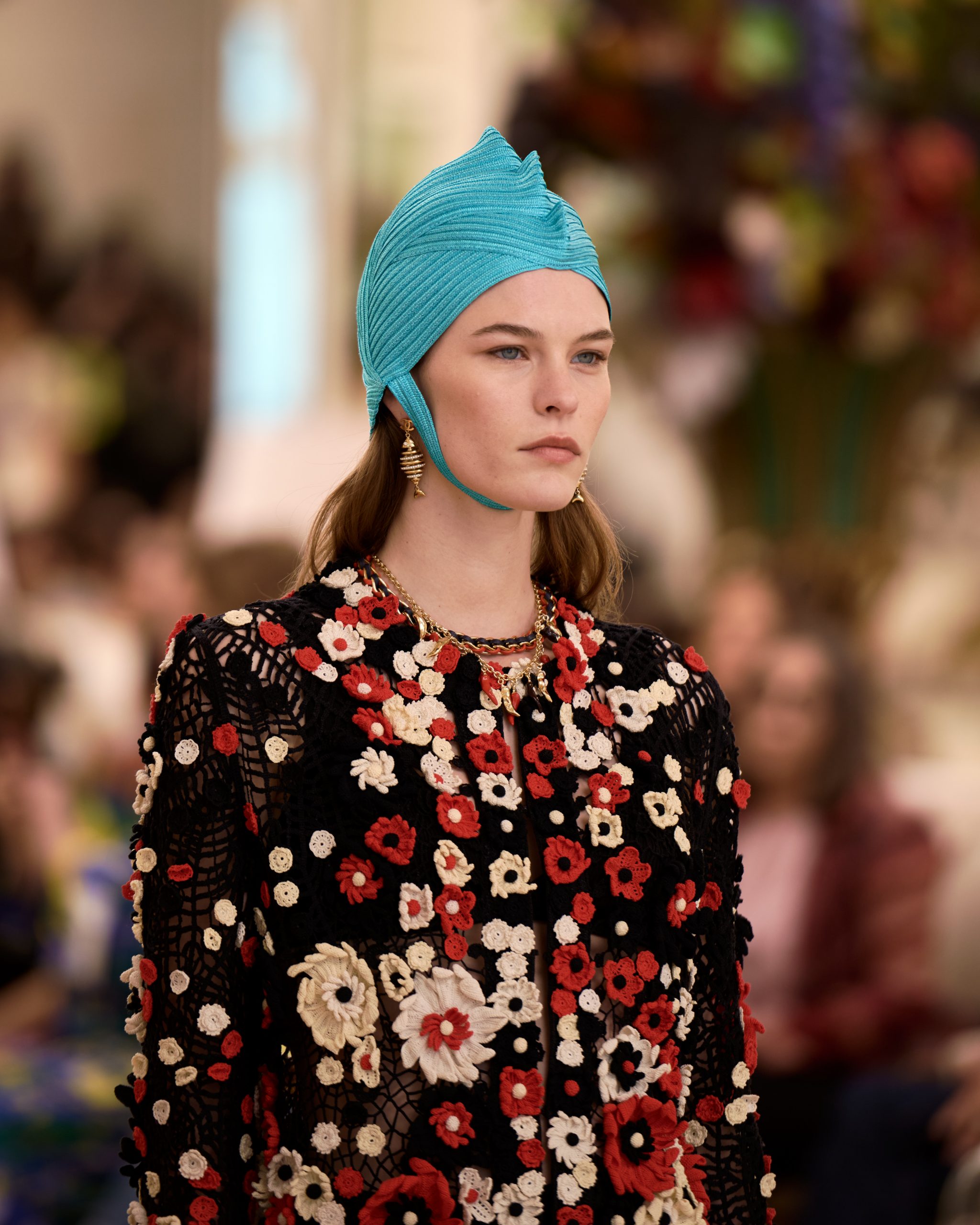
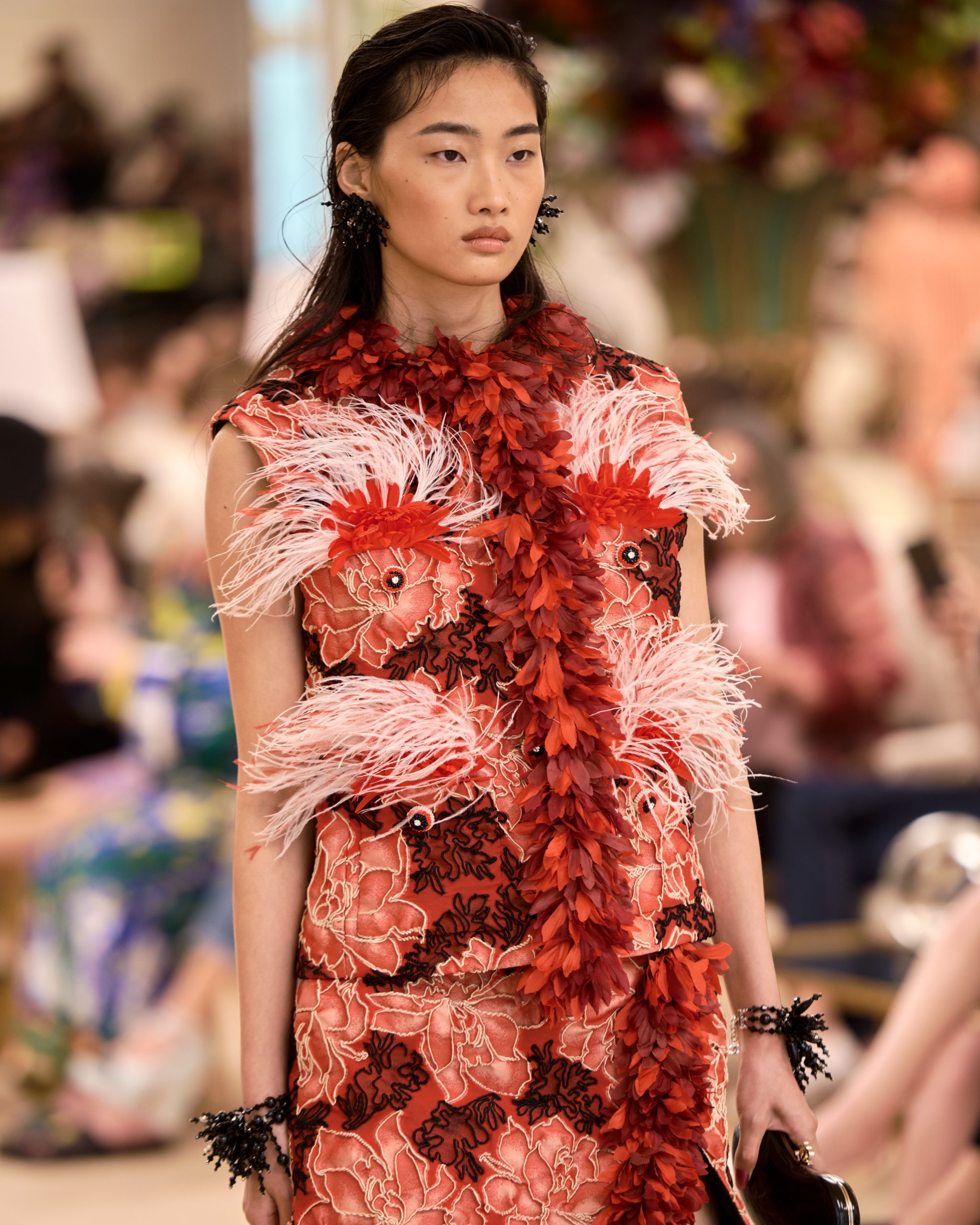
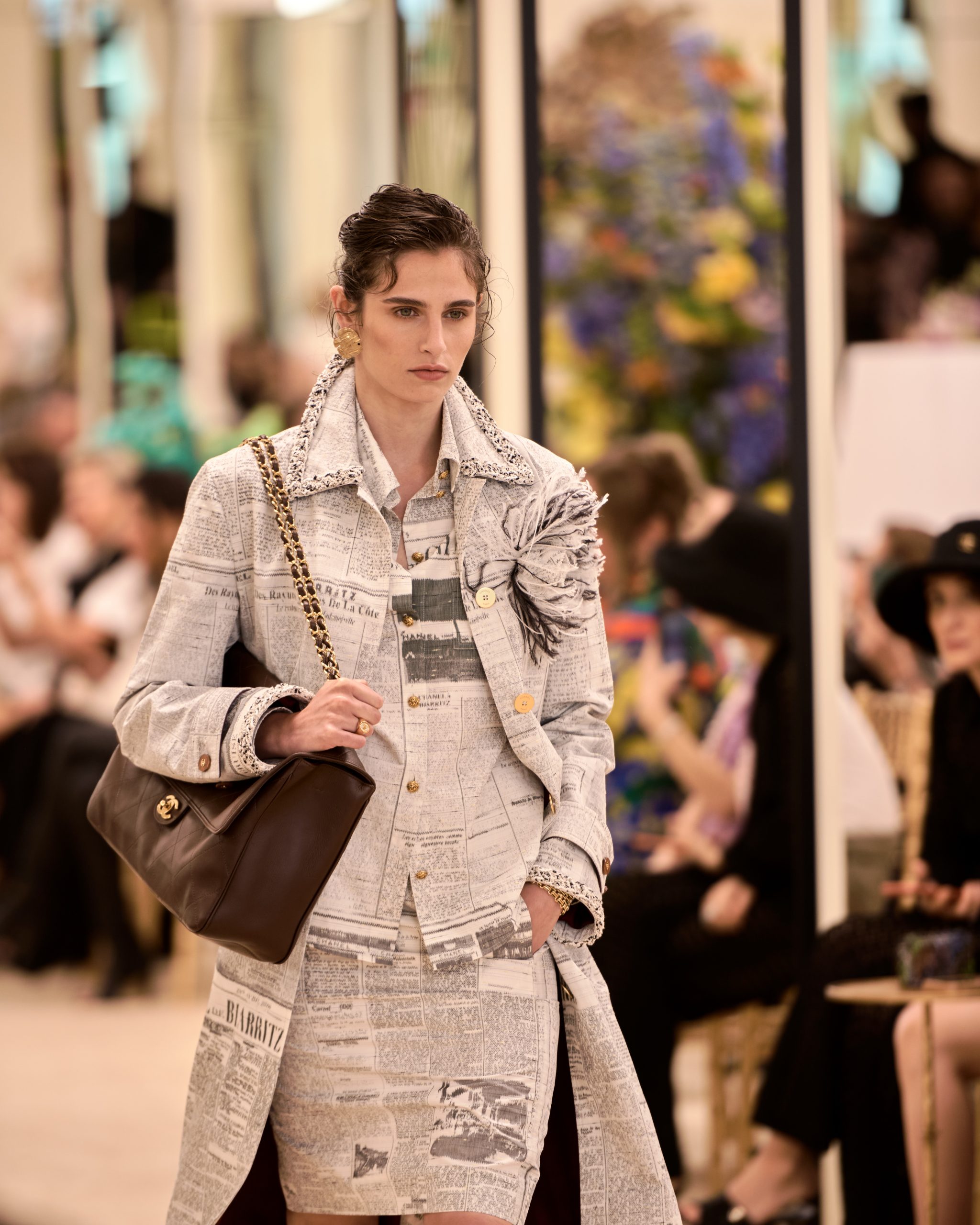
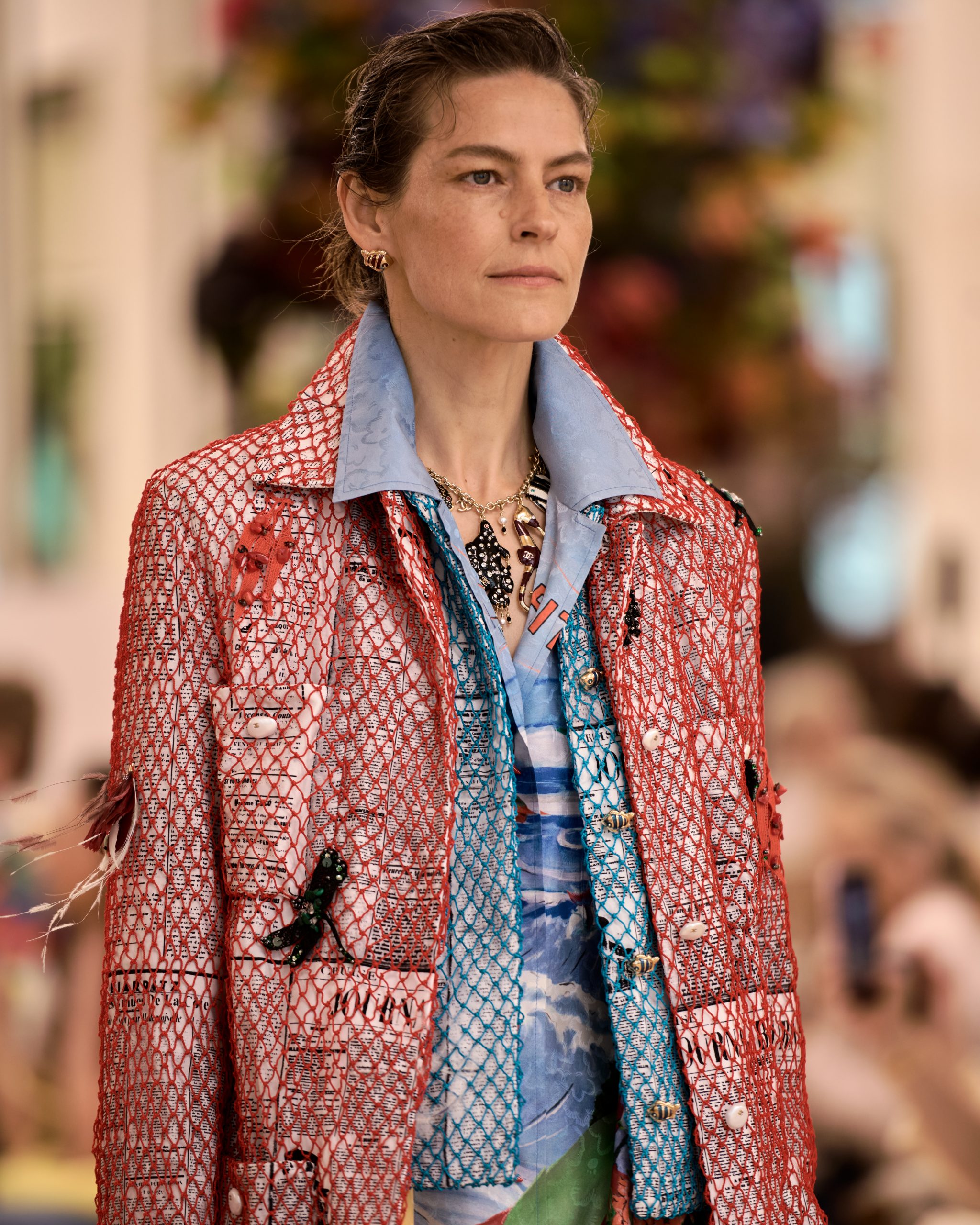
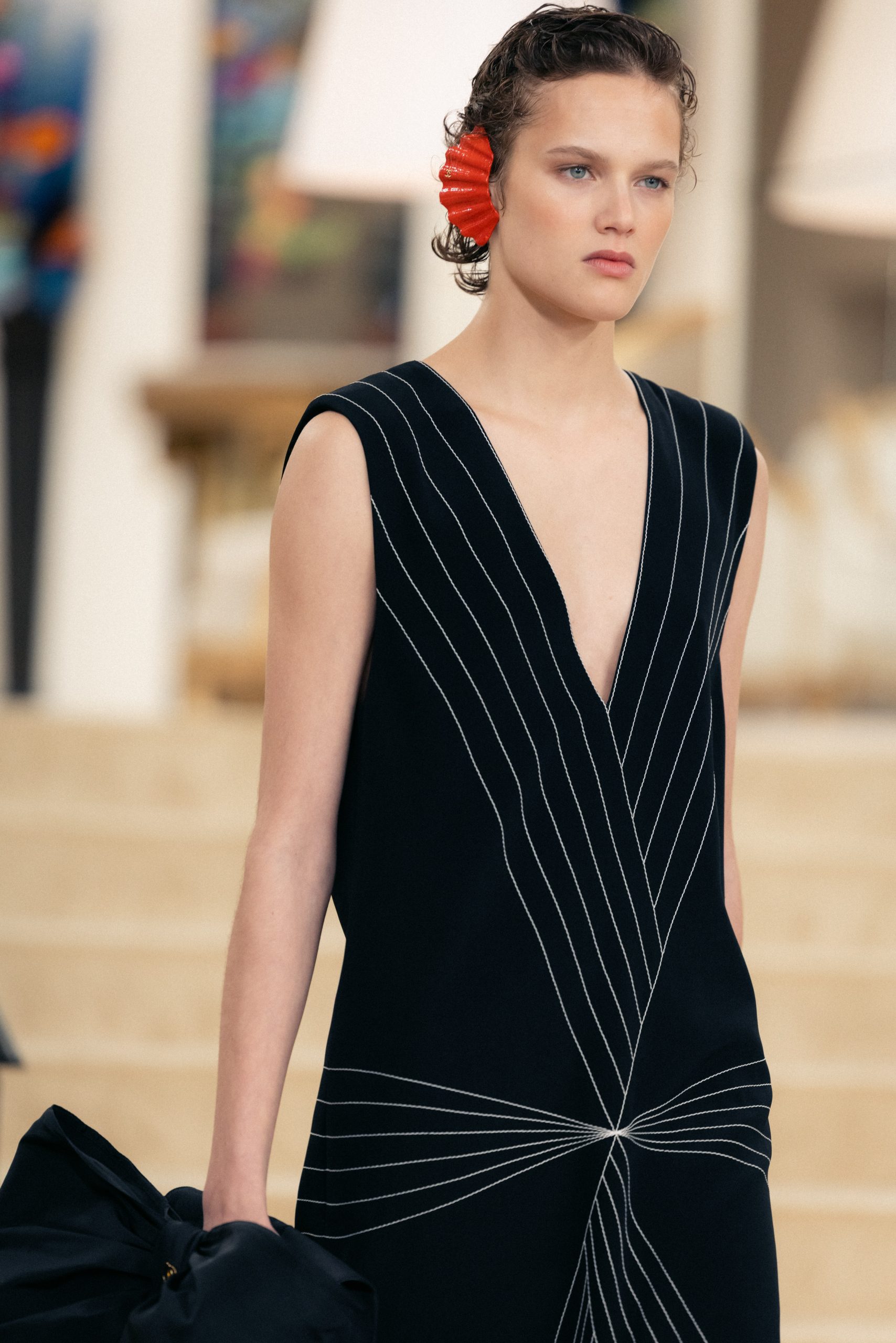
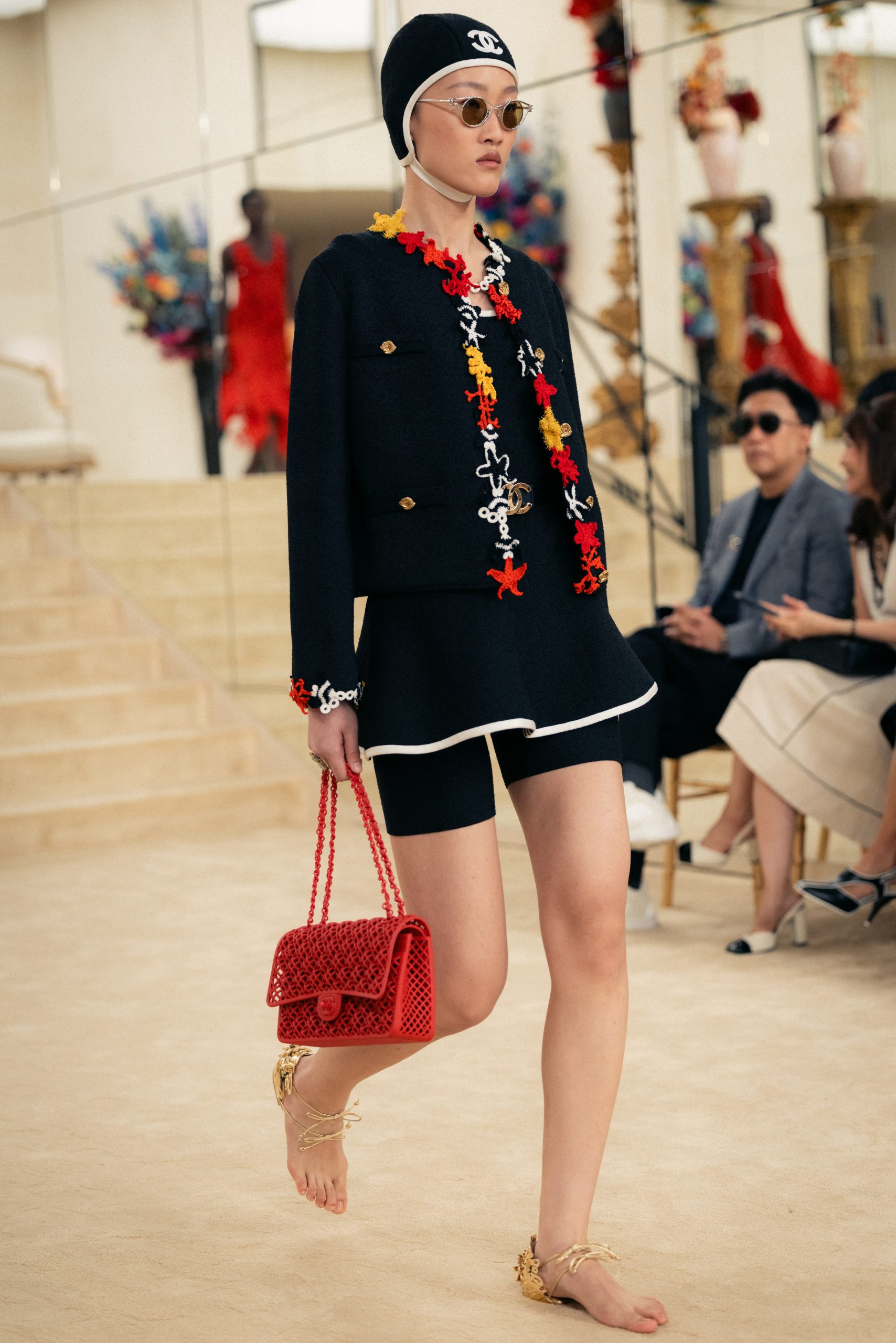
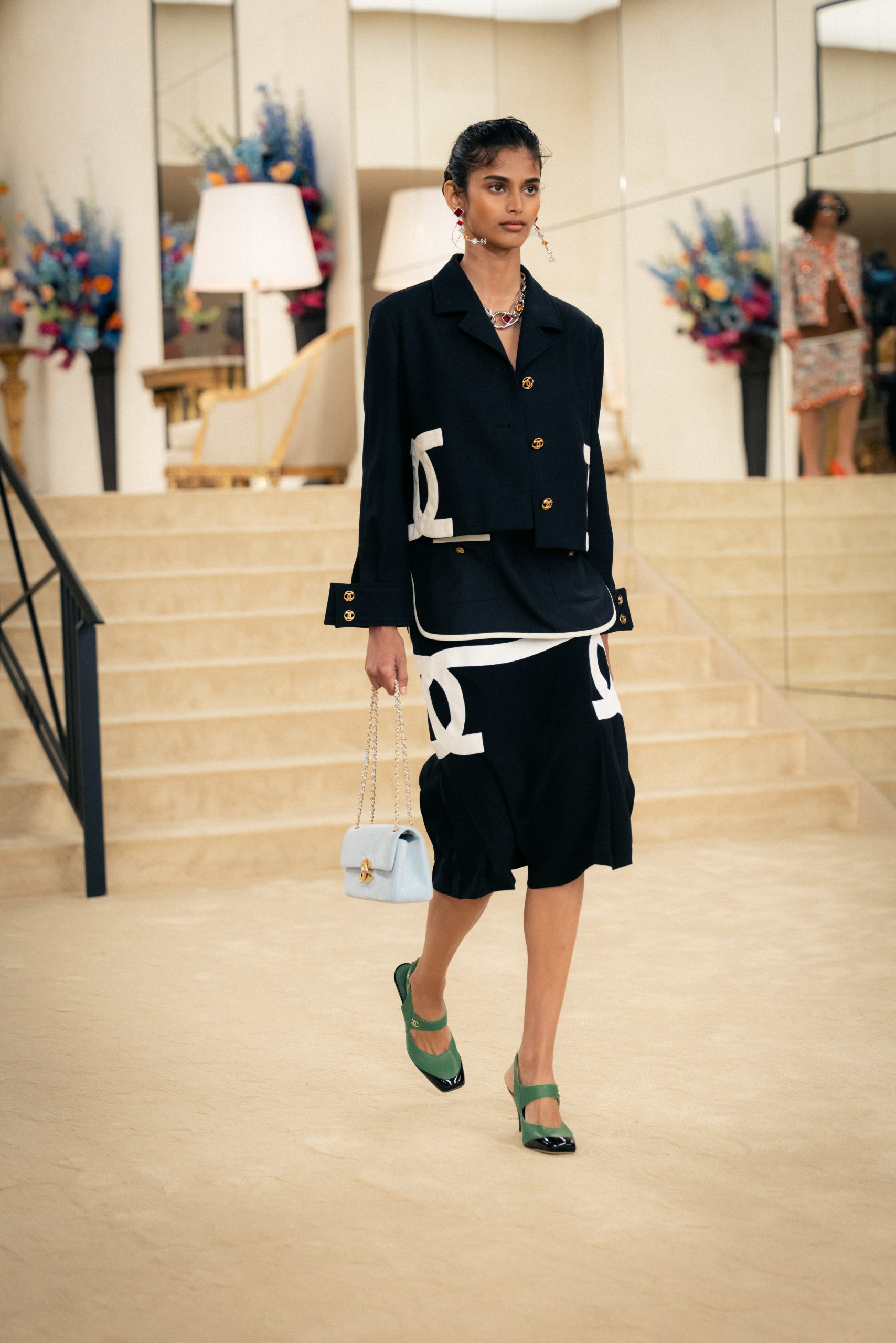
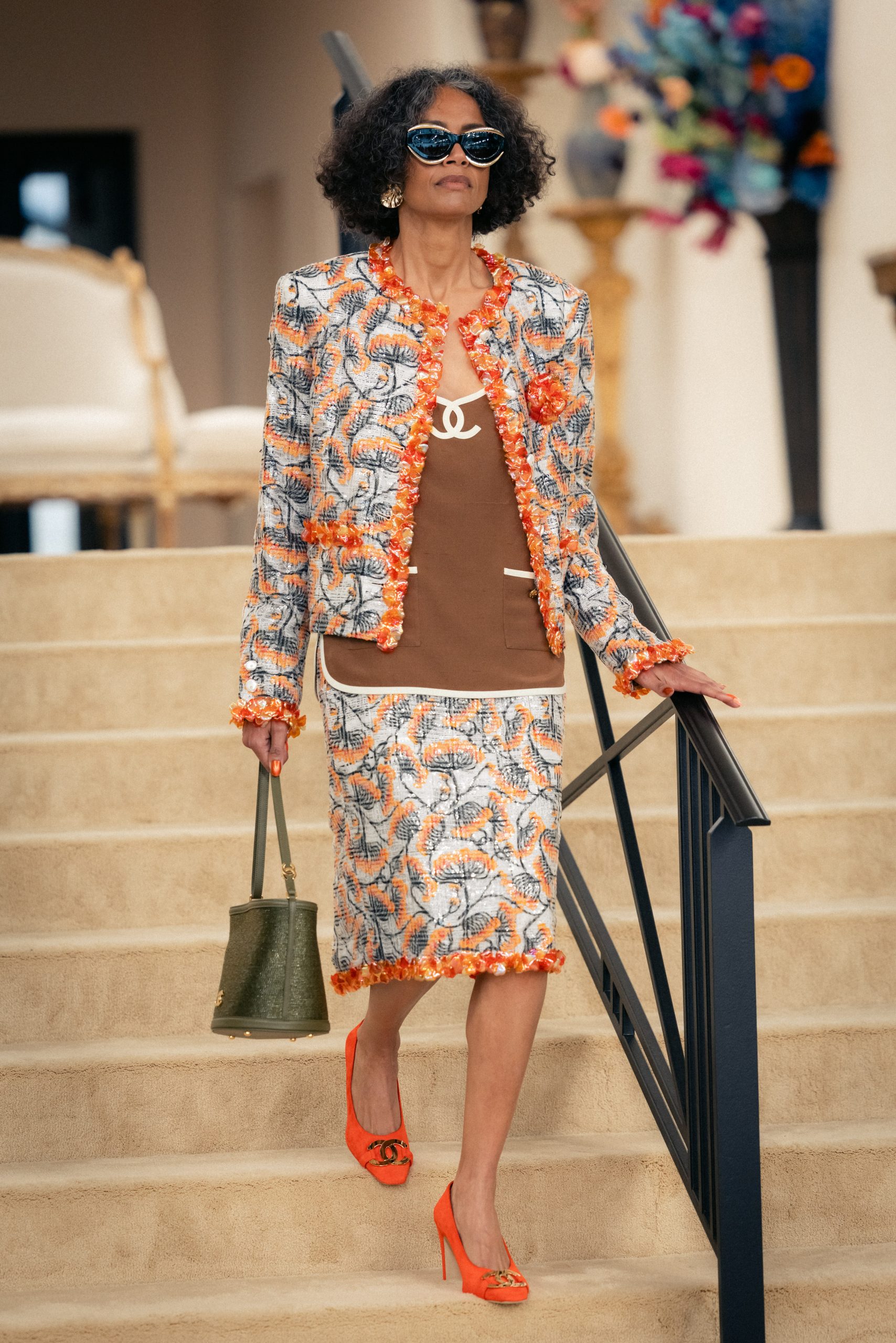
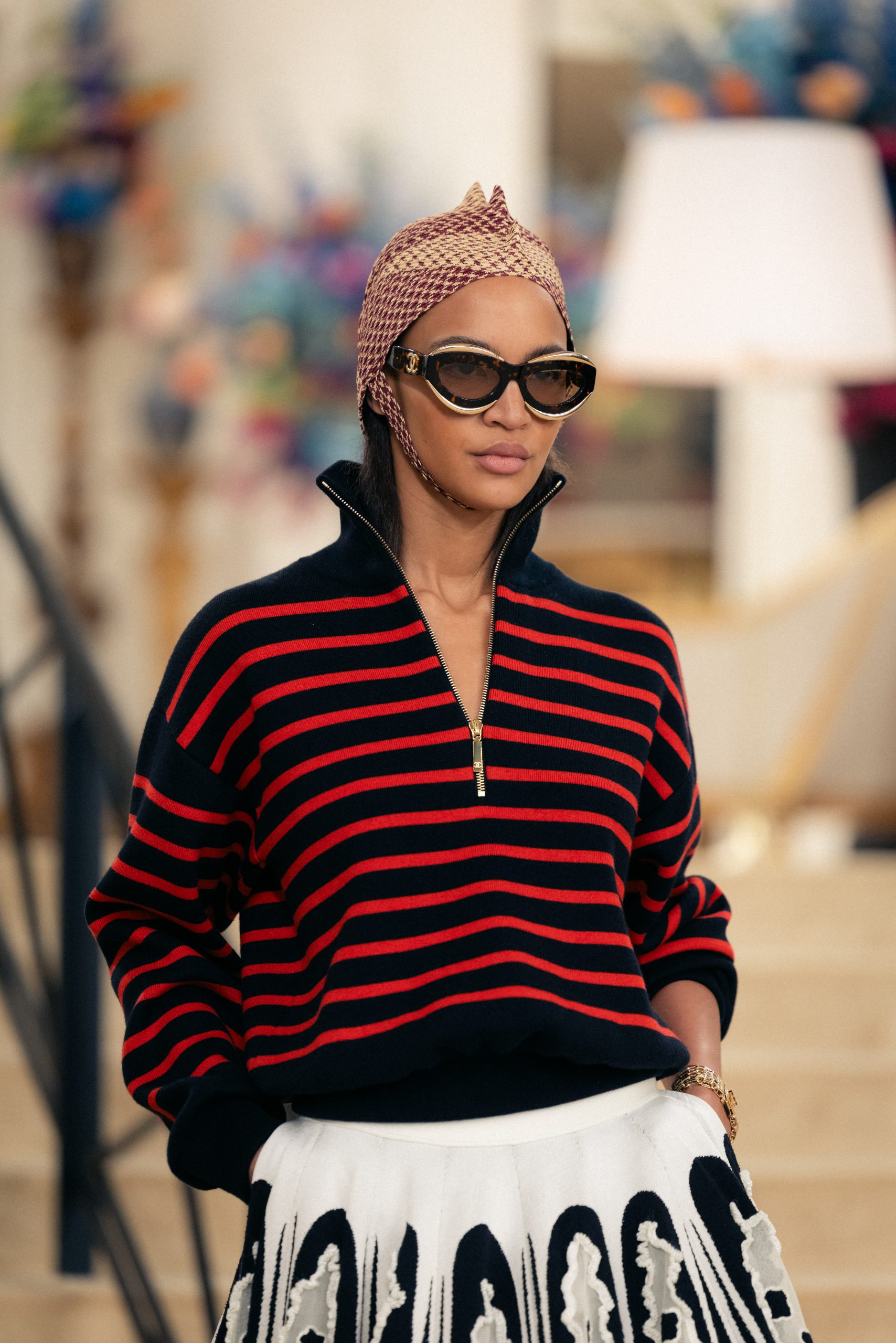
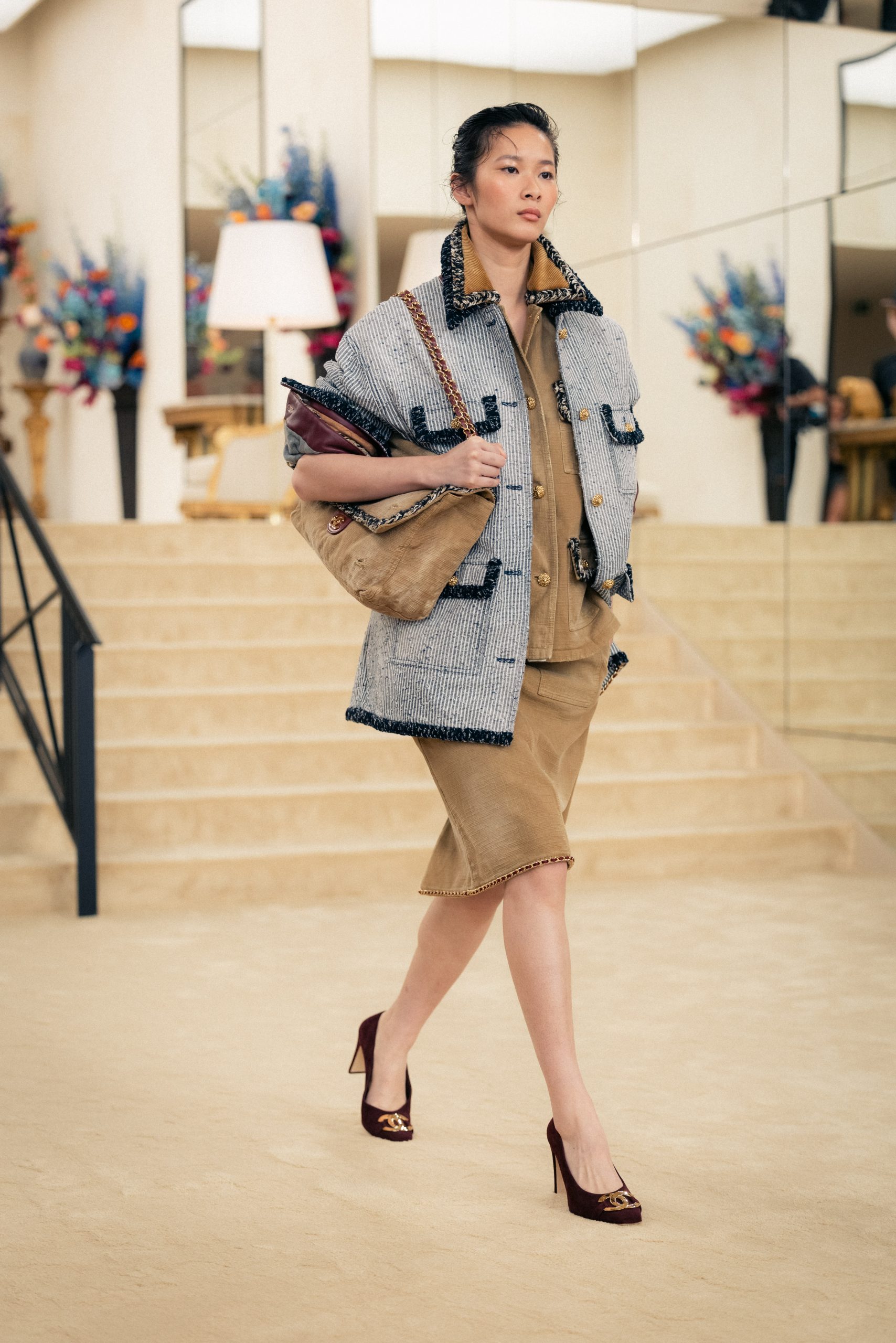
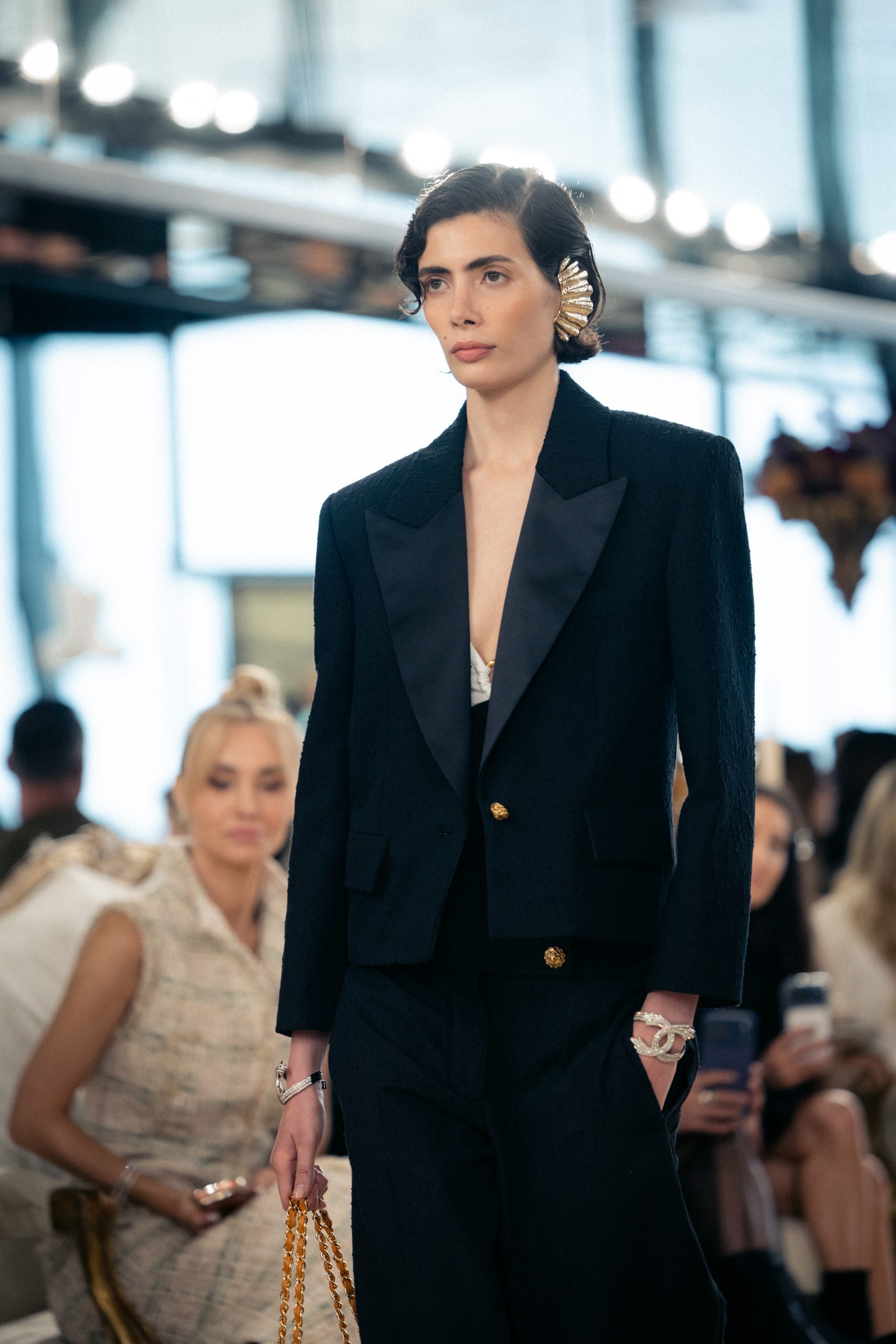
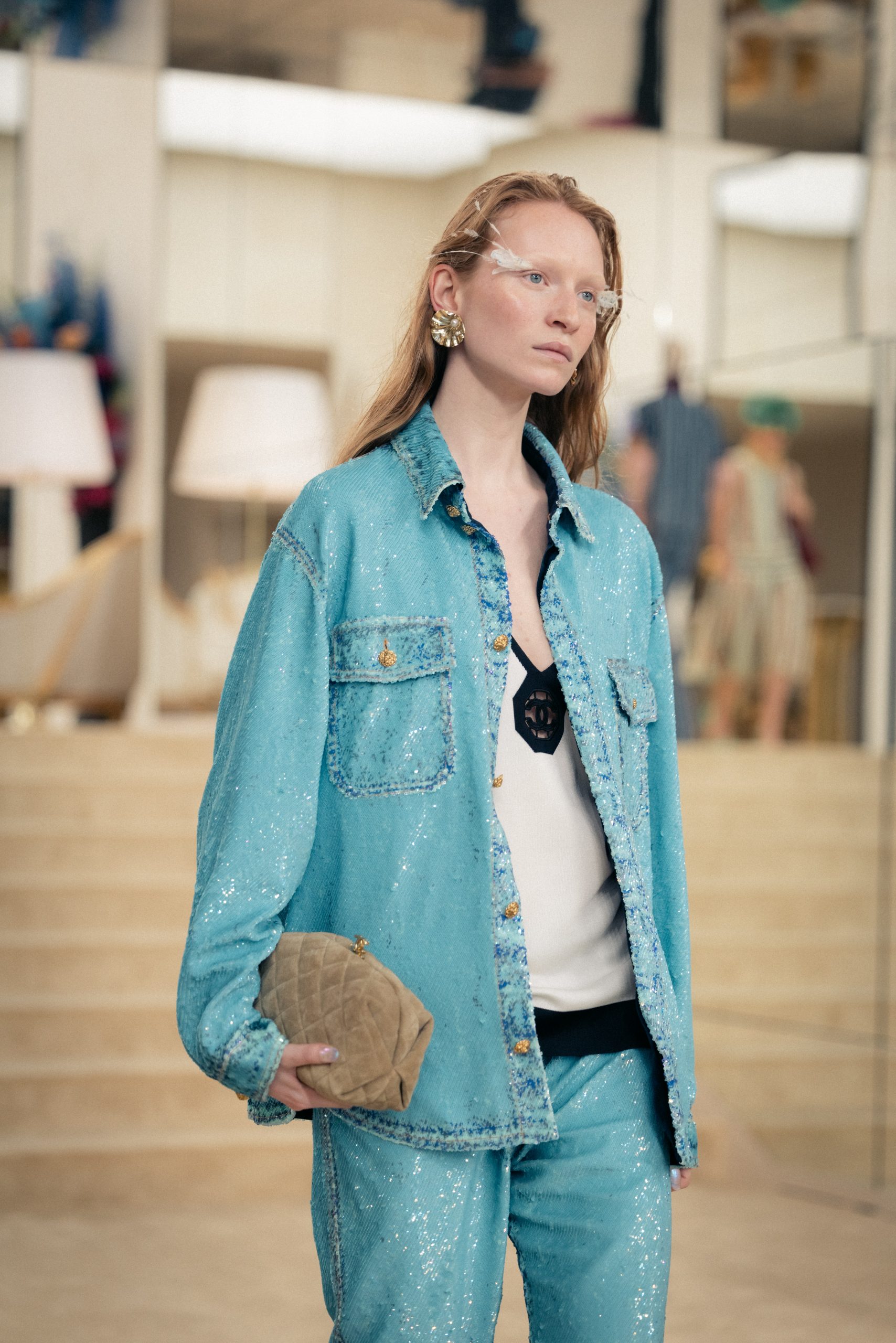

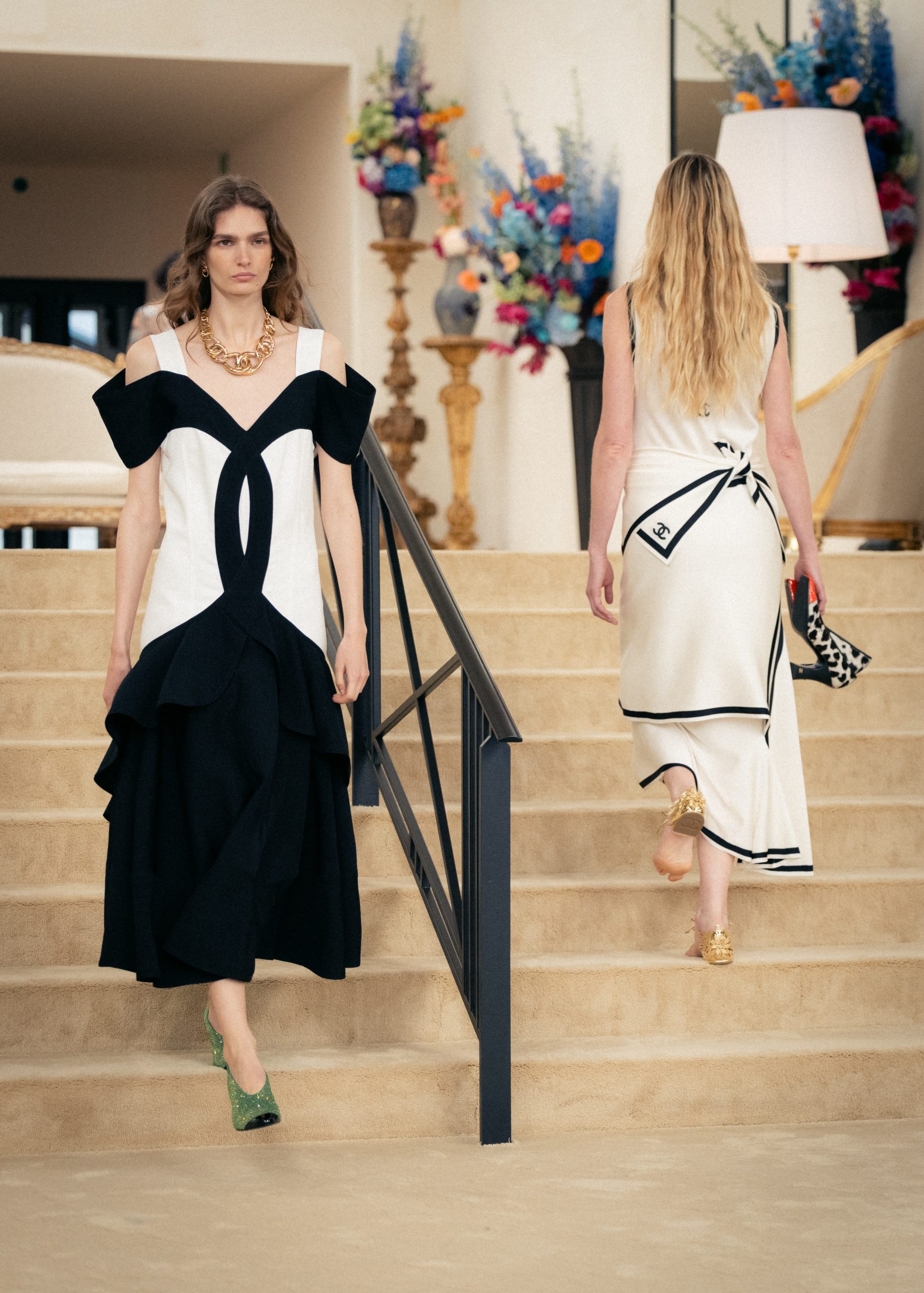
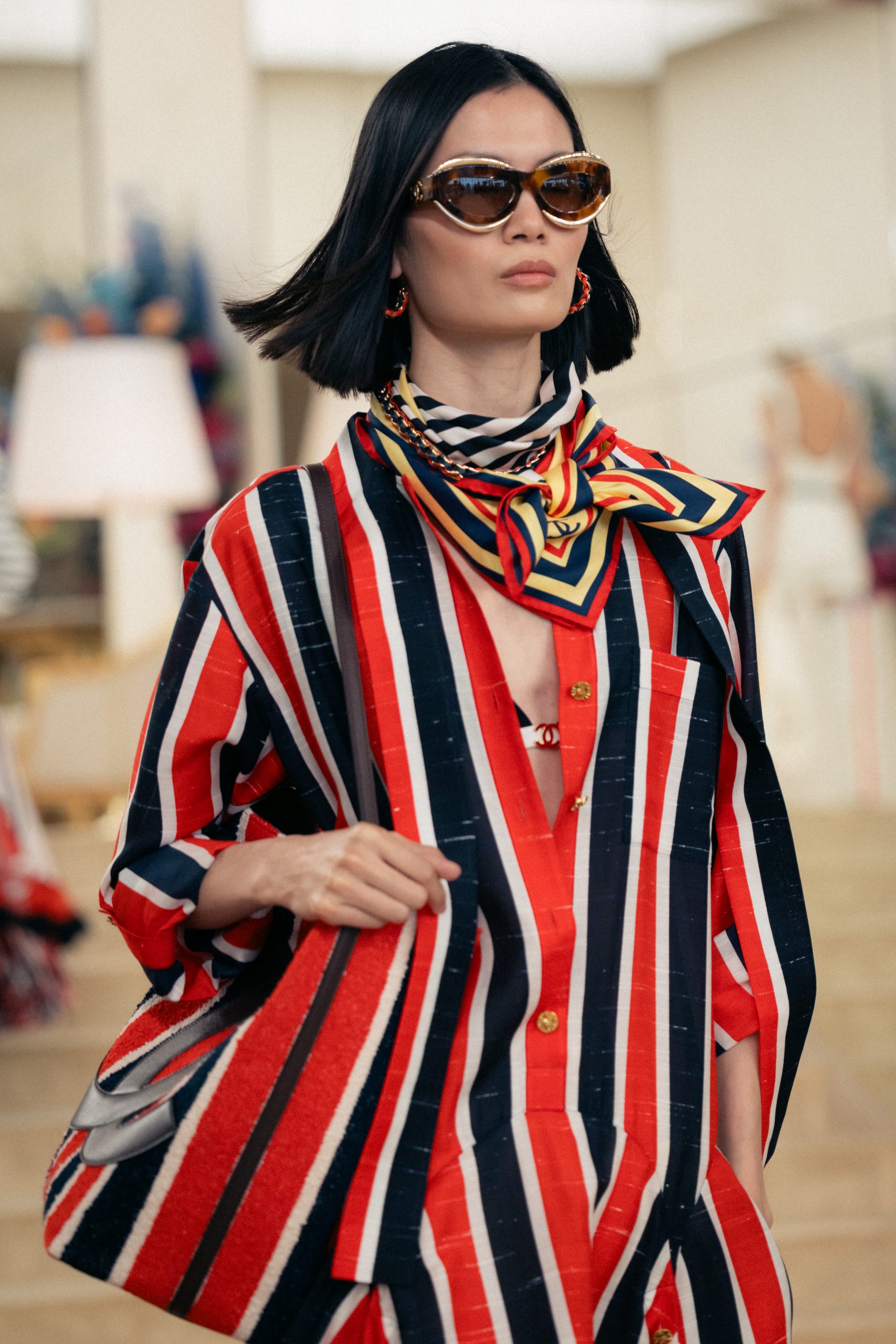
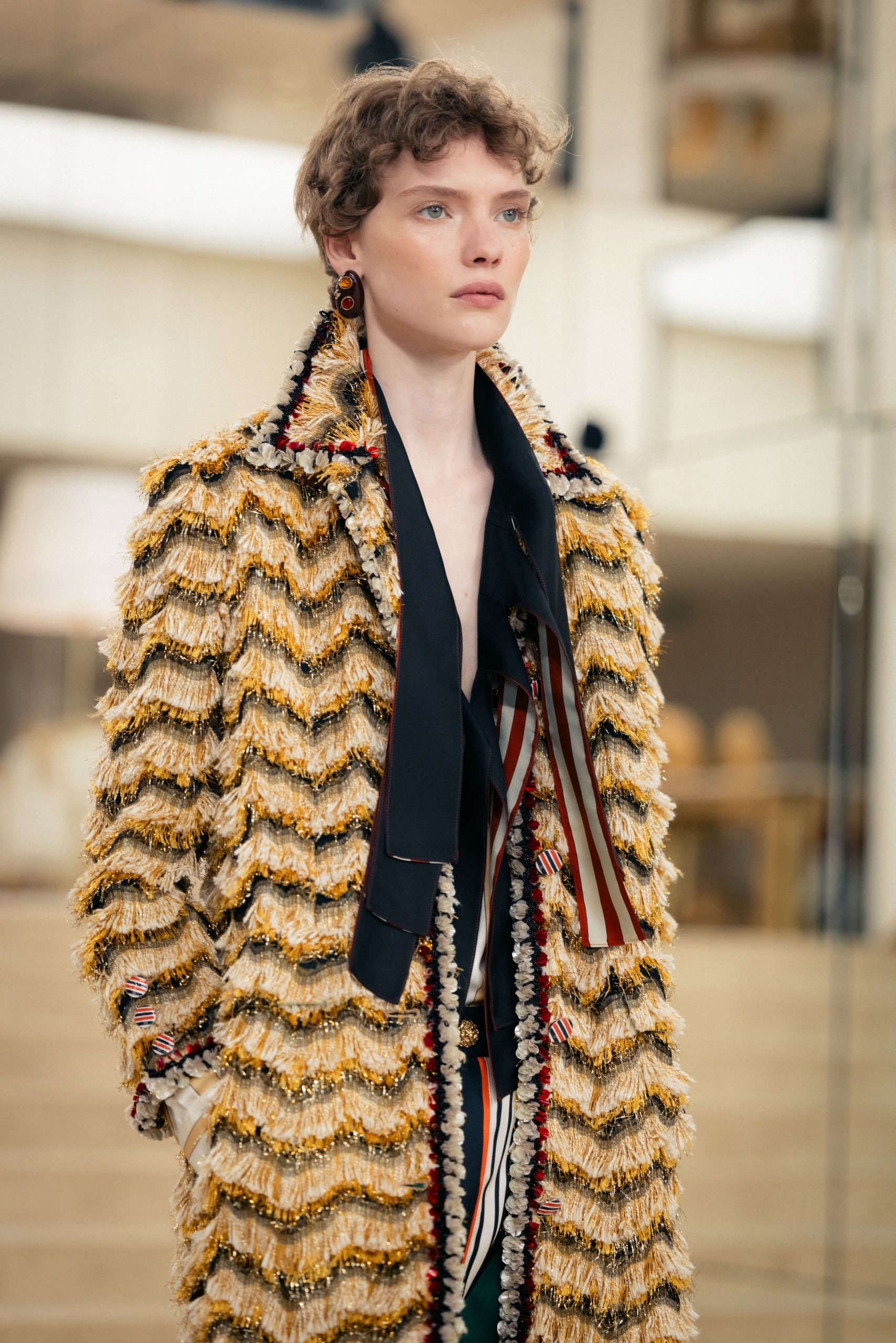
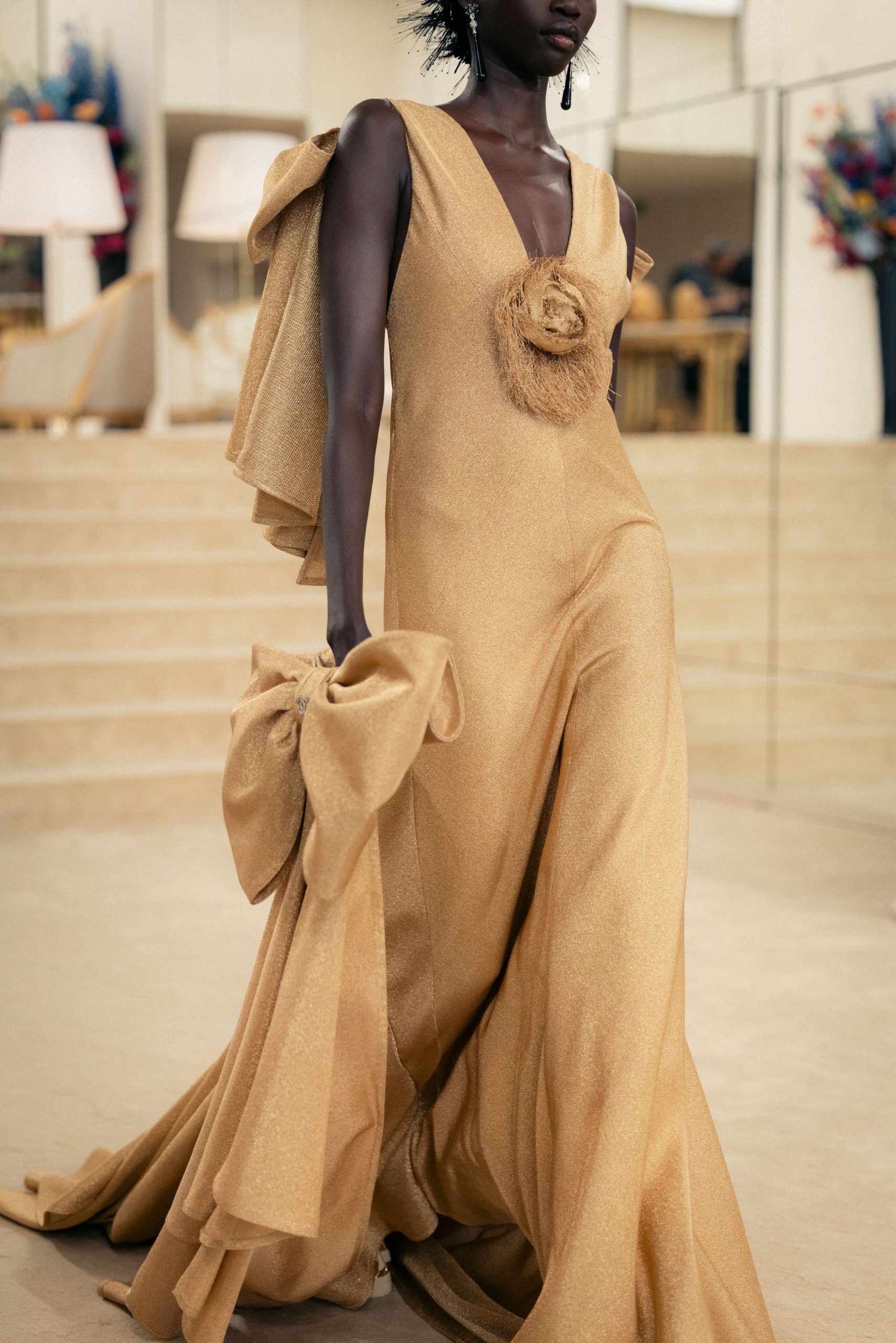
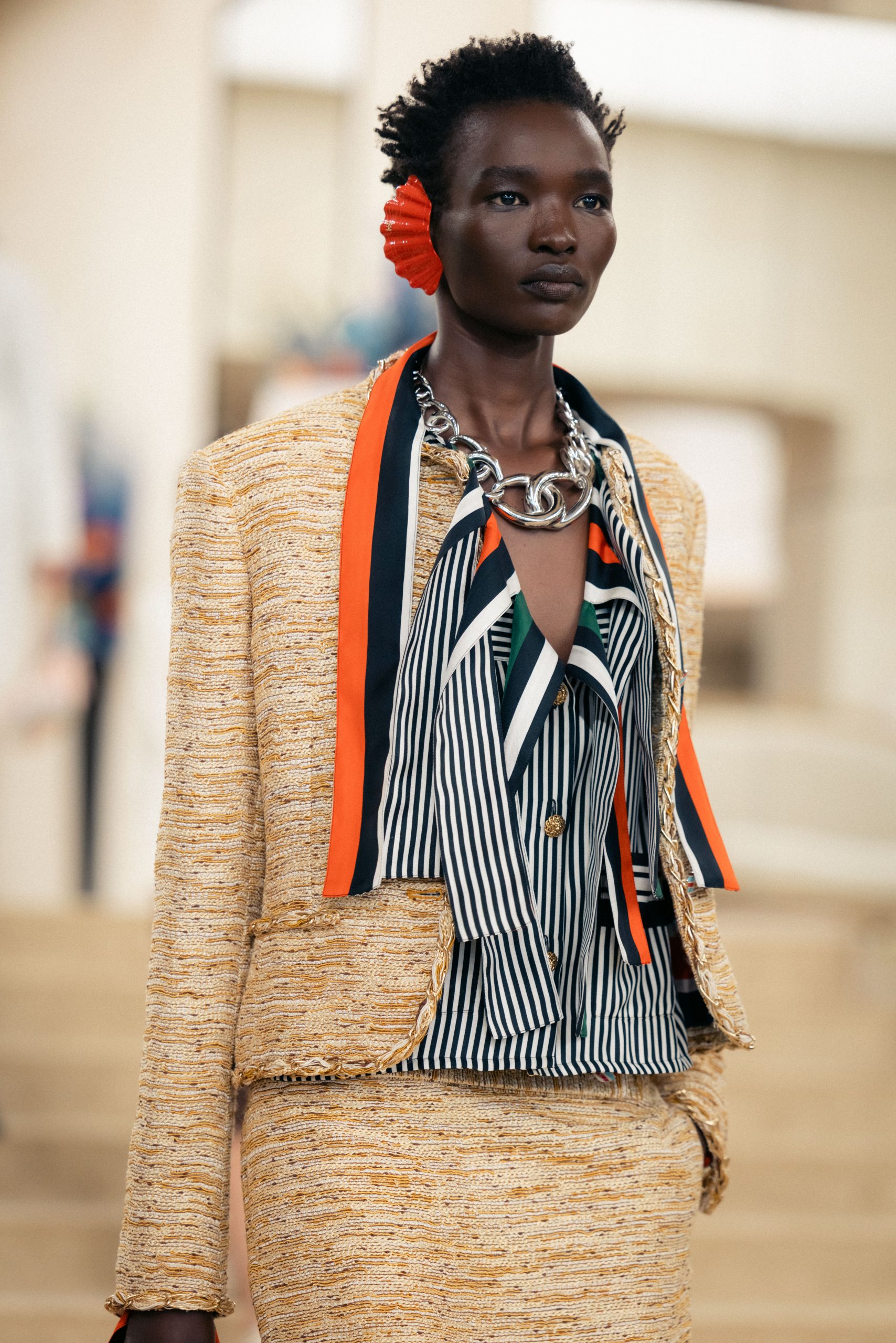
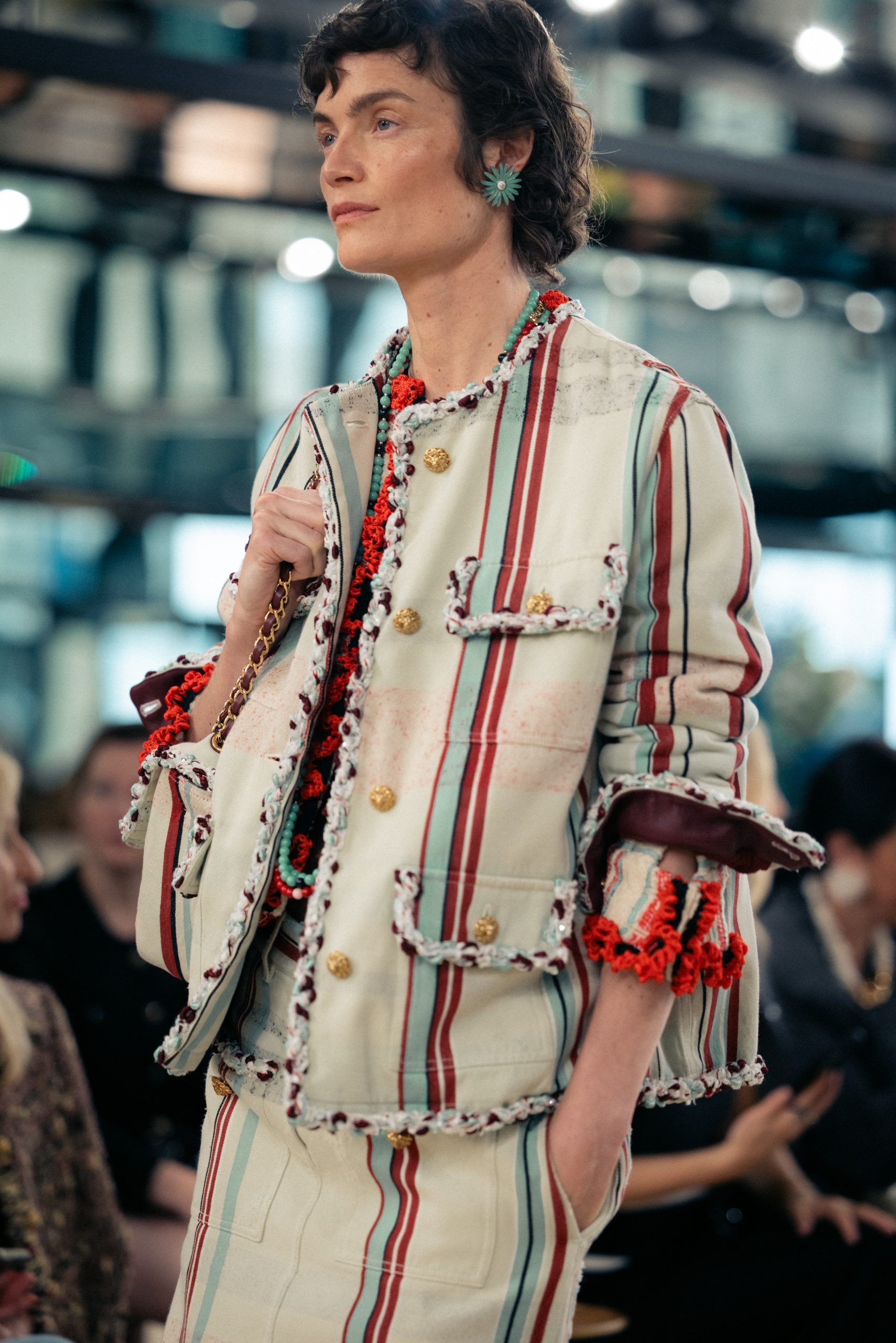
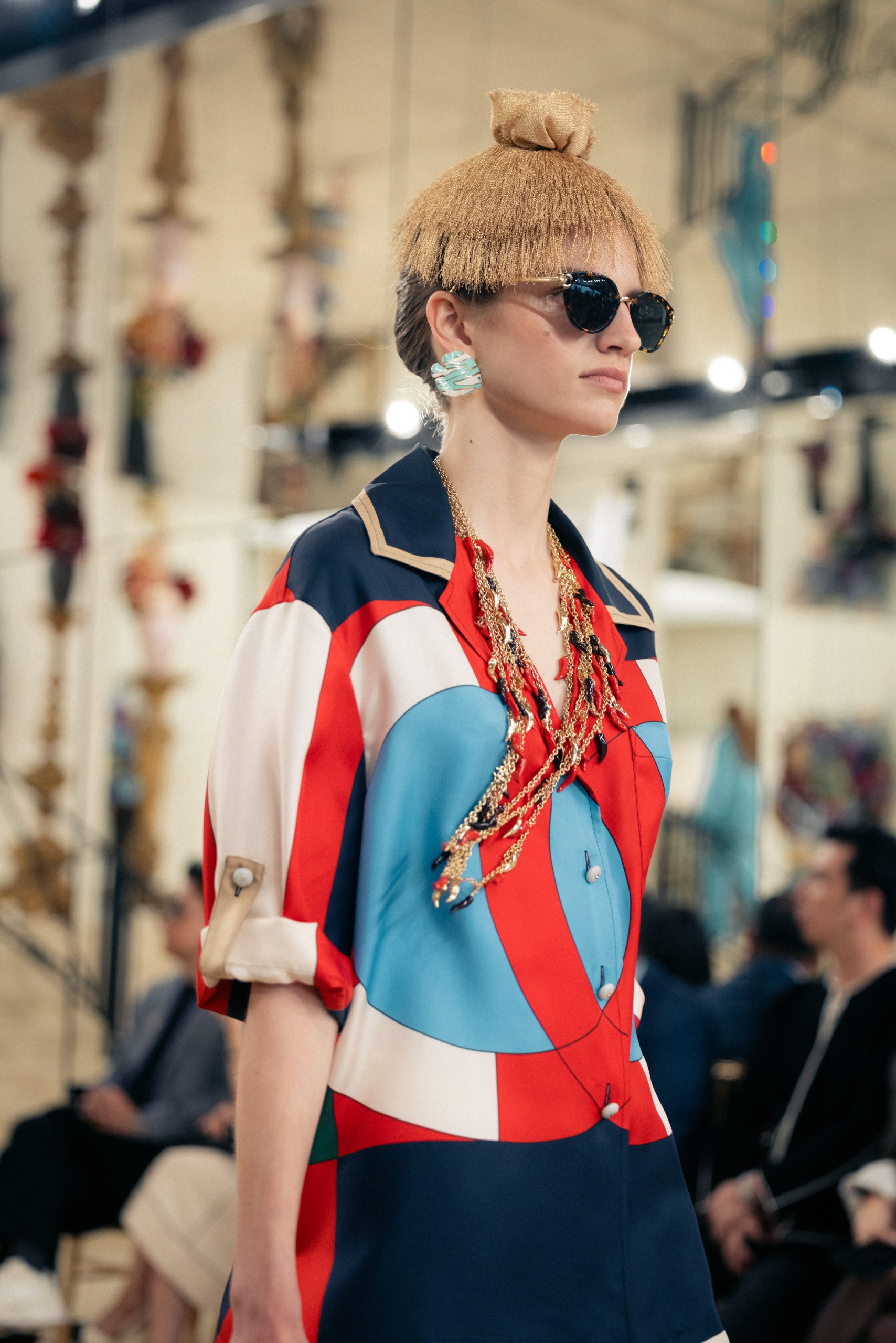
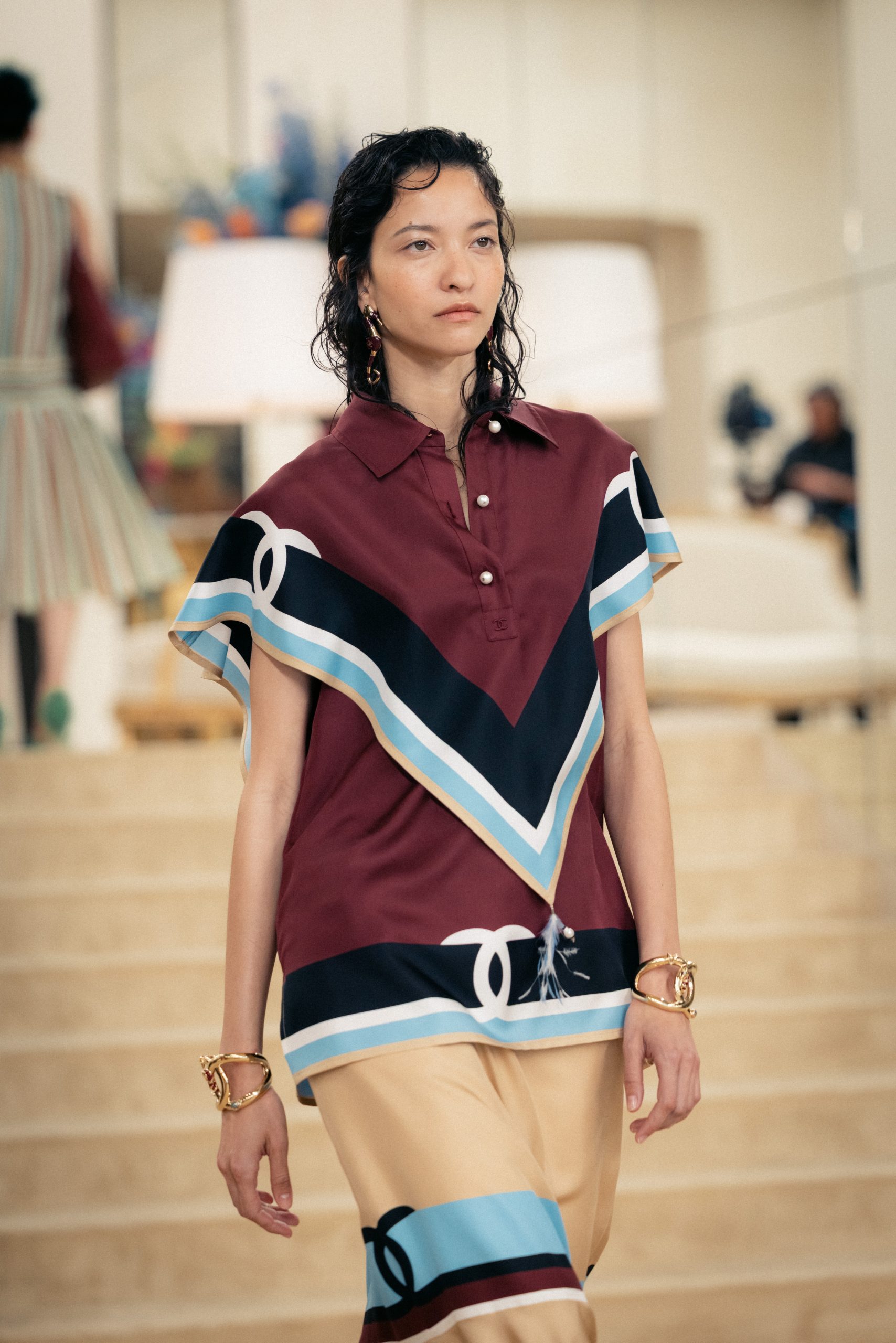
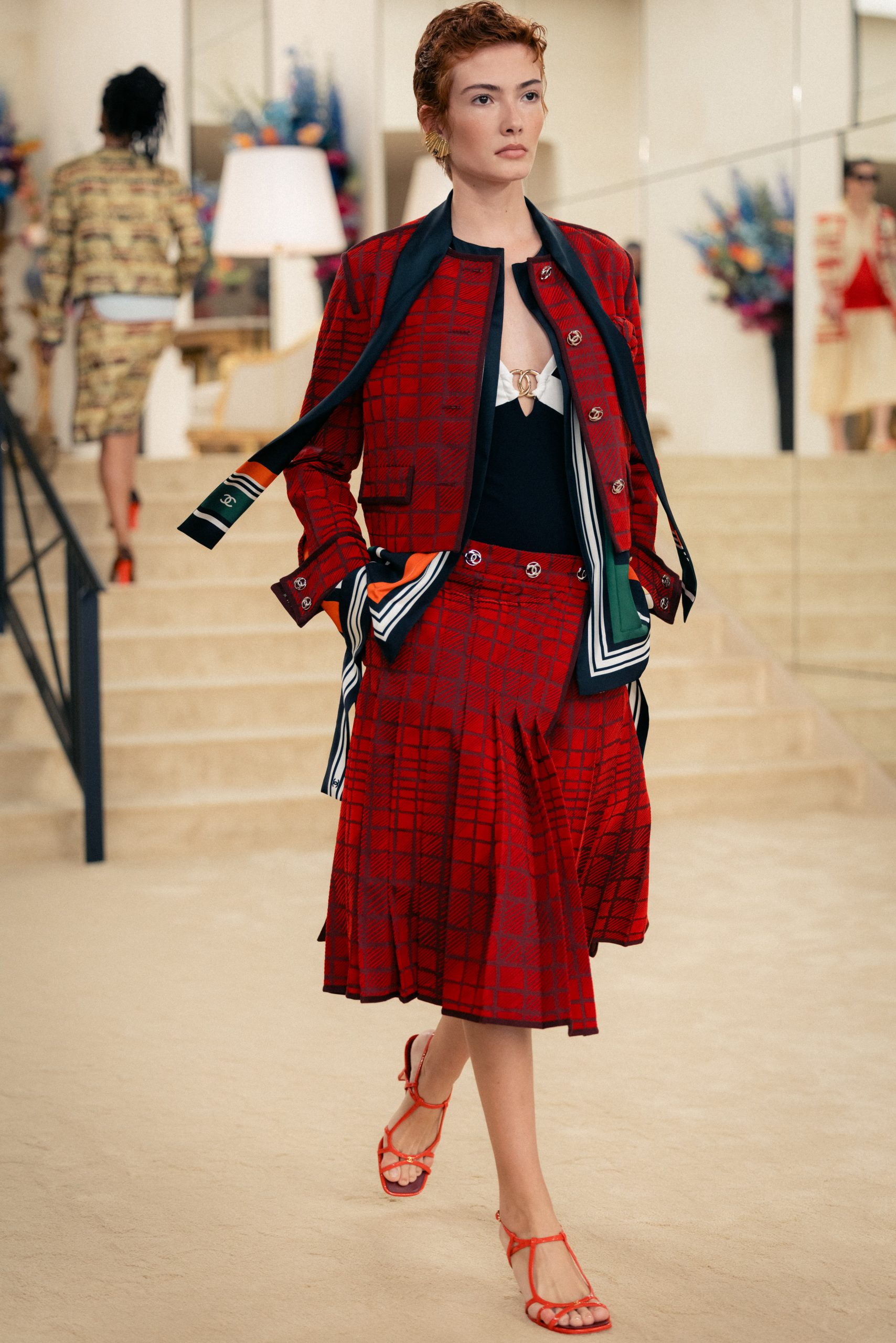
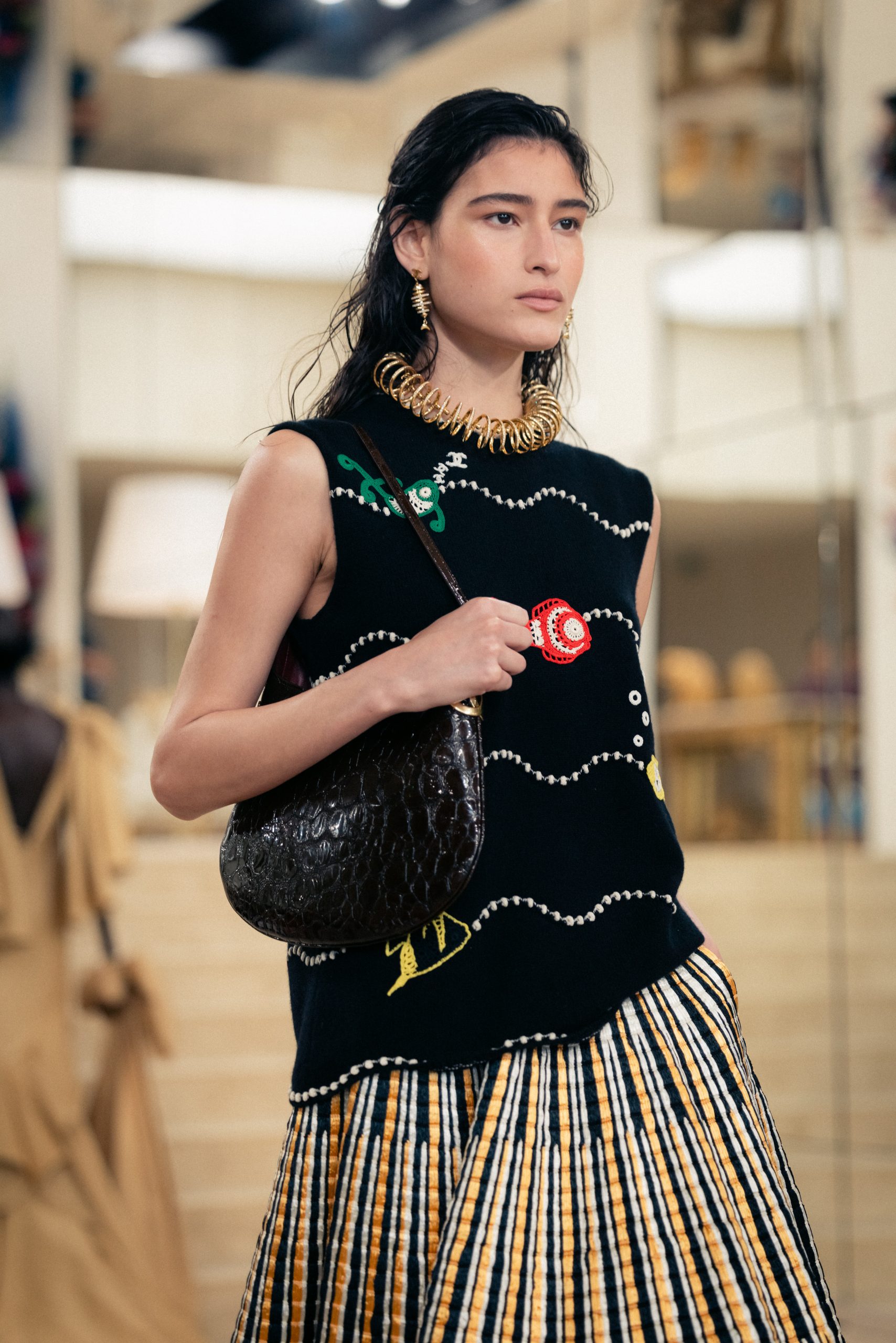
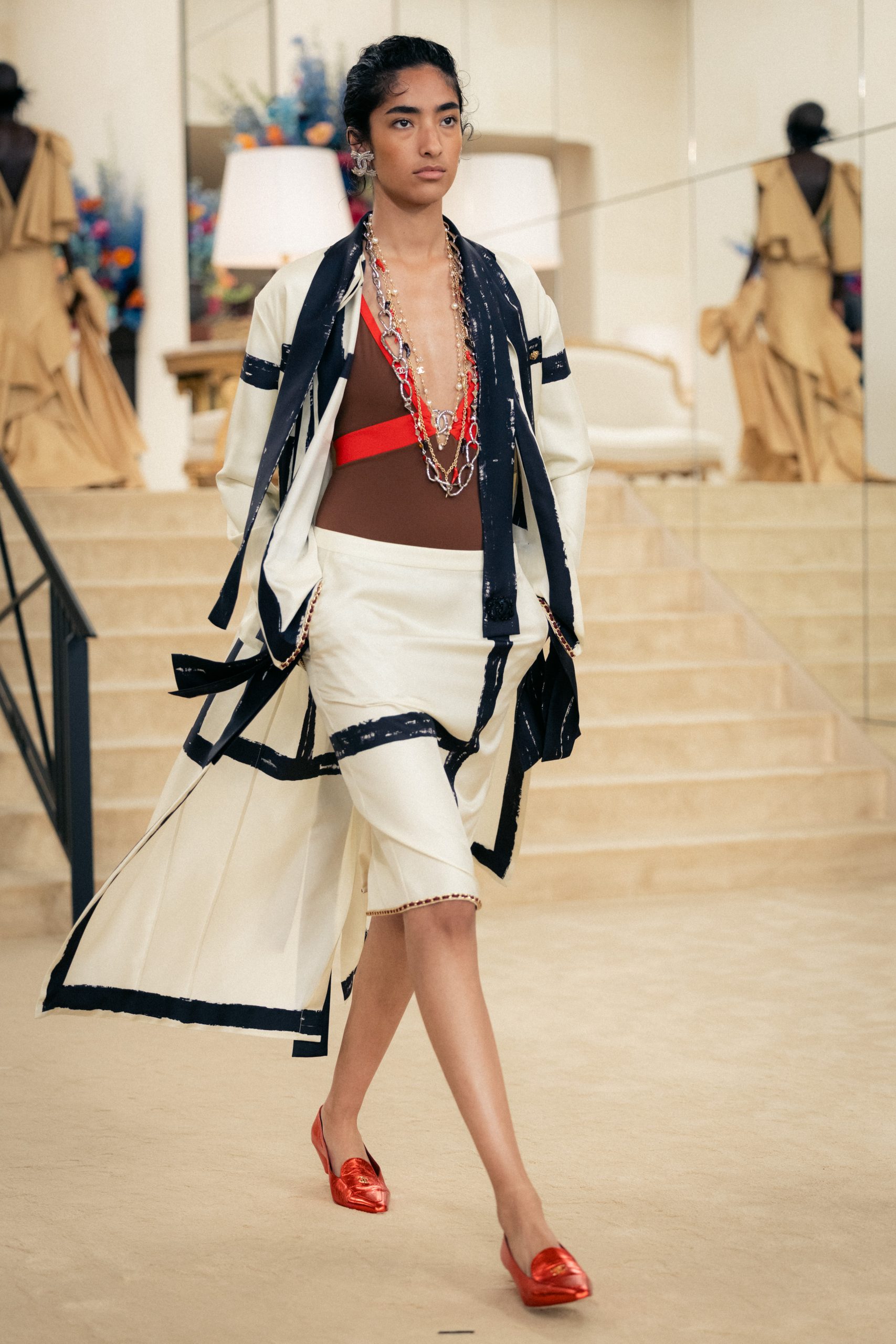
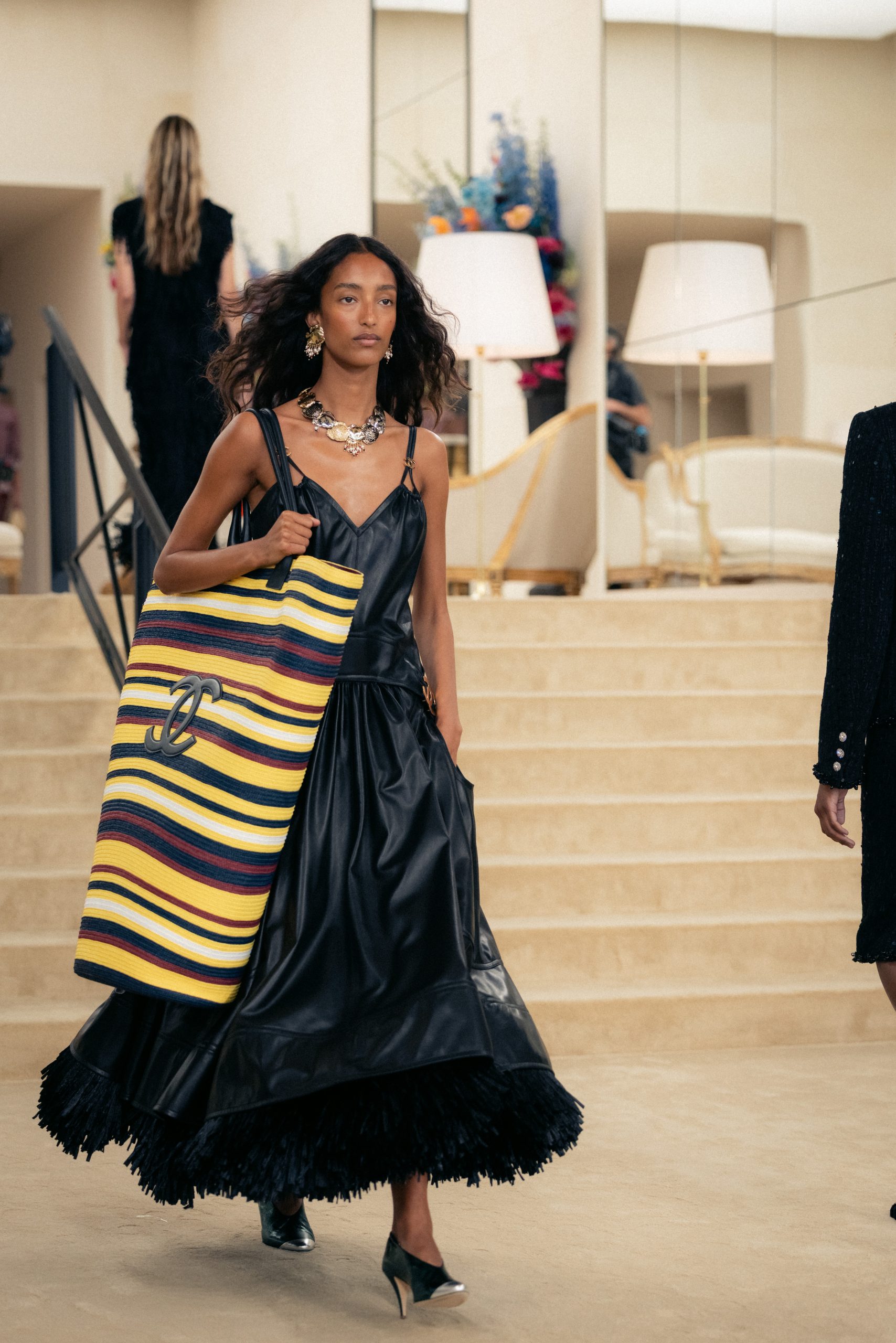
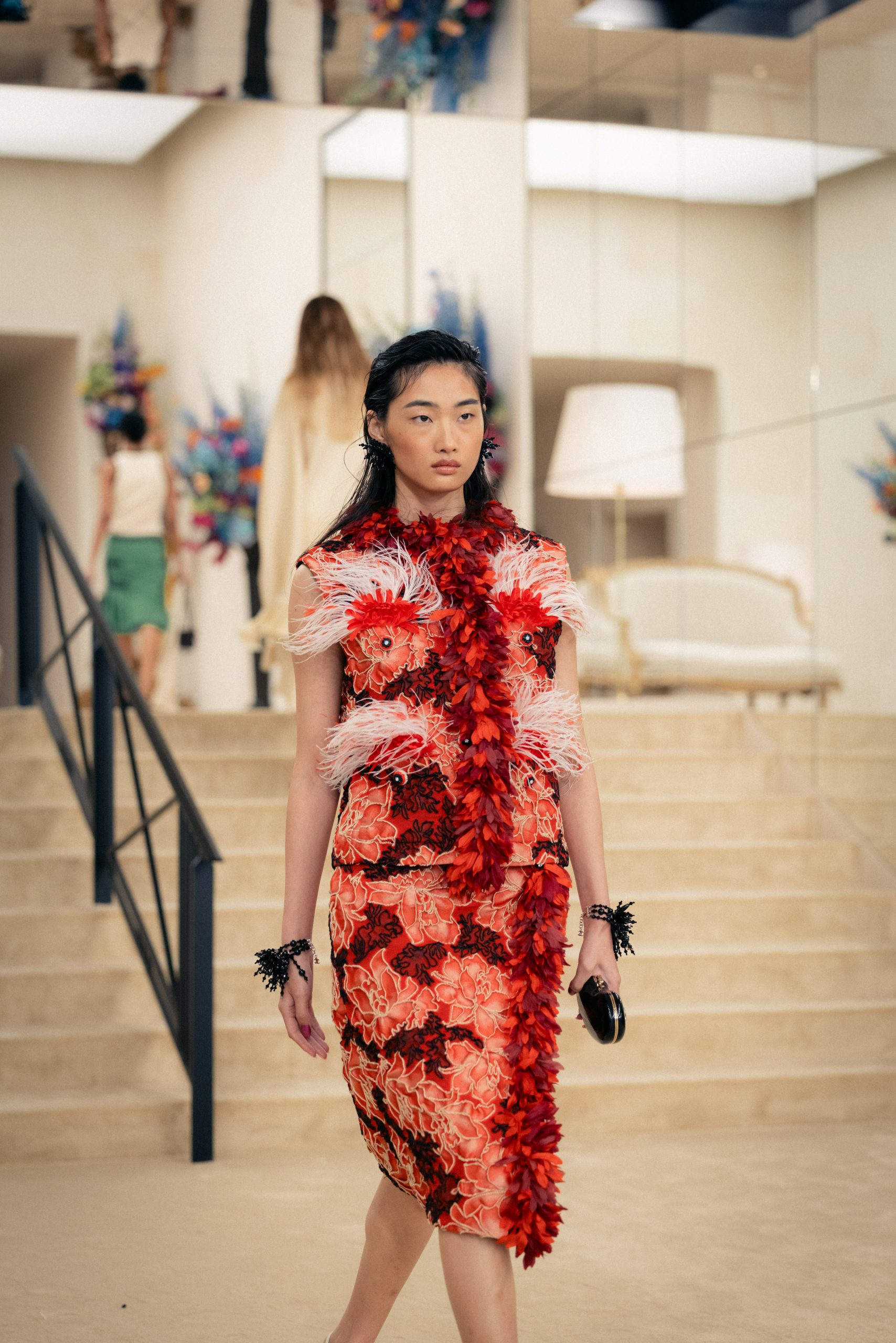
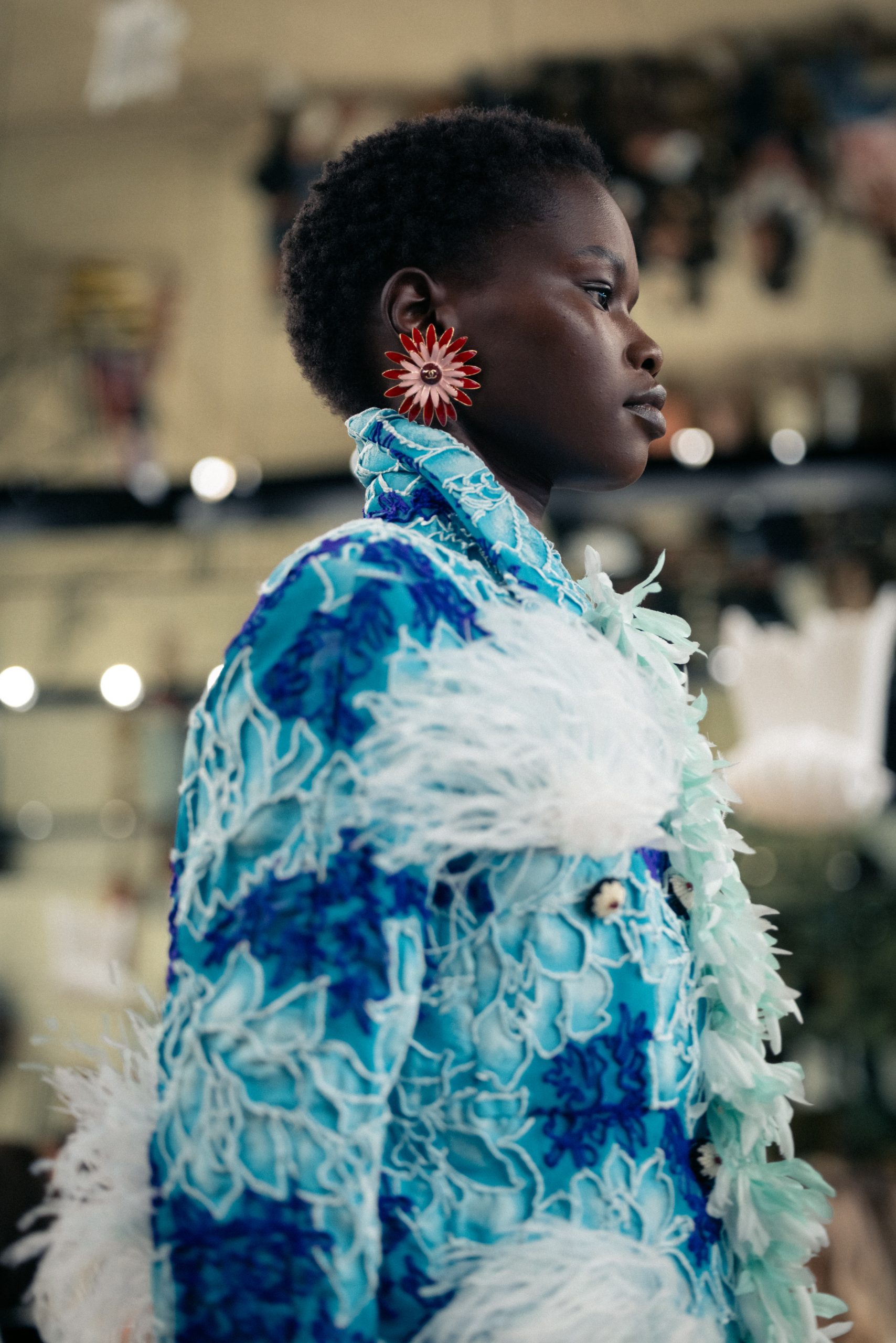
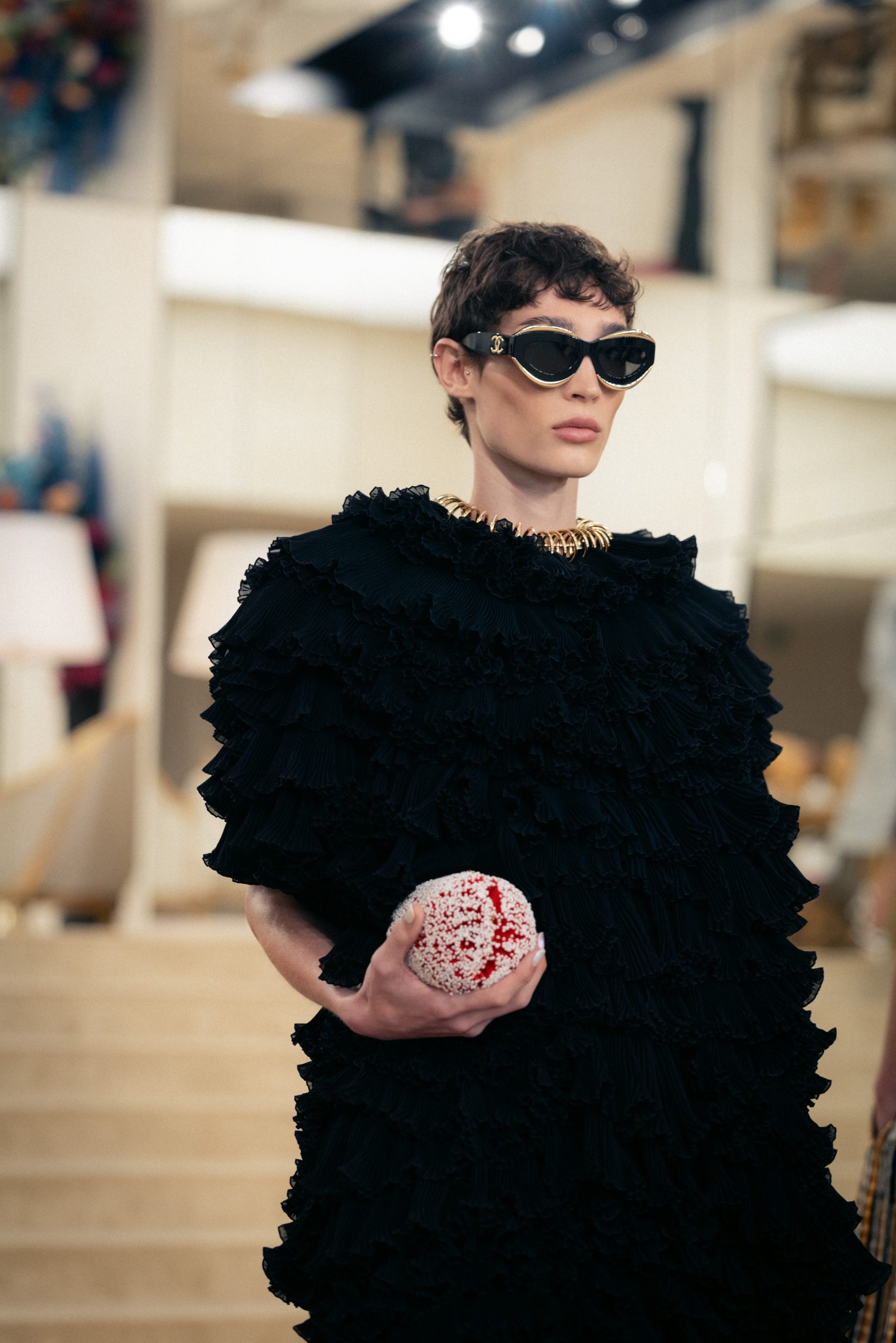
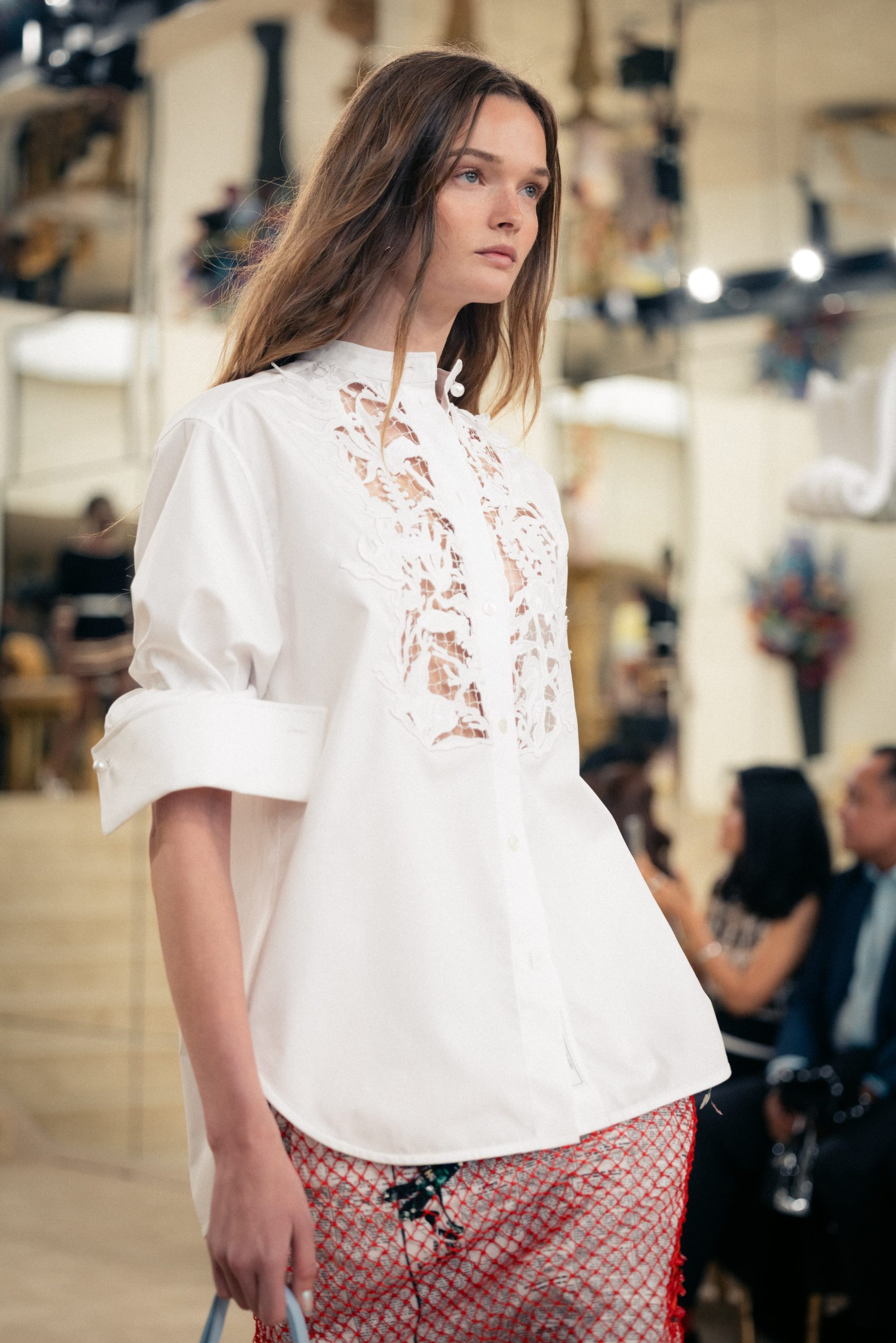
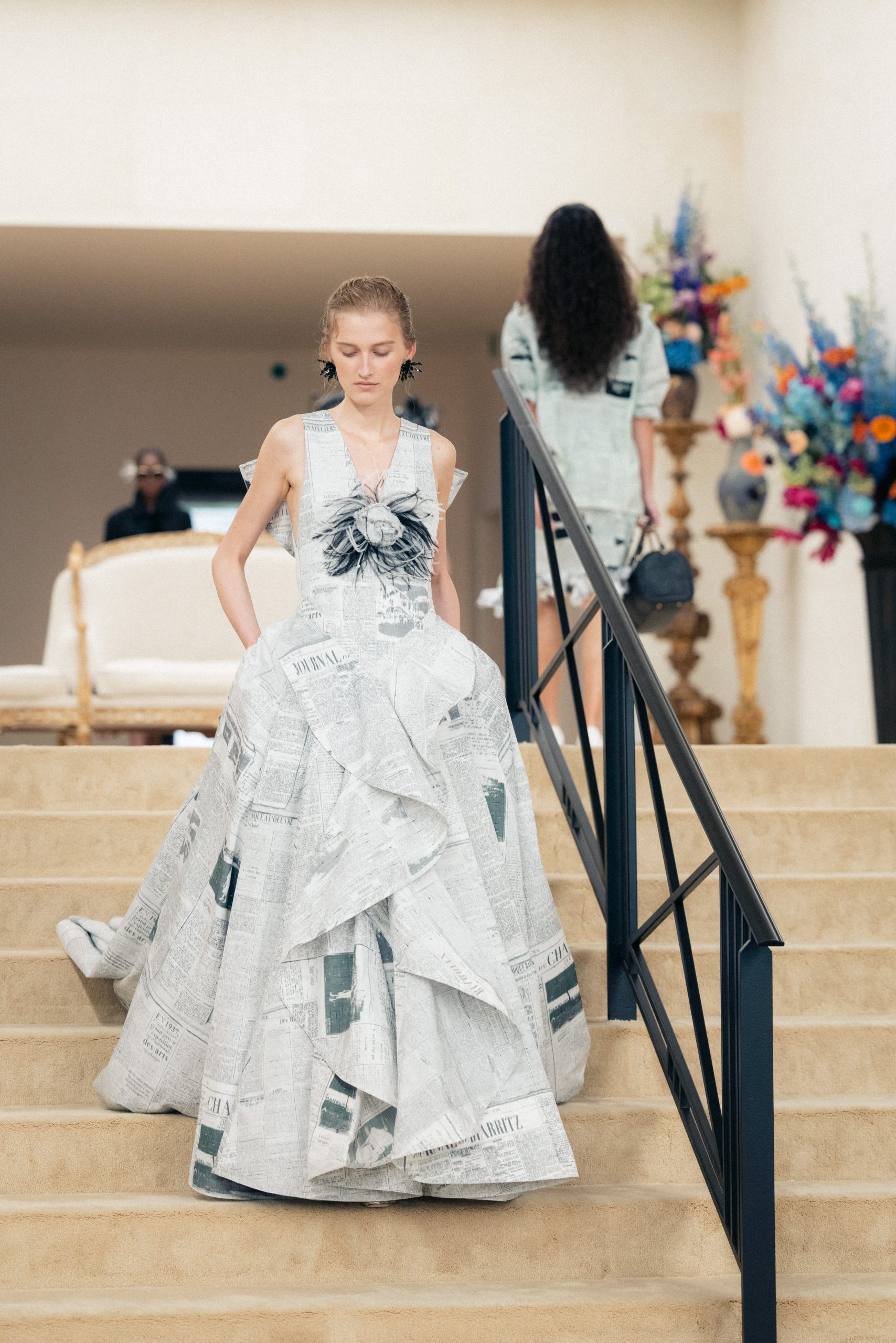
Here, the double C is the other linking line represented, not as an exercise in branding, but as part of an elemental architecture in garments. Radically introduced to clothing in the 1930s, its sinuous contours denote the rigorous signature of Gabrielle Chanel and a sense of her manifesto and autobiography in attire. Now it is up to the wearer to add her own.
The accessories of the collection reinforce the idea of a journey, spanning the practical and playful across an abundance of styles. From a small valise handbag to a full-grown holdall; from a waterproof flap bag to a giant striped beach panier. Even a pala carrier makes an appearance. Shoes straddle both salon and beach, taking the wearer wherever they please, from elegant Art Deco heels to barefoot ‘heel caps.’ The jewellery, too, echoes the Art Deco architecture of Biarritz, alongside its life aquatic, where shell earrings are held to the ear, and the CHANEL pearl finds its spiritual home.
“There is no beauty without freedom of the body.”
Gabrielle Chanel
CHANEL’S BLACK DRESS
“I imposed black; it is still going strong today, for black wipes out everything else around.”
Gabrielle Chanel
“Much is said about the ‘revenge dress’ – this might be considered the original one.”
Matthieu Blazy
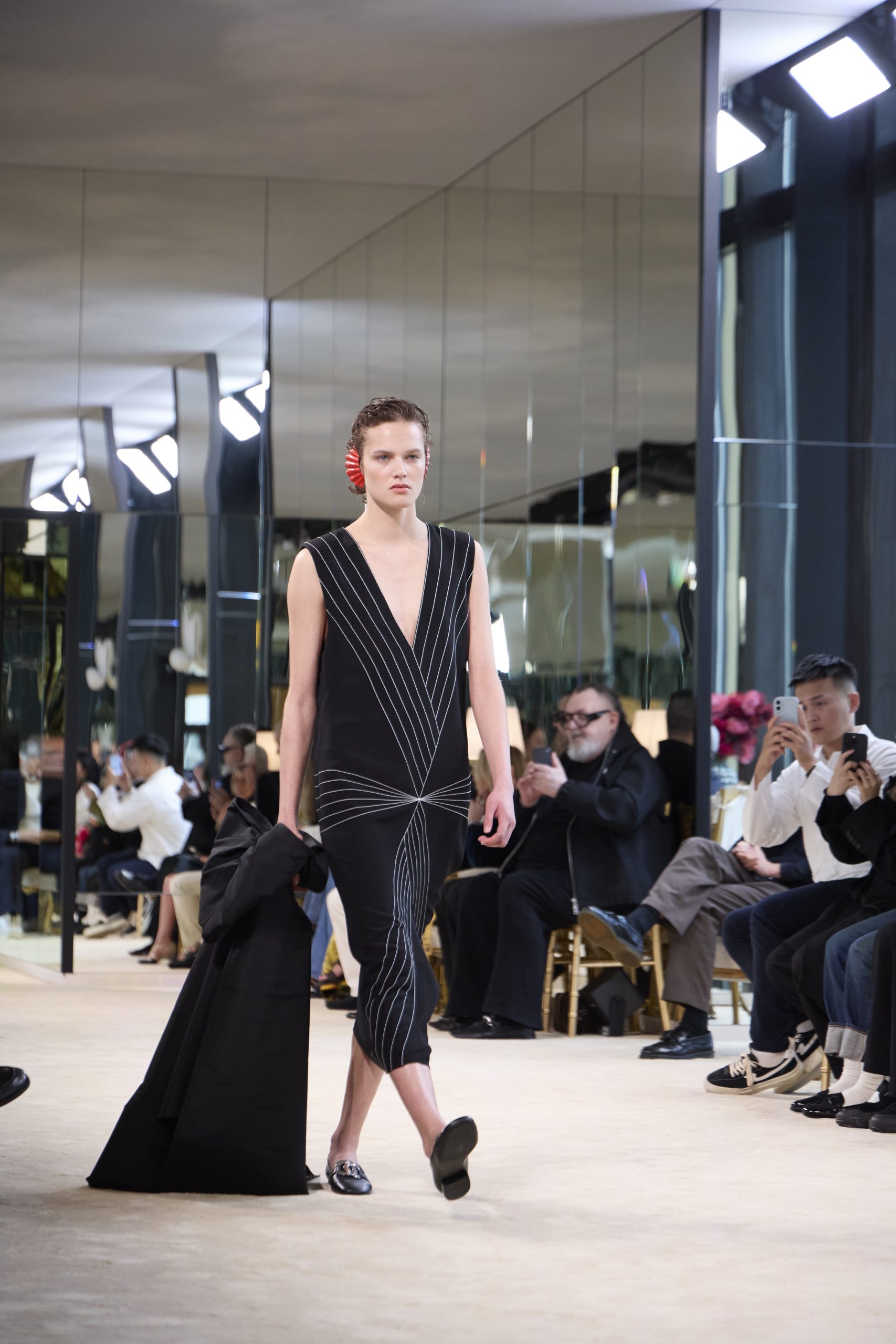
A classic is never a classic at first – it’s often a revolution. This is true of Gabrielle Chanel’s black dress. Purposeful, precise, and appealing in its simplicity, it was a bold innovation in 1926, amid high-flown haute couture. That year, Vogue declared it Chanel’s ‘Ford.’ Yet it was not unfamiliar. Rather, it was the craftsmanship and context – not to mention the publicity – that transformed the dress and its audience. The dress and its colour were long familiar to women who worked, including servants, shopgirls, and sisters in convents. Gabrielle Chanel’s innovation – she was, after all, a former shopgirl raised by the sisterhood – was to make grand ladies want to look like the women who served them, with purpose and precision. She made them want to look like her. Now they had to find their own meaning in wearing such a dress. This could be seen as a form of revenge.
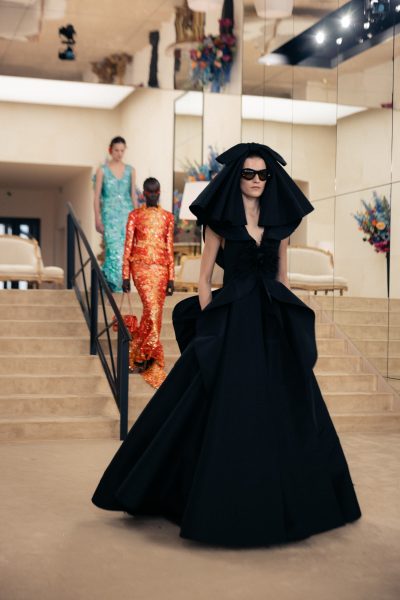
Chanel’s black dress marked a paradigm shift. What could be seen as ‘fashionable’ would become ‘archetypal.’ Here, the wearer is finally made visible – unadorned, defiant and unapologetically themselves. The black dress, as ‘workwear’ that blurred hierarchies by being worn across different strata of society, would later be echoed in the latter half of the last century by denim jeans. Denim itself is thought to originate in the South of France, ‘de Nimes’.
In this Cruise collection, Matthieu Blazy presents Gabrielle Chanel’s 1926 black dress as look one. Returning to the original archival sketch, the widely distributed drawing of the dress in 1926 did not show a large bow visible from the back. Today, it is transposed into a clutch bag. The collection also embraces the traditions of many forms of French workwear, from the sailor’s marinière to the ‘bleu de travail,’ upholding their functional as well as their fictional, rebellious status. All have achieved classic eminence, further confirmed by their presence in the roll of CHANEL.
CHANEL CHANELCruise